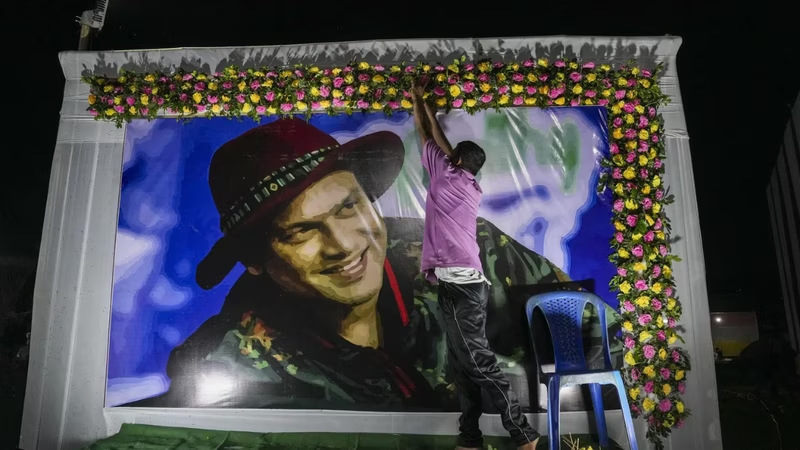
The heartbreaking news that shook fans across India and beyond has now been met with an official conclusion: the death of beloved Assamese singer, composer, and filmmaker Zubeen Garg was a tragic accident—not the result of foul play. After a thorough investigation, Singapore police have released key findings that paint a sobering picture of how a moment of poor judgment during a recreational outing led to an irreversible loss.
Garg, 52, drowned on January 12, 2026, while on a private boat trip off the coast of Singapore. Initial speculation swirled online, but authorities have now provided clarity—and a stark warning about water safety, alcohol, and the critical importance of wearing life-saving gear.
Table of Contents
- What Happened: The Final Moments of Zubeen Garg
- Zubeen Garg Death: Official Findings from Singapore Police
- Why Life Jackets Matter—Even for Strong Swimmers
- The Role of Alcohol in Water-Related Accidents
- Fan Reactions and Tributes to a Cultural Icon
- Conclusion
- Sources
What Happened: The Final Moments of Zubeen Garg
According to eyewitness accounts and police reports, Zubeen Garg was enjoying a leisurely boat ride with friends near Lazarus Island, a popular weekend spot for residents and tourists alike. At some point, he decided to enter the water—possibly to swim or cool off.
Witnesses told investigators that Garg appeared unsteady and had consumed alcohol prior to entering the sea. More critically, when offered a life jacket by fellow passengers, he reportedly declined, saying he was a confident swimmer and didn’t need one .
Minutes later, those on the boat noticed he was struggling. Despite immediate rescue attempts, strong currents and his impaired state made recovery difficult. He was pulled from the water unconscious and rushed to Singapore General Hospital, where he was pronounced dead.
Zubeen Garg Death: Official Findings from Singapore Police
After a three-day investigation involving witness interviews, toxicology reports, and scene reconstruction, Singapore’s Central Police Division issued a definitive statement:
“There is no indication of foul play. The deceased was found to have a high blood alcohol concentration. He had voluntarily entered the water and declined to wear a life jacket. The cause of death is consistent with accidental drowning.”
This conclusion aligns with standard protocols for such incidents in Singapore, where maritime safety is strictly enforced. Authorities emphasized that all recreational vessels are required to carry sufficient life jackets, and passengers are strongly advised—but not always legally compelled—to wear them in open waters.
Why Life Jackets Matter—Even for Strong Swimmers
Garg’s case is a tragic reminder that swimming ability alone is no guarantee of safety in open water. Experts stress several risks that even elite swimmers can’t overcome:
- Cold Water Shock: Sudden immersion can trigger gasping and hyperventilation, leading to water inhalation.
- Currents and Tides: Ocean conditions change rapidly; rip currents can pull even strong swimmers far from shore.
- Alcohol Impairment: Reduces coordination, judgment, and response time—critical in emergencies.
- Panic: Once in distress, even experienced swimmers can succumb to fear, accelerating exhaustion.
According to the World Health Organization (WHO), over 236,000 people die annually from drowning globally—and many of these deaths involve individuals who believed they were “safe” in the water .
The Role of Alcohol in Water-Related Accidents
Alcohol is a major contributing factor in recreational water deaths worldwide. The U.S. Centers for Disease Control and Prevention (CDC) estimates that alcohol use is involved in up to 70% of adult drowning deaths during water activities .
It impairs balance, increases risk-taking behavior, and slows reaction times—all deadly combinations near water. In Garg’s case, the combination of intoxication and refusal of a life jacket created a perfect storm of preventable risk factors.
Fan Reactions and Tributes to a Cultural Icon
Zubeen Garg wasn’t just a singer—he was a cultural force in Northeast India. Known for hits like “Ya Ali” and “Dhuniya Jon,” he also directed films, composed award-winning soundtracks, and championed Assamese language and identity on national platforms.
Following news of his death, tributes poured in from Bollywood stars, regional artists, and political leaders. Fans lit candles at his Guwahati residence, and Assam declared a day of state mourning. Many expressed grief not just at his passing, but at the preventable nature of the accident.
For more on water safety during travel, see our guide on [INTERNAL_LINK:essential-water-safety-tips-for-travelers].
Conclusion
The Zubeen Garg death is a profound loss to Indian music and cinema—but it’s also a cautionary tale that transcends celebrity. His final moments underscore a universal truth: water demands respect, and safety gear isn’t optional. As fans mourn a legend, his legacy may now include a powerful, if unintended, public service message about the life-saving value of a simple life jacket—and the dangers of mixing alcohol with aquatic recreation.
Sources
- Times of India. (2026). Zubeen Garg death: Singer was drunk, declined life jacket; ‘no foul play’, say Singapore cops. Retrieved from https://timesofindia.indiatimes.com/india/zubeen-garg-death-singer-was-drunk-declined-life-jacket-what-singapore-cops-uncovered/articleshow/126526769.cms
- Singapore Police Force. (2026, January 14). Media Statement: Drowning Incident at Lazarus Island.
- World Health Organization (WHO). (2025). Global Report on Drowning: Preventing a Leading Killer. Retrieved from https://www.who.int/
- Centers for Disease Control and Prevention (CDC). (2024). Unintentional Drowning: Get the Facts. Retrieved from https://www.cdc.gov/
- Assam State Government. (2026). Official Condolence Message on the Demise of Shri Zubeen Garg.