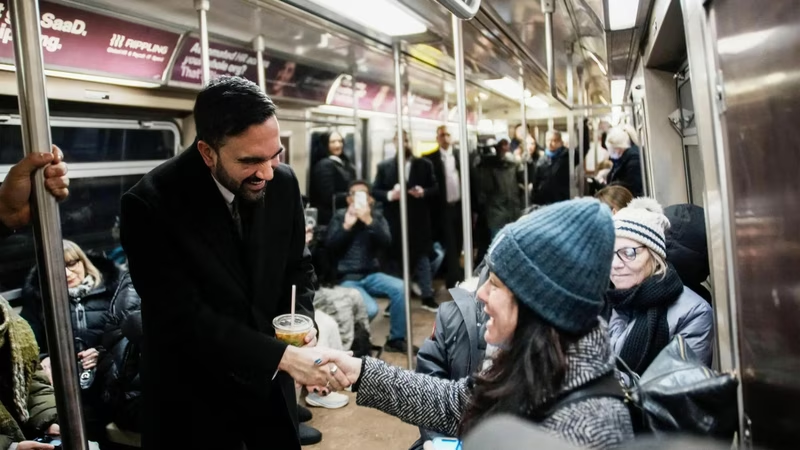
In a city where the subway is the lifeblood for millions, a mayor’s choice of morning commute speaks volumes. So when newly inaugurated NYC Mayor Zohran Mamdani boarded a downtown-bound train on his first full day in office, cameras in tow, the message was clear: he’s a mayor of the people .
But in the age of curated social media moments, the public is right to ask: was the Zohran Mamdani subway ride a genuine act of solidarity, or just another piece of political theater? The answer, as with most things in New York, is layered and complex.
Table of Contents
- A Mayor on the Move: The Subway Commute Breakdown
- Beyond the Ride: Announcing the Office of Mass Engagement
- Public & Media Reaction: Stunt or Sincerity?
- A History of Mayoral Commutes: From Bloomberg to Adams
- What This Symbolic Ride Means for NYC’s Future
- Conclusion: The Commute is Just the Beginning
- Sources
A Mayor on the Move: The Zohran Mamdani Subway Commute
Just one day after his historic inauguration, the 34-year-old mayor made a very deliberate choice for his first official commute: the New York City subway . Clad in a sharp suit and a jazzy tie from an Indian designer , Mamdani was seen checking his agenda on the train and greeting fellow riders with a warm handshake and a smile .
The scene was a stark visual contrast to the motorcades and SUVs typically associated with City Hall. His security detail and a team of cameramen accompanied him, a reality of his new office that some critics pointed to as undermining the “man of the people” narrative .
Yet, Mamdani seemed unfazed. He used the time not just for a ride, but for work, preparing for a packed Day 1 agenda that included signing executive orders, announcing key appointments, and facing his first press briefing .
Beyond the Ride: Announcing the Office of Mass Engagement
The Zohran Mamdani subway journey wasn’t just a commute; it was the launchpad for his first major policy announcement. On the platform, he unveiled his new Office of Mass Engagement .
This initiative is designed to be a direct line between City Hall and everyday New Yorkers, aiming to cut through bureaucratic red tape and give residents a real voice in city government. For a mayor who has built his political identity on grassroots organizing and his “one struggle” philosophy, this office is a tangible manifestation of that promise .
The choice of location for the announcement was no accident. By making the subway—a shared, public, and often frustrating space—the backdrop, Mamdani was grounding his new administration in the daily reality of his constituents.
Public & Media Reaction: Stunt or Sincerity?
The internet, of course, had a field day. Social media was split between those who applauded the gesture as a refreshing break from the aloofness of past administrations and those who dismissed it as a “stunt” filled with “cameramen and his NYPD security detail to further his ‘one struggle’ shtick” .
This skepticism is healthy in a city that has seen its fair share of political promises evaporate. New Yorkers are a savvy bunch; they know that a single subway ride doesn’t fix the MTA’s deep-seated infrastructure problems or make housing more affordable. They’ll be watching to see if the symbolism is backed by real action.
For a deeper look at NYC’s political climate, see our analysis on [INTERNAL_LINK:nyc-politics-2026].
A History of Mayoral Commutes: From Bloomberg to Adams
Mamdani isn’t the first mayor to attempt to connect via public transit, but his approach is notably different.
- Michael Bloomberg was famously driven everywhere in a city-issued SUV, a reflection of his billionaire status and technocratic style.
- Bill de Blasio made his daily subway commute from Park Slope a cornerstone of his 2013 campaign, though its authenticity was often questioned.
- Eric Adams also used his personal story and public transit early in his tenure, but his administration was later mired in scandal.
Mamdani’s team seems aware of this history. By announcing a concrete policy initiative during the ride, they’re trying to add substance to the symbolism, showing it’s not just about where he goes, but what he’s building along the way.
What This Symbolic Ride Means for NYC’s Future
The Zohran Mamdani subway moment is a powerful opening statement for his administration. It signals a few key priorities:
- Accessibility: A commitment to being physically and politically present in the spaces New Yorkers inhabit.
- Transit as a Priority: An acknowledgment that fixing the subway is not just a transportation issue, but a fundamental economic and social justice issue for the city.
- Grassroots Governance: The launch of the Office of Mass Engagement suggests a move towards a more participatory and less top-down model of city government.
For more on urban policy and its impact, the Urban Institute offers a wealth of non-partisan research on city governance and public transit.
Conclusion: The Commute is Just the Beginning
Whether you see it as a masterstroke of political communication or a calculated photo op, the Zohran Mamdani subway ride has successfully set the tone for his mayoralty. It was a clear declaration that his administration intends to be different—more present, more engaged, and more focused on the everyday lives of New Yorkers.
The true test, however, won’t be on Day 1, but on Day 100, Day 365, and beyond. Can he translate the symbolism of that subway ride into real, measurable improvements in transit, housing, and public safety? New Yorkers, ever the city’s toughest critics, will be his judges.
Sources
- Times of India: Watch: New York mayor Zohran Mamdani takes subway to work on Day 1
- Web search results on Zohran Mamdani’s first day as NYC mayor [[1], [2], [3], [4], [5], [6], [7]].