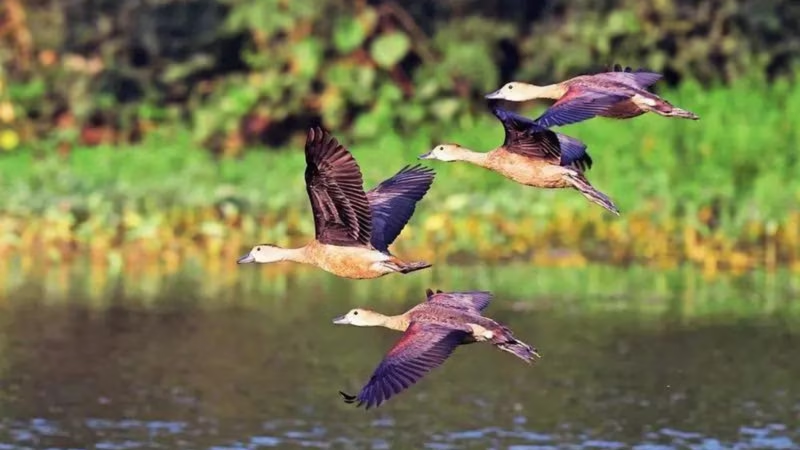
Amid the concrete sprawl of India’s capital, a quiet miracle unfolds every winter: flocks of painted storks glide over wetlands, Siberian cranes call from reed beds, and kingfishers dart above murky waters. This isn’t a scene from a nature documentary—it’s the **Yamuna floodplain in Delhi**, one of the last refuges for birds in urban India.
But this ecological lifeline is under siege. In a recent **Yamuna bird survey**, four dedicated teams recorded an impressive 131 bird species along a 22-kilometer stretch of the river—proof of the Yamuna’s enduring, if fragile, vitality. Yet, experts warn that unless urgent action is taken, this avian sanctuary could vanish within a decade, swallowed by pollution, encroachment, and apathy.
Table of Contents
- Survey Findings: 131 Species in a Stressed Ecosystem
- Key Species Spotted: From Rarities to Residents
- The Triple Threat: Pollution, Encroachment, and Neglect
- Why the Yamuna Floodplain Matters for Delhi’s Ecology
- Birders Sound the Alarm: A Race Against Time
- Current Conservation Efforts and Gaps
- What Can Be Done? A Blueprint for Action
- Conclusion: Saving the Yamuna Is Saving Delhi’s Soul
- Sources
Survey Findings: 131 Species in a Stressed Ecosystem
Organized by local ornithologists and citizen scientists, the recent **Yamuna bird survey** covered a 22-km stretch from Wazirabad to Okhla—a zone that includes marshes, agricultural fields, and seasonal wetlands. Despite degraded water quality and fragmented habitats, the count revealed remarkable biodiversity:
- 131 total species documented in a single round.
- 42 migratory species, including the rare Pallas’s gull and ferruginous duck.
- 18 near-threatened or vulnerable species, such as the Indian skimmer and sarus crane.
- Over 20,000 individual birds observed, including large congregations of waterfowl.
“The numbers are encouraging, but they’re also a warning,” says Dr. Meenakshi Poti, a Delhi-based ecologist involved in the survey. “These birds are clinging to what little remains of a functional ecosystem.”
Key Species Spotted: From Rarities to Residents
Among the highlights of the survey were several flagship and indicator species:
- Painted Stork: Large wading birds nesting in riverine trees—dependent on clean, shallow wetlands.
- Black-headed Ibis: A near-threatened species sensitive to pesticide use and wetland drainage.
- Greater Flamingo: Winter visitors that rely on saline lagoons, now increasingly rare along the Yamuna.
- Indian Pitta: A colorful forest floor bird, indicating the presence of healthy scrubland patches.
- Pallas’s Gull: A rare long-distance migrant from Central Asia—its presence signals intact flyways.
Even common species like the red-wattled lapwing and coppersmith barbet play vital roles in seed dispersal and insect control—underscoring the floodplain’s ecological interconnectedness.
The Triple Threat: Pollution, Encroachment, and Neglect
Despite its ecological value, the Yamuna floodplain faces relentless pressure:
- Sewage and Industrial Waste: Over 95% of Delhi’s untreated sewage flows into the Yamuna, creating toxic foam and killing aquatic life that birds depend on.
- Illegal Construction: Encroachments for housing, temples, and event venues are fragmenting habitats. Recent reports cite over 200 illegal structures in the Okhla bird sanctuary buffer zone alone.
- Agricultural Intensification: Use of chemical fertilizers and deep borewells is depleting groundwater and poisoning soil—impacting insect populations that feed birds.
“The floodplain is treated like wasteland,” laments veteran birder Anand Arya. “But it’s not empty—it’s teeming with life that has nowhere else to go.”
Why the Yamuna Floodplain Matters for Delhi’s Ecology
The Yamuna isn’t just a river—it’s Delhi’s ecological lung. The floodplain:
- Acts as a natural groundwater recharge zone.
- Absorbs floodwaters during monsoons.
- Filters pollutants through wetland vegetation.
- Provides critical stopover for birds on the Central Asian Flyway—one of the world’s major migratory routes.
Losing the Yamuna’s biodiversity would mean losing a key buffer against climate change and urban heat in India’s most polluted capital.
Birders Sound the Alarm: A Race Against Time
Birdwatching groups like the Delhi Bird Foundation and Nature Mates have launched public awareness campaigns, urging authorities to:
- Enforce the National Green Tribunal’s 2015 order declaring the floodplain a “no-construction zone.”
- Upgrade sewage treatment infrastructure to prevent untreated waste inflow.
- Designate core zones as protected urban biodiversity reserves.
“We’re not just saving birds—we’re saving the last green space Delhi has,” says birder and educator Priya Singh [[INTERNAL_LINK:delhi-urban-wetlands-conservation]].
Current Conservation Efforts and Gaps
While the Okhla Bird Sanctuary is a notified protected area, much of the surveyed stretch lies outside its boundaries—leaving it vulnerable. Some positive steps include:
- The Delhi government’s 2023 proposal for a “Yamuna Biodiversity Park” near Narela.
- Community-led clean-up drives by NGOs like Yamuna Jiye Abhiyan.
- Use of GIS mapping to monitor encroachments in real-time.
However, enforcement remains weak, and inter-agency coordination between Delhi, Haryana, and Uttar Pradesh is often disjointed.
What Can Be Done? A Blueprint for Action
Experts propose a four-point plan:
- Declare the entire 22-km surveyed stretch as an Ecologically Sensitive Area (ESA) under the Environment Protection Act.
- Launch a Yamuna Restoration Mission with dedicated funding for wetland revival and sewage diversion.
- Integrate bird corridors into Delhi’s Master Plan 2041, ensuring green connectivity.
- Engage citizens through citizen science programs like eBird India to monitor species trends.
Conclusion: Saving the Yamuna Is Saving Delhi’s Soul
The **Yamuna bird survey** is more than a species count—it’s a wake-up call. The presence of 131 bird species in such a degraded landscape is a testament to nature’s resilience. But resilience has limits. Without urgent, coordinated action, Delhi risks losing not just its birds, but the very ecological foundation that sustains life in the megacity. The time to act is now—before the winged visitors stop coming altogether.
Sources
- Times of India. “Winged visitors bank on Yamuna: Ecological threats worry birders.” https://timesofindia.indiatimes.com/…
- Yamuna Jiye Abhiyan. “Floodplain Conservation Reports.” https://www.yamunajiyeabhiyan.com/
- BirdLife International. “Central Asian Flyway Action Plan.” https://www.birdlife.org/