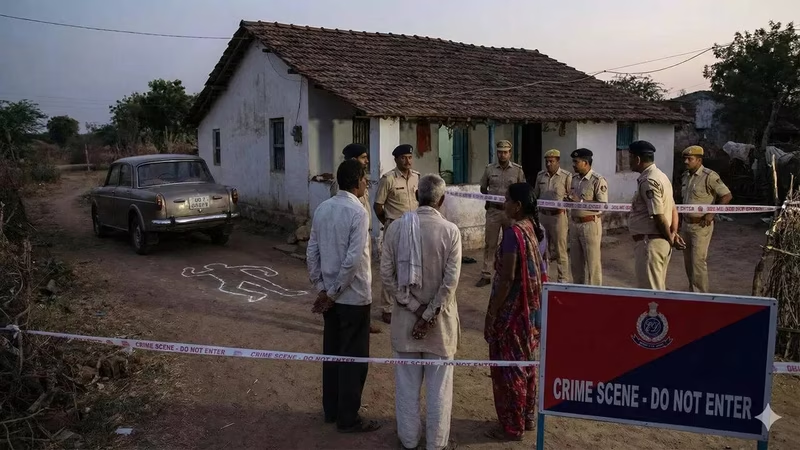
In the quiet village of Nawada, Bihar, a chilling crime has once again exposed the deadly grip of superstition in parts of rural India. A 35-year-old woman—mother, daughter, neighbor—was brutally murdered by people she lived alongside for years. Her alleged crime? Practicing witchcraft. The trigger? A sick child in a neighboring household. Armed with nothing but baseless suspicion, her attackers used bricks, stones, and iron rods to end her life in an act of mob violence that has left the nation reeling.
Table of Contents
- What Happened in Nawada, Bihar?
- The Deadly Role of Superstition and Witchcraft Accusations
- Witchcraft Murder Bihar: A Pattern of Violence
- Legal Framework: Can Laws Prevent Future Tragedies?
- Community Response and Police Action
- How to Combat Superstition-Driven Violence
- Conclusion: Breaking the Cycle of Fear and Violence
- Sources
What Happened in Nawada, Bihar?
According to police reports and family testimonies, the incident unfolded in early January 2026 in a village under the Warisaliganj police station in Nawada district . Tensions began when a young child from a neighboring family fell seriously ill. Instead of seeking medical help, some villagers turned to age-old superstitions—and pointed fingers at a 35-year-old woman, accusing her of casting an evil spell or practicing black magic.
The situation escalated rapidly. On the day of the attack, a group of individuals—allegedly including relatives of the sick child—confronted the woman. Without any evidence or due process, they launched a vicious assault. Eyewitnesses and family members reported that the attackers used readily available objects: bricks, stones, and iron rods. The woman succumbed to her injuries on the spot. Four others, including family members who tried to intervene, were also injured in the chaos .
The Deadly Role of Superstition and Witchcraft Accusations
This tragedy is not an isolated incident. Across eastern India—particularly in states like Jharkhand, Chhattisgarh, Odisha, and Bihar—accusations of witchcraft (often referred to as “tonhi” or “dayan”) have long been used to target vulnerable individuals, especially women. These accusations frequently stem from personal grudges, property disputes, or unexplained illnesses, serving as a convenient scapegoat in communities with limited access to education and healthcare .
Victims are often widows, single women, or those from marginalized castes—individuals with little social or legal protection. Once labeled a witch, they face social ostracization, torture, and, all too often, murder. The brutality of these attacks, like the one in Nawada, underscores how deeply entrenched these beliefs remain despite decades of modernization efforts.
Witchcraft Murder Bihar: A Pattern of Violence
Bihar has a troubling history of such incidents. In 2023 alone, the National Crime Records Bureau (NCRB) recorded dozens of cases linked to witch-hunting, though experts believe the actual number is far higher due to underreporting . Many cases go unreported because entire villages may be complicit, or survivors fear retaliation.
What makes the Nawada case particularly disturbing is the sheer brutality and the involvement of neighbors—people who shared daily life with the victim. This highlights a critical failure in community awareness and law enforcement’s preventive presence. [INTERNAL_LINK:violence-against-women-india] could provide further context on systemic gender-based violence in the region.
Why Women Are Targeted
Several factors contribute to why women bear the brunt of witchcraft accusations:
- Social vulnerability: Widows or women without male protectors are easy targets.
- Property disputes: Accusing a woman of witchcraft can be a tactic to seize her land or assets.
- Lack of education: In areas with low literacy, supernatural explanations fill gaps where science and medicine are inaccessible.
- Cultural normalization: In some communities, belief in witchcraft is so ingrained it’s rarely questioned.
Legal Framework: Can Laws Prevent Future Tragedies?
India does have legal tools to address this issue. Bihar enacted the Bihar Prevention of Witch (Daain) Practices Act in 2019, which criminalizes witch-hunting and prescribes up to life imprisonment for causing death . Similar laws exist in Jharkhand, Chhattisgarh, and Assam.
However, enforcement remains weak. Police often lack training to handle such cases sensitively, and local officials may share the same superstitious beliefs. Moreover, victims’ families are sometimes too afraid to file complaints. Legal experts argue that while laws are necessary, they must be paired with grassroots education and community policing to be effective .
Community Response and Police Action
Following the Nawada incident, local police acted swiftly—registering a case under relevant sections of the Indian Penal Code and the Bihar Witchcraft Act. Several suspects have been detained, and investigations are ongoing .
Yet, reactive measures aren’t enough. Community leaders, teachers, and health workers must play a proactive role in debunking myths. NGOs like Human Rights Watch India have long advocated for integrating anti-superstition modules into school curricula and public health campaigns .
How to Combat Superstition-Driven Violence
Preventing future tragedies requires a multi-pronged approach:
- Education & Awareness: Mobile campaigns, street plays, and radio programs in local dialects can challenge harmful beliefs.
- Healthcare Access: Expanding rural clinics reduces reliance on supernatural explanations for illness.
- Women’s Empowerment: Economic independence and legal literacy make women less vulnerable to false accusations.
- Police Training: Specialized units trained in handling witchcraft-related crimes can improve response and deterrence.
Conclusion: Breaking the Cycle of Fear and Violence
The brutal witchcraft murder in Bihar is more than a crime—it’s a symptom of deep societal fractures. Until superstition is confronted with reason, and fear with justice, women like the 35-year-old in Nawada will remain at risk. This case must serve as a wake-up call for authorities, civil society, and citizens alike to prioritize education, empathy, and the rule of law over blind belief. Only then can we ensure that no one is killed for a crime that exists only in myth.
Sources
- [1] Times of India: Bricks, stones and iron rods: 35-year-old woman beaten to death by neighbours
- [2] United Nations Human Rights Office: Reports on Witch-Hunting and Gender-Based Violence
- [3] National Crime Records Bureau (NCRB): Crime in India 2023 Statistics
- [4] Government of Bihar: Bihar Prevention of Witch (Daain) Practices Act, 2019
- [5] Commonwealth Human Rights Initiative: Combating Witch-Hunting in India
- [6] Human Rights Watch: India: Events of 2025