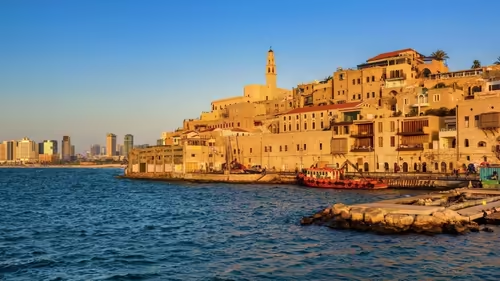
If you’ve ever heard Tel Aviv referred to as “The Big Orange,” you might have pictured a giant fruit hovering over its skyline. While that’s not quite the case, the nickname is deeply symbolic—and far juicier than it sounds. This beloved alias isn’t a marketing gimmick; it’s a tribute to one of Israel’s most iconic exports: the Jaffa orange .
For much of the 19th and 20th centuries, the fragrant, seedless, and brilliantly colored Jaffa orange wasn’t just a fruit—it was an economic engine, a cultural emblem, and a global ambassador for the region. And since modern Tel Aviv grew right next to the ancient port city of Jaffa—the birthplace of this citrus legend—the two became forever intertwined .
Table of Contents
- What Does ‘The Big Orange’ Mean?
- The Rise of the Jaffa Orange: From Orchard to Global Fame
- Tel Aviv and Yafo: A United Citrus Legacy
- Why Did ‘The Big Orange’ Nickname Stick?
- Is the Jaffa Orange Still Grown Today?
- Conclusion: More Than Just a Nickname
- Sources
What Does ‘The Big Orange’ Mean?
“The Big Orange” is a playful yet proud nickname for Tel Aviv-Yafo, directly referencing the city’s historic association with the Jaffa orange . Unlike New York’s “Big Apple”—whose origins are debated—Tel Aviv’s citrus moniker has a clear, tangible root: agriculture.
The name celebrates a time when citrus groves dominated the coastal plain, and crates of Jaffa oranges were shipped worldwide, bearing labels with the port city’s name. These oranges became so synonymous with quality that “Jaffa” itself turned into a brand—a symbol of sun-drenched sweetness and Mediterranean vitality .
The Rise of the Jaffa Orange: From Orchard to Global Fame
The Jaffa orange (a variety of Shamouti) is a thick-skinned, nearly seedless citrus fruit known for its deep orange color, easy peeling, and balanced sweet-tart flavor. Its cultivation in the Jaffa region dates back to the early 19th century, but it exploded in popularity during the Ottoman and British Mandate periods .
By the late 1800s, Jaffa oranges were being exported across Europe, reaching markets in London, Paris, and beyond. The fruit’s durability during sea voyages made it ideal for international trade. In fact, the famous British snack “Jaffa Cakes”—created by McVitie & Price in 1927—was named in homage to this very export .
The citrus industry didn’t just bring wealth; it shaped infrastructure, labor practices, and even urban development along Israel’s coast. Entire communities revolved around the harvest season, and the scent of orange blossoms became part of the region’s identity .
Tel Aviv and Yafo: A United Citrus Legacy
It’s crucial to understand that “Tel Aviv” and “Jaffa” (Yafo in Hebrew) are now one city: Tel Aviv-Yafo. Founded in 1909 as a Jewish suburb north of the ancient Arab port of Jaffa, Tel Aviv was initially separate—but its fate was always tied to its neighbor .
When the two municipalities officially merged in 1950, the new entity inherited Jaffa’s global reputation, including its citrus fame . Even though Tel Aviv itself was built on sand dunes rather than orchards, it became the administrative and commercial heart of the citrus trade. Over time, “Tel Aviv” absorbed the Jaffa orange’s legacy, leading to the affectionate nickname “The Big Orange” .
Why Did ‘The Big Orange’ Nickname Stick?
Several factors cemented this nickname in popular culture:
- Cultural Pride: At a time when Israel was building its national identity, the Jaffa orange represented self-sufficiency, innovation, and connection to the land.
- Global Recognition: The fruit was already world-famous, making the nickname instantly evocative for international audiences.
- Urban Branding: In recent decades, Tel Aviv has embraced the moniker in art, festivals, and tourism campaigns—celebrating its heritage while projecting a vibrant, sunny image .
You’ll even find monuments dedicated to the Jaffa orange in the old city of Jaffa, a testament to how deeply this fruit is woven into the city’s soul .
Is the Jaffa Orange Still Grown Today?
Ironically, large-scale production of authentic Jaffa oranges has declined significantly. Urban expansion, water scarcity, and competition from other global citrus producers have reduced local orchards . Most oranges labeled “Jaffa” today are grown elsewhere in Israel under a protected trademark managed by the Israeli Citrus Marketing Board.
Still, the legacy lives on. Boutique farms, community gardens, and historical tours in Jaffa keep the memory alive. For many residents, the scent of an orange tree in bloom is a direct link to their grandparents’ era—a time when the land itself seemed to glow with golden fruit .
If you’re planning a visit, don’t miss the chance to explore [INTERNAL_LINK:jaffa-old-city-guide] to see where it all began.
Conclusion: More Than Just a Nickname
“The Big Orange” is far more than a cute label. It’s a living archive of Tel Aviv-Yafo’s agricultural roots, economic ambition, and cultural resilience. In a city now known for startups and skyscrapers, this citrus nickname serves as a sweet reminder of the humble fruit that once put it on the world map. So next time you hear “The Big Orange,” think not of a cartoonish sphere—but of sunlit groves, wooden crates stamped with history, and the enduring spirit of a city built on dreams… and oranges.