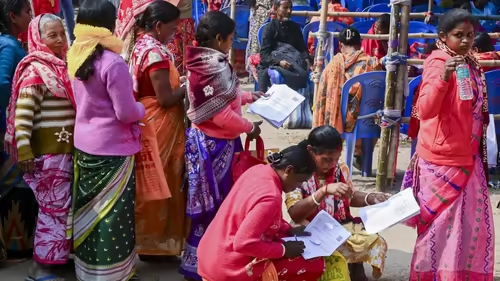
Tensions are escalating in West Bengal’s electoral landscape. In a rare and forceful intervention, the state’s Chief Electoral Officer (CEO) has issued a strict new protocol for ongoing Statutory Information Report (SIR) hearings following a disturbing incident in Murshidabad. The directive is clear: any act of violence, intimidation, or destruction of public property during these critical proceedings will result in an immediate First Information Report (FIR)—and the hearing itself will be adjourned until further notice.
Table of Contents
- What Happened in Murshidabad: The Spark
- West Bengal SIR Hearing: New Rules from the CEO
- Why SIR Hearings Matter for Democracy
- Controversy: MLA Not Named in FIR Despite Allegations
- Legal and Political Implications
- Conclusion
- Sources
What Happened in Murshidabad: The Spark
The CEO’s directive comes on the heels of a chaotic SIR hearing in Murshidabad district, where reports emerged of significant unrest. According to local sources and media accounts, supporters of a sitting MLA allegedly vandalized public property and engaged in hate speech during the proceedings . The situation grew so volatile that officials were forced to halt the hearing temporarily.
What raised eyebrows, however, was the police response—or lack thereof. Despite video evidence and eyewitness testimonies pointing to the MLA’s direct involvement in inciting the mob, his name was conspicuously absent from the FIR filed afterward. This selective omission has sparked widespread criticism from opposition parties and civil society groups, who accuse authorities of political bias and undermining the rule of law.
West Bengal SIR Hearing: New Rules from the CEO
In response to this breakdown of order, the CEO has rolled out a zero-tolerance policy effective immediately across all districts:
- Mandatory FIR Filing: District election officers must ensure an FIR is registered without delay against anyone involved in attacking staff, threatening witnesses, or damaging government property during SIR hearings.
- Automatic Adjournment: If violence or intimidation occurs, the hearing must be adjourned on the spot.
- Central Approval Required: No adjourned hearing can resume without explicit written permission from the CEO’s office in Kolkata.
- Accountability for Local Officials: District magistrates and police superintendents will be held personally accountable for maintaining order and ensuring impartial enforcement.
This move underscores the Election Commission of India’s (ECI) growing concern over the weaponization of local hearings for political grandstanding. The ECI has long maintained that SIR processes must remain free from coercion—a principle now being reinforced with teeth .
Why SIR Hearings Matter for Democracy
Statutory Information Report hearings are not mere bureaucratic formalities. They are a cornerstone of India’s electoral integrity framework. During these sessions, candidates must publicly declare their assets, liabilities, criminal cases (if any), and educational qualifications under oath. Opposition parties and citizens use this forum to raise objections, ensuring transparency before a candidate’s name appears on the ballot.
When these hearings are disrupted by violence or political muscle, it doesn’t just delay paperwork—it erodes public trust in the entire democratic process. As noted by the Association for Democratic Reforms (ADR), a non-partisan watchdog, “Free and fair SIR hearings are essential to prevent unqualified or criminally implicated candidates from contesting elections” .
Controversy: MLA Not Named in FIR Despite Allegations
The Murshidabad incident has become a flashpoint because of the perceived impunity granted to the ruling party MLA. Eyewitnesses claim he not only used inflammatory language but also directed his supporters to “tear down the venue” when questions about his asset declaration arose. Yet, the FIR named only unnamed “miscreants,” shielding the MLA from legal consequences.
Opposition leaders have called this a textbook example of “selective justice.” They argue that if an ordinary citizen had behaved similarly, they would have been arrested on the spot. This double standard, they warn, normalizes political violence and intimidates honest officials trying to do their duty.
Legal and Political Implications
The CEO’s new order carries significant weight. Under Section 188 of the Indian Penal Code, disobeying a public servant’s lawful order is a punishable offense. By making FIR filing mandatory, the CEO is not just issuing a guideline—he’s creating a legal paper trail that could lead to disqualification of candidates under the Representation of the People Act.
Politically, this puts the ruling Trinamool Congress (TMC) in a difficult position. While it has publicly pledged support for “peaceful elections,” its ground-level cadres have repeatedly been accused of using strong-arm tactics. The CEO’s intervention may force the party to rein in its more aggressive elements—or risk direct confrontation with the Election Commission.
For voters in West Bengal, this development is a crucial test of institutional independence. Can electoral authorities uphold the law without fear or favor? The coming weeks will provide the answer as SIR hearings resume under this new, stricter regime.
Conclusion
The West Bengal SIR hearing saga is more than a local administrative issue—it’s a litmus test for India’s democratic resilience. The CEO’s bold directive to file FIRs and adjourn violent proceedings is a necessary step to restore order and credibility. However, its success hinges on consistent enforcement, especially when powerful political figures are involved. As the state heads toward future elections, the world will be watching to see whether the rule of law prevails over the rule of the mob.