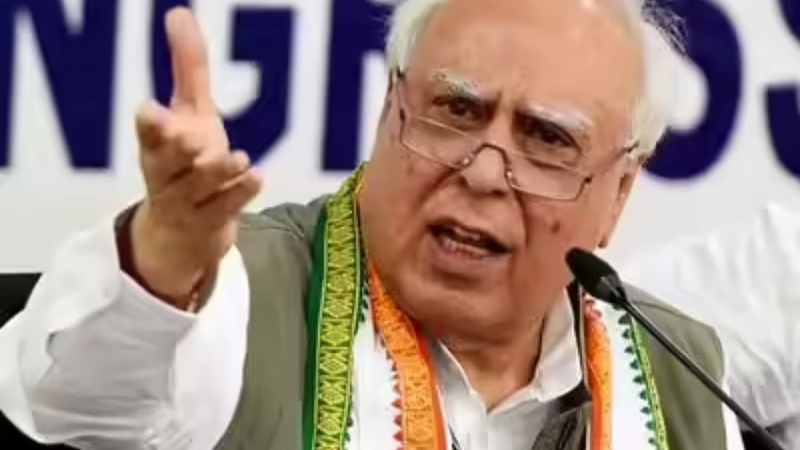
In a development that could reshape the political landscape of West Bengal—and potentially the nation—the Trinamool Congress (TMC) has alleged that a staggering **58 lakh voters** have been quietly erased from electoral rolls during recent revisions. The claim is so serious that the Supreme Court of India has stepped in, directing the Election Commission of India (ECI) to file a formal response .
At the heart of this controversy lies the **voter list removal** process—a routine administrative exercise that’s now under intense scrutiny for its scale, transparency, and potential impact on democratic participation. For millions of ordinary citizens, this isn’t just about numbers; it’s about whether their fundamental right to vote is being silently revoked.
Table of Contents
- What Did the TMC Allege?
- Why Voter List Removal Is a Sensitive Issue
- How the ECI Revises Electoral Rolls
- Supreme Court Intervention and Legal Implications
- Political Fallout in West Bengal
- What Citizens Should Do to Protect Their Voting Rights
- Conclusion: Democracy Hangs in the Balance
- Sources
What Did the TMC Allege?
The TMC, led by West Bengal Chief Minister Mamata Banerjee, filed a petition in the Supreme Court claiming that approximately 58 lakh (5.8 million) registered voters—many from marginalized and rural communities—were deleted from the state’s electoral rolls during the latest revision cycle .
According to the party, these deletions were not based on verified data like death or migration but appear arbitrary and disproportionate. They argue this could amount to **mass disenfranchisement**, especially ahead of crucial upcoming elections. The TMC has called for an immediate halt to the revised rolls and demanded a transparent audit of the entire process.
Why Voter List Removal Is a Sensitive Issue
Electoral roll maintenance is essential. Duplicate entries, deceased individuals, or people who’ve moved must be removed to keep lists accurate. But when removals happen at an unprecedented scale—especially in politically sensitive states like West Bengal—it raises alarms.
Critics warn that poorly managed purges can disproportionately affect vulnerable groups: daily wage laborers, migrant workers, women with changed surnames, and residents in informal settlements. These citizens often lack the documentation or digital access needed to re-register if wrongly deleted.
A legitimate voter list removal should follow due process: public notices, verification drives, and grievance redressal mechanisms. If shortcuts are taken, democracy itself is compromised.
How the ECI Revises Electoral Rolls
The Election Commission of India conducts annual revisions of electoral rolls under the Representation of the People Act, 1950. The process includes:
- Door-to-door enumeration by Booth Level Officers (BLOs)
- Public display of draft rolls for citizen feedback
- Grievance windows where voters can file claims or objections
- Final publication after verification
The ECI maintains that all deletions are data-driven and based on field verification. It also provides online tools like the Electoral Search Portal and the Voter Helpline App so citizens can check their status instantly .
However, the TMC contends that in West Bengal, many voters were removed without proper notice or opportunity to appeal—violating procedural safeguards.
Supreme Court Intervention and Legal Implications
Recognizing the gravity of the allegations, a bench of the Supreme Court, headed by Chief Justice of India, has issued notice to the ECI, asking it to explain the basis for the mass deletions . The Court emphasized that “the right to vote is integral to democracy” and cannot be undermined by administrative oversight.
This case could set a major precedent. If the Court finds systemic flaws in the revision process, it may mandate stricter protocols nationwide—including mandatory SMS/email alerts before deletion and independent audits of roll updates.
Political Fallout in West Bengal
West Bengal remains a fiercely contested political battleground. With assembly elections expected in the next two years, any shift in voter demographics could tilt the balance. The TMC sees the deletions as a targeted move to dilute its support base, while opposition parties dismiss the claims as fear-mongering.
Regardless of intent, the perception of unfairness erodes public trust. As [INTERNAL_LINK:voter-suppression-india] debates heat up, both state and central authorities must act with utmost transparency to preserve electoral credibility.
What Citizens Should Do to Protect Their Voting Rights
Don’t wait for someone else to safeguard your vote. Here’s what you can do:
- ✅ Check your voter status online at ECI’s portal
- ✅ If missing, file a Form 6 application to get re-registered
- ✅ Visit your nearest Electoral Registration Officer (ERO) office for help
- ✅ Report suspicious mass deletions in your area to civil society watchdogs
Your vote is your voice. Don’t let it vanish from the record.
Conclusion: Democracy Hangs in the Balance
The controversy over alleged **voter list removal** in West Bengal is more than a political spat—it’s a stress test for India’s electoral democracy. The Supreme Court’s involvement ensures this issue won’t be swept under the rug. Whether the deletions were routine housekeeping or something more sinister will soon be revealed. Until then, every citizen must stay vigilant. Because in a democracy, no vote should disappear without a trace.
Sources
- Times of India: TMC claims 58L voters removed from rolls, SC seeks EC response
- Election Commission of India: Official Website & Electoral Roll Guidelines
- Representation of the People Act, 1950: Ministry of Law and Justice