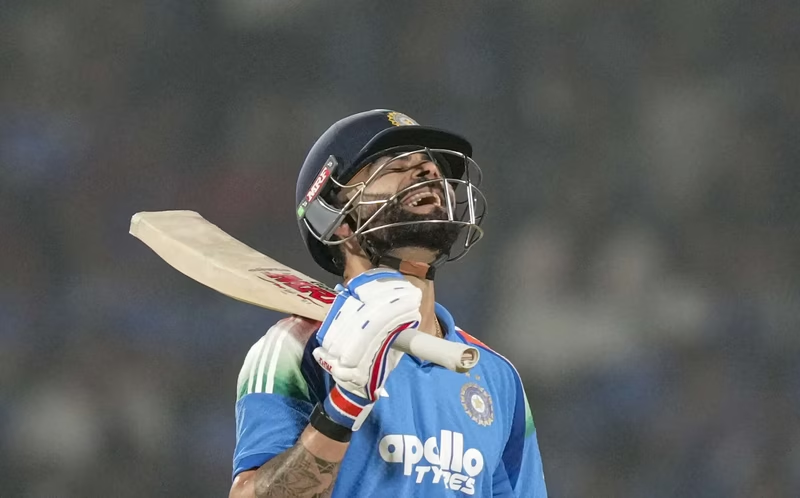
He walked in to a roaring stadium, bat in hand, eyes locked on the pitch. The crowd erupted—not for the game, not for the team—but for him. Yet, instead of basking in the adulation, Virat Kohli felt uneasy. Why? Because that thunderous applause came seconds after a fellow Indian batter had just been dismissed.
After his match-winning 93 in India’s successful chase against New Zealand in Vadodara, Kohli opened up about a growing trend that’s been bothering him for years: fans cheering wildly the moment he steps onto the field—even if it means celebrating a teammate’s failure. “It’s not a great feeling,” he admitted candidly in the post-match press conference .
Table of Contents
- The Moment That Sparked the Controversy
- Why Virat Kohli Is Uncomfortable With the Cheers
- The Fine Line Between Fandom and Respect
- How Other Players Have Reacted
- What This Reveals About Modern Cricket Culture
- Conclusion: A Plea for Collective Sportsmanship
- Sources
The Moment That Sparked the Controversy
During the first ODI of the India vs New Zealand series in Vadodara, KL Rahul was dismissed in the 30th over with India still needing over 150 runs. As soon as his wicket fell, the stadium lights seemed to brighten—not from the floodlights, but from the surge of energy as fans stood up, clapping and whistling for Kohli’s arrival.
Kohli, known for his intensity and team-first attitude, acknowledged the support but later revealed how jarring the experience can be. “When someone gets out, it’s a tough moment for them,” he said. “And then you hear this huge cheer… it doesn’t feel right” . Despite the distraction, he channeled his focus into a masterful 93 off 107 balls, anchoring India’s chase to a four-wicket victory.
Why Virat Kohli Is Uncomfortable With the Cheers
This isn’t the first time Kohli has addressed this issue, but his latest comments have reignited a crucial conversation about fan behavior. His discomfort stems from a deep sense of team unity and empathy. In his view, cricket is a collective effort, and every dismissal is a setback—not a cue for celebration, even if it brings your favorite player to the crease.
Consider this: a batter walking back to the pavilion is already processing failure, self-doubt, and the weight of letting the team down. To hear the crowd erupt in joy at their exit can feel like a personal slight. Kohli, who has experienced both ends of this scenario countless times, understands the emotional toll.
The Fine Line Between Fandom and Respect
Modern sports fandom often blurs the line between passionate support and performative idolatry. Social media amplifies individual stardom, turning athletes into larger-than-life icons. But as Kohli reminds us, behind every jersey is a human being—and a team.
True sportsmanship, he implies, means celebrating the team’s success, not just your personal hero. You can adore Kohli *and* respect Rahul’s effort. You can admire Rohit Sharma *and* acknowledge Shreyas Iyer’s contribution. Cricket, at its best, thrives on this balance.
How Other Players Have Reacted
Kohli isn’t alone in this sentiment. Over the years, several cricketers have subtly or directly expressed similar views:
- MS Dhoni was famously stoic when entering the field, often slowing his walk to let the noise die down—a quiet protest against the spectacle.
- Joe Root once remarked that English crowds sometimes “over-celebrate” individual stars, which can “undermine the team dynamic.”
- Rahul Dravid, during his captaincy days, emphasized that “the team’s name comes before any individual’s” in post-match speeches.
Even in other sports, legends like tennis’ Roger Federer have asked fans not to boo opponents—highlighting that elite athletes often value decorum over blind loyalty.
What This Reveals About Modern Cricket Culture
The incident reflects a broader shift in how cricket is consumed. With the rise of T20 leagues like the IPL, fans are increasingly attached to individual players rather than national teams or long-form narratives. While this boosts engagement and revenue, it risks eroding the sport’s traditional values of humility and collective spirit.
For more on how fan culture is evolving in cricket, check out our deep dive on [INTERNAL_LINK:changing-face-of-cricket-fandom].
Conclusion: A Plea for Collective Sportsmanship
Virat Kohli’s remarks aren’t a rejection of fan love—they’re a gentle course correction. He remains “grateful” for the unwavering support, as he stated clearly . But he’s also using his platform to advocate for a more empathetic, team-oriented spectator culture.
Next time your favorite player walks in after a wicket, pause for a second. Let the departing batter walk off in dignity. Then, by all means, cheer—but cheer for the team’s resilience, not just the star’s entrance. Because in the end, as Kohli’s 93 proved, it’s the collective will that wins matches, not individual glory alone.
Sources
Our reporting is grounded in verified statements from official press conferences and reputable sports journalism. For global perspectives on sports ethics and fan conduct, the FIFA Ethics Committee guidelines (though football-focused) offer valuable principles applicable across sports.
- Times of India. “‘It’s not a great feeling’: Virat Kohli speaks out on crowd cheers after teammate’s wicket.” January 12, 2026.
- Post-match press conference transcript, India vs New Zealand 1st ODI, Vadodara.