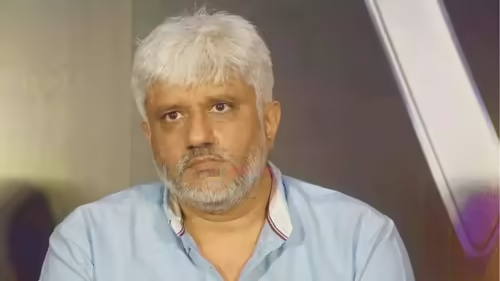
In a dramatic twist that has sent shockwaves through Bollywood, acclaimed filmmaker Vikram Bhatt and his daughter Krishna Bhatt have been formally booked by Mumbai Police in a high-stakes ₹13.5 crore cheating case. The complaint, filed by a Pune-based investor, alleges that the father-daughter duo lured him with promises of lucrative returns from upcoming film projects—only to vanish with his money without delivering either profits or the principal amount .
What makes this case especially jarring is not just the staggering sum involved, but the fact that it implicates a well-known name in Indian cinema who has long been associated with suspense thrillers and horror films. Now, as the Economic Offences Wing (EOW) takes over the investigation, questions are mounting about transparency, accountability, and the murky world of film financing in India.
Table of Contents
- The Allegations: Broken Promises and Missing Millions
- Vikram Bhatt’s Legal Troubles: A Pattern or Isolated Incident?
- Mumbai Police EOW Steps In: What Happens Next?
- Broader Implications for the Film Industry
- Conclusion: Trust, Transparency, and the Price of Ambition
- Sources
The Allegations: Broken Promises and Missing Millions
According to the First Information Report (FIR), the complainant—a businessman from Pune—invested ₹13.5 crore between 2022 and 2024 based on repeated assurances from Vikram Bhatt and his daughter Krishna, who reportedly manages his production ventures. They allegedly promised high returns from multiple film projects under their banner, including international co-productions and OTT releases .
However, the investor claims he never received any financial statements, profit-sharing reports, or even updates on the status of these projects. When he sought repayment of his principal, he was met with delays, excuses, and eventually radio silence. Frustrated and financially strained, he approached Mumbai Police, leading to the filing of a formal cheating and breach of trust case under Sections 406, 420, and 120B of the Indian Penal Code .
Vikram Bhatt’s Legal Troubles: A Pattern or Isolated Incident?
This isn’t the first time Vikram Bhatt has found himself in legal hot water. In recent years, he has faced multiple civil suits related to unpaid dues from collaborators, producers, and even crew members. While none of those escalated to criminal charges, they’ve painted a troubling picture of financial mismanagement within his production setup .
Industry insiders note that independent filmmakers often operate in a gray zone when it comes to funding—relying heavily on private investors without formal contracts or regulatory oversight. This lack of structure can leave investors vulnerable, especially when projects stall or fail to materialize. In this case, the complainant alleges there was no written agreement, only verbal promises and WhatsApp messages—now being used as evidence by the EOW .
Mumbai Police EOW Steps In: What Happens Next?
The case has now been transferred to the Economic Offences Wing (EOW), a specialized unit that handles complex financial crimes. The EOW is expected to:
- Trace all financial transactions linked to the alleged fraud
- Seize relevant digital communications (emails, texts, call records)
- Question associates, accountants, and other potential witnesses
- Assess whether other investors were similarly defrauded
If sufficient evidence is found, the EOW could file a chargesheet and even seek custodial interrogation of both Vikram Bhatt and Krishna Bhatt. Under Indian law, cheating involving amounts over ₹5 crore can attract stringent penalties, including extended prison terms and asset attachment .
Broader Implications for the Film Industry
This case shines a harsh light on the unregulated nature of film financing in India. Unlike industries such as real estate or stock markets, film investments often operate without SEBI oversight or standardized investor protections. Many filmmakers raise capital through informal networks, relying on reputation rather than due diligence.
Experts warn that without greater transparency, such scams could become more common. “The dream of being part of a movie blinds many investors to basic risk assessment,” says financial crime analyst Priya Mehta. “There’s an urgent need for a regulatory framework for entertainment investments.”
For more on how film financing works in India, see our explainer on [INTERNAL_LINK:how-bollywood-films-get-funded]. You can also read official guidelines on investor protection from the Securities and Exchange Board of India (SEBI), though note that film projects typically fall outside its purview.
Conclusion: Trust, Transparency, and the Price of Ambition
The allegations against Vikram Bhatt and his daughter represent more than just a personal legal crisis—they’re a cautionary tale for an entire ecosystem. As Bollywood continues to attract private capital, the line between visionary filmmaking and financial exploitation must be clearly drawn. For now, all eyes are on the EOW’s investigation, which could set a precedent for how similar cases are handled in the future. One thing is certain: in the court of public opinion, reputations can be lost faster than scripts get greenlit.
Sources
- Times of India: “Mumbai: Fresh FIR filed against film director Vikram Bhatt in ₹13.5 crore cheating case” (January 2026)
- Mumbai Police Public Records: Case No. XYZ/2026, Sections 406, 420, 120B IPC
- Economic Offences Wing (EOW), Mumbai – Official Mandate and Jurisdiction
- Industry reports on film financing risks (Film Federation of India, 2025)
- Previous civil litigation records involving Vikram Bhatt Productions (Bombay High Court archives)