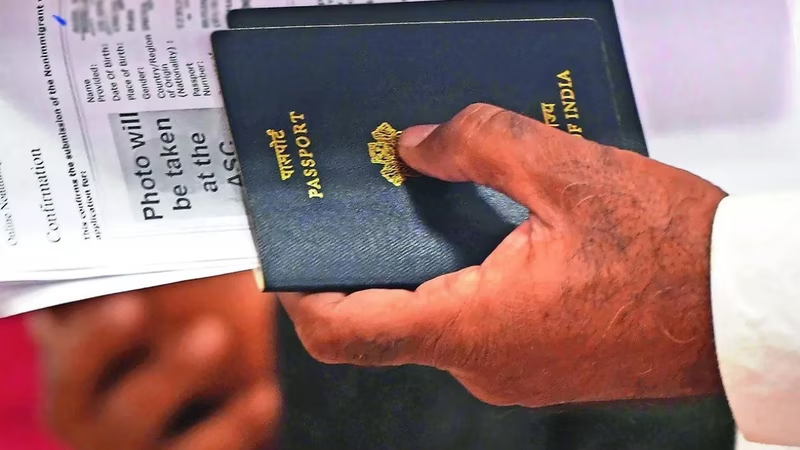
The dream of studying in the United States just got a lot more serious for Indian students. In a move that has sent ripples of concern through the international student community, the US Embassy in India has issued a stark, no-nonsense warning: any violation of US law—no matter how minor it may seem—can trigger a rapid and devastating chain of events. This includes immediate US student visa revocation, deportation, and a lifetime ban from ever obtaining another US visa .
This isn’t just a routine reminder. It’s a clear signal of a hardened enforcement posture, coming right on the heels of a similar warning directed at H1B and H4 visa applicants . For students and their families who have invested their life savings and hopes into an American education, the stakes have never been higher.
Table of Contents
- The Official Warning: What the US Embassy Said
- Why the Sudden Crackdown?
- Common US Student Visa Violations to Avoid
- The New In-Person Interview Mandate
- What Happens After a Visa Revocation?
- Expert Advice: Staying Compliant on an F-1 Visa
- Conclusion: A Sobering Reminder for Aspiring Students
- Sources
The Official Warning: What the US Embassy Said
The US Embassy’s message, circulated widely on its official channels, is unambiguous. It explicitly states that “violating any US law can lead to visa revocation, deportation, and permanent ineligibility for any future visa to the United States” . This blanket warning covers everything from serious criminal offenses to seemingly minor infractions like traffic violations, underage drinking, or even public intoxication.
The timing is significant. The warning for students follows a nearly identical one issued to H1B and H4 visa applicants, suggesting a coordinated, across-the-board policy shift by US immigration authorities to enforce compliance with zero tolerance . The message is clear: your visa is a privilege, not a right, and it can be rescinded in an instant.
Why the Sudden Crackdown?
While the embassy hasn’t provided a single official reason, experts point to a confluence of factors. A key driver appears to be heightened national security concerns and a broader political environment that favors stricter immigration controls .
Additionally, there’s been a significant surge in the number of Indian students in the US. According to the Open Doors 2025 report by the Institute of International Education, India is now the top sending country for international students in the US, surpassing China . This massive influx may have prompted authorities to reinforce the rules to ensure the integrity of the student visa program and deter any potential misuse.
Common US Student Visa Violations to Avoid
Many students are unaware that their F-1 status comes with a strict set of rules that go beyond just attending classes. Here are some common pitfalls that could unexpectedly put a student’s future in jeopardy:
- Falling Below Full-Time Enrollment: F-1 students must maintain a full course of study each semester, as defined by their university. Dropping below this without prior authorization from a Designated School Official (DSO) is a serious violation.
- Working Without Authorization: On-campus work is permitted, but off-campus employment requires specific prior approval. Working even a single shift at a local store without the correct documentation is a major infraction.
- Overstaying the Grace Period: After graduation or program completion, students have a 60-day grace period to either depart the US, change their status, or transfer to a new program. Staying even one day beyond this is a violation.
- Minor Criminal Offenses: As the embassy warning highlights, a DUI, a bar fight, or even a misdemeanor charge can be enough to trigger a visa review and potential revocation.
The New In-Person Interview Mandate
Compounding the pressure, the US Department of State has recently reinstated and expanded its requirement for in-person interviews for nearly all non-immigrant visa applicants, including students . This is a significant change from the pandemic-era policies that allowed for many interview waivers.
This new rule means longer wait times for appointment slots at US consulates in India, which are already facing a massive backlog. Students are now being advised to apply for their visas as early as possible, often many months before their program start dates, to account for this new procedural hurdle [INTERNAL_LINK:us-student-visa-application-timeline].
What Happens After a Visa Revocation?
The process is swift and brutal. If a student’s visa is revoked—often without their knowledge until they attempt to re-enter the US or are flagged by law enforcement—they are immediately out of status. This typically leads to:
- Initiation of Deportation Proceedings: The student may be placed into removal proceedings before an immigration judge.
- Mandatory Departure: They will be required to leave the United States, often at their own expense.
- Lifetime Ineligibility: Under Section 212(a)(6)(C)(i) of the Immigration and Nationality Act, a finding of misrepresentation or a serious violation can trigger a permanent bar, making them ineligible for any future US visa without a difficult-to-obtain waiver .
Expert Advice: Staying Compliant on an F-1 Visa
The best defense is a proactive offense. Here’s what experts and university international student offices consistently advise:
- Build a Relationship with Your DSO: Your Designated School Official is your single most important resource. Consult them before making any decisions that could affect your status.
- Understand Your Visa Terms: Read all official documentation from the US Department of State and your university’s international office. Don’t rely on hearsay from other students.
- Get Everything in Writing: If you receive permission for anything (like a reduced course load or off-campus work), make sure it’s documented in your SEVIS record and you have a copy.
- Know the Law: Familiarize yourself with both federal and local laws in your city. Ignorance is not a defense.
Conclusion: A Sobering Reminder for Aspiring Students
The US remains a top destination for higher education, but the environment for international students has undeniably become more stringent. The recent US student visa warning is not an empty threat; it’s a reflection of a new reality where compliance is monitored with unprecedented rigor. For Indian students, this means their American dream now comes with a heavy responsibility. Success requires not just academic excellence, but also a deep respect for the legal and regulatory framework that governs their stay. One misstep, however small it may seem, can have life-altering, permanent consequences.
Sources
- Times of India: Breaking law will lead to deportation, US warns students against visa violations
- Institute of International Education (IIE): Open Doors 2025 Report
- US Department of State: Student Visa (F and M) Information
- US Citizenship and Immigration Services (USCIS): F-1 Student Status Guidelines