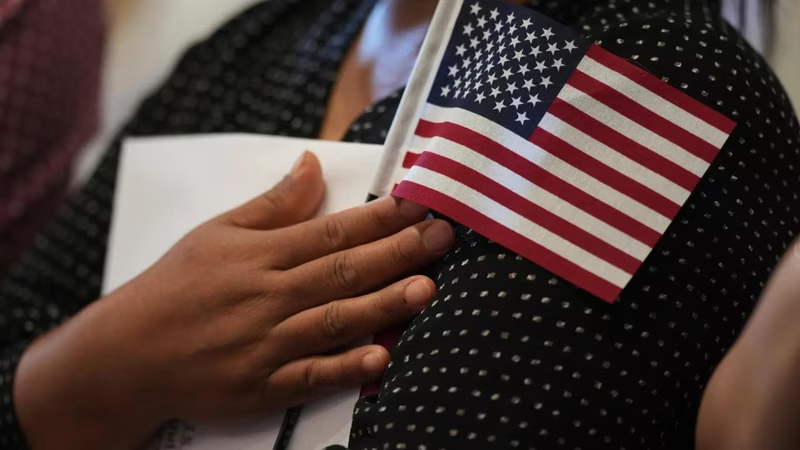
If you’re in the middle of applying for U.S. citizenship, there’s a new—or rather, very old—wrinkle in the process you need to prepare for. The U.S. Citizenship and Immigration Services (USCIS) has quietly brought back a long-dormant tactic: in-person neighborhood and workplace visits as part of the US citizenship background check .
That’s right. USCIS officers may now show up at your door, speak with your neighbors, or even contact your employer to verify the information in your N-400 application. While this practice was common decades ago, it had largely faded into obscurity—until now. For new applicants in 2026, this revival signals a heightened scrutiny era that demands full transparency and consistency in every detail of your application.
Table of Contents
- What Is the US Citizenship Background Check?
- Why Is USCIS Bringing Back Neighborhood Visits?
- What Will Officers Ask Your Neighbors or Employer?
- How to Prepare for a Possible Field Visit
- Historical Context: When Were These Visits Last Used?
- Legal Rights During a USCIS Field Interview
- Common Mistakes to Avoid in Your N-400 Application
- Conclusion: Staying Honest Is Your Best Defense
- Sources
What Is the US Citizenship Background Check?
Every applicant for U.S. naturalization undergoes a comprehensive background investigation. This includes FBI fingerprint checks, review of immigration history, criminal records, tax compliance, and military registration (for eligible males) .
But the newly reactivated layer goes beyond digital databases. USCIS Field Operations officers are now authorized to conduct field verification visits to confirm key details like your residence, marital status, employment, and community ties—especially if your application raises inconsistencies or red flags.
Why Is USCIS Bringing Back Neighborhood Visits?
According to internal USCIS communications cited by the Times of India, the move is part of a broader effort to “ensure the integrity of the naturalization process” amid rising application volumes and concerns about fraudulent claims .
Common triggers for a field visit include:
- Discrepancies between your stated address and utility bills or mail.
- Recent marriage to a U.S. citizen, especially if filed shortly before the N-400.
- Self-employment or remote work that’s difficult to verify through standard records.
- Gaps in residence history or frequent moves.
While not every applicant will be visited, the mere possibility means you must ensure your application tells a consistent, verifiable story.
What Will Officers Ask Your Neighbors or Employer?
USCIS officers typically identify themselves and ask polite, non-intrusive questions:
- “Do you know [Applicant’s Name]?”
- “How long have they lived here?”
- “Do they live with their spouse?” (in marriage-based cases)
- “What do they do for work?”
They are **not** supposed to disclose that you’ve applied for citizenship unless you’ve given consent. Their goal is to corroborate facts—not to interrogate.
How to Prepare for a Possible Field Visit
Don’t panic—but do prepare. Here’s how:
- Ensure address consistency: All mail, bills, and ID should reflect your current residence.
- Inform trusted neighbors: Let a reliable neighbor know you’ve applied for citizenship so they can confirm your residency if asked.
- Keep employment records handy: Pay stubs, offer letters, or client contracts should verify your work claims.
- Never lie or exaggerate: Even a small inconsistency can trigger a visit or denial.
Historical Context: When Were These Visits Last Used?
Field investigations were standard procedure for naturalization until the early 2000s. As digital record-keeping improved and caseloads grew, USCIS scaled back in-person checks to focus on database verification .
Their return now suggests a shift toward “trust but verify” in an era of increased migration and complex application patterns. It’s not a sign of suspicion against all applicants—but a tool for high-risk or ambiguous cases.
Legal Rights During a USCIS Field Interview
If an officer visits:
- You have the right to **ask for official identification**.
- You are **not required** to answer questions without your attorney present (though refusal may delay your case).
- You can **request that questions be directed to you**, not your neighbors or employer, though USCIS is not obligated to comply.
For full guidance, consult the official USCIS website, the highest authority on U.S. immigration procedures .
Common Mistakes to Avoid in Your N-400 Application
Many field visits stem from avoidable errors:
- Listing an old address as current.
- Misreporting income or tax filing status.
- Failing to disclose all trips outside the U.S.
- Inconsistent answers about marital cohabitation.
Double-check every entry against your documents before submitting.
Conclusion: Staying Honest Is Your Best Defense
The return of neighborhood checks may feel intrusive, but it’s a reminder that U.S. citizenship is a privilege earned through transparency and truthfulness. If your application is accurate and your life is consistent with what you’ve reported, a field visit should be a formality—not a threat. Prepare, be honest, and trust the process. Your future as an American citizen is worth the extra diligence.
For a step-by-step guide to your N-400, see our resource on [INTERNAL_LINK:uscis-n400-application-checklist]. To understand your rights during immigration interviews, read [INTERNAL_LINK:know-your-rights-uscis-visits].
Sources
[1] Times of India. “Will visit your neighbors, office: US reminds new citizenship applicants that this ‘old’ background check is back.” January 2026.
[2] USCIS. “Naturalization Eligibility and Requirements.”
[3] Migration Policy Institute. “Evolution of U.S. Naturalization Procedures, 1990–2020.”
[4] U.S. Citizenship and Immigration Services. https://www.uscis.gov/