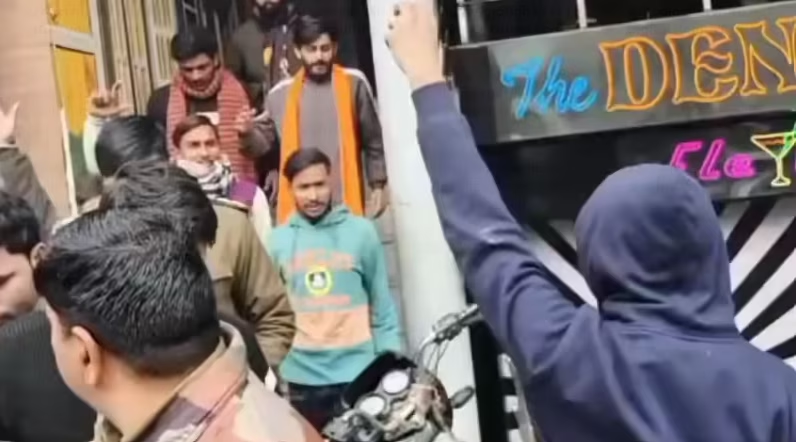
What was meant to be a joyful celebration turned into a nightmare for a 21-year-old nursing student in Bareilly, Uttar Pradesh. While hosting a small birthday gathering with friends, a group of self-styled **‘moral police’** stormed the venue, hurling abuses, filming the attendees, and accusing them of engaging in ‘inappropriate activity.’ Now, the student says she’s too scared to leave her house alone—haunted by the trauma of an unprovoked **UP vigilante attack** that she believes was fueled by religious suspicion and social policing.
“Do I now have to choose my friends based on their faith?” she asked in a recent interview, her voice trembling. “We were just celebrating a birthday—singing, eating cake. But to them, that was a crime.” Her story has ignited a fierce debate about the rise of extrajudicial vigilantism in India’s most populous state and the chilling effect it’s having on young people’s freedom and sense of security.
Table of Contents
- The Bareilly Birthday Party Incident: What Happened?
- UP Vigilante Attack: Allegations and Motives
- Victim Speaks Out: Fear and Trauma After the Attack
- Police Response and Legal Actions
- Pattern of Vigilantism in Uttar Pradesh
- Impact on Students and Social Freedom
- Conclusion: When Celebration Becomes a Crime
- Sources
The Bareilly Birthday Party Incident: What Happened?
According to the victim, the gathering on December 18, 2025, included about 10 close friends—mostly fellow nursing students—from diverse religious backgrounds. The party was held at a rented hall near Bareilly College and lasted only a few hours. There was no alcohol, no loud music, and no public disturbance.
Midway through, a group of 8–10 men barged in, claiming to be from a local “cultural protection committee.” They began shouting accusations of “love jihad” and “anti-national activity,” despite no evidence of wrongdoing. They recorded videos of the attendees, shared them on social media with inflammatory captions, and demanded the gathering be shut down immediately.
Police arrived only after the mob had left, following a call from the venue owner. No arrests were made that night.
UP Vigilante Attack: Allegations and Motives
The attackers’ primary accusation centered on **interfaith friendship**—specifically, that the group included both Hindu and Muslim youth socializing freely. In recent years, Uttar Pradesh has seen a surge in vigilante groups invoking moral, religious, or nationalist justifications to harass couples, artists, and students.
While no formal hate speech charges have been filed yet, digital forensics teams are reviewing the videos circulated online, which contain derogatory remarks about minority students. Experts say such incidents are less about “morality” and more about **enforcing social segregation** under the guise of cultural preservation.
Victim Speaks Out: Fear and Trauma After the Attack
In a rare and courageous interview, the student described her emotional turmoil:
“I used to walk to college without a second thought. Now, I look over my shoulder. My parents are terrified. Some of my friends have stopped talking to me online because they’re scared too. This wasn’t just an invasion of privacy—it was a message: ‘Know your place.’”
She added that the police initially dismissed her complaint as “a small misunderstanding,” only registering a formal FIR after media coverage amplified her voice.
Police Response and Legal Actions
Following public outcry, Bareilly police have now opened an investigation under sections of the Indian Penal Code related to:
- Section 504 (Intentional insult with intent to provoke breach of peace)
- Section 506 (Criminal intimidation)
- Section 354D (Stalking and privacy violation)
However, as of late December 2025, no suspects have been identified or arrested. Activists argue that **delayed responses** and lack of protection for victims embolden vigilante groups to act with impunity.
Pattern of Vigilantism in Uttar Pradesh
This is not an isolated case. Data from the National Human Rights Commission (NHRC) shows a 40% rise in reported mob vigilantism incidents in UP between 2022 and 2025—many targeting young people in public spaces, cafes, and educational institutions .
Common triggers include:
- Interfaith friendships or relationships
- Western clothing or hairstyles
- Celebrating Valentine’s Day or New Year’s Eve
- Attending mixed-gender parties
While the state government denies systemic tolerance of such groups, critics point to the lack of convictions and the frequent use of vague “public order” justifications to avoid serious charges.
Impact on Students and Social Freedom
The psychological toll on students is profound. Campus counselors in Bareilly report a spike in anxiety and social withdrawal among young women, especially from minority communities. “They’re internalizing fear,” said Dr. Priya Mehta, a clinical psychologist. “They believe any social interaction could be weaponized against them.”
University authorities have issued advisories urging students to “avoid controversial gatherings”—a move many see as victim-blaming rather than protection.
Conclusion: When Celebration Becomes a Crime
The **UP vigilante attack** in Bareilly is more than a local disturbance—it’s a symptom of a deeper erosion of public freedom. When a birthday cake becomes a provocation, and friendship across faith lines is treated as subversion, democracy itself is under threat.
Protecting young people isn’t just about policing mobs—it’s about defending the right to joy, connection, and ordinary life. As the nursing student poignantly asked: “Should I really have to choose my friends based on their religion just to feel safe?” In a healthy society, the answer must be a resounding no.
[INTERNAL_LINK:vigilantism-in-india-report] [INTERNAL_LINK:student-safety-up-campaigns]
Sources
Times of India: ‘Afraid to leave house alone’: UP students speaks out; slams ‘vigilantes’ who stormed party
National Human Rights Commission (NHRC): Annual Report on Civil Liberties Violations