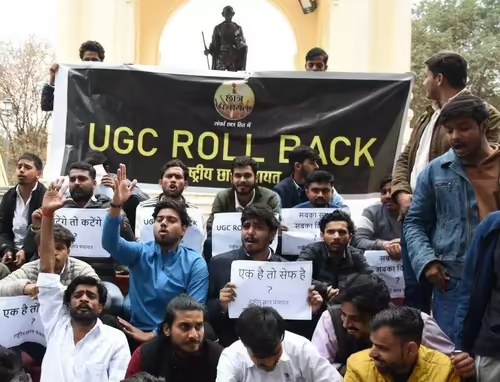
The air on university campuses across Uttar Pradesh is thick with tension and the sound of protest slogans. For the second day running, thousands of students have taken to the streets, their voices unified in a single, urgent demand: an immediate rollback of the newly introduced UGC Regulation 2026. This controversial policy, which mandates the formation of equity committees in higher education institutions, has ignited a firestorm of opposition, with critics calling it divisive, poorly conceived, and ripe for misuse [[1]].
Table of Contents
- What is UGC Regulation 2026?
- Why Students Are Furious: The Core Concerns
- The Protests Spread Across UP
- Government and UGC Response So Far
- Broader Implications for Higher Education
- Conclusion: A Call for Dialogue Over Decree
- Sources
What is UGC Regulation 2026?
At its core, the UGC Regulation 2026 is a directive from the University Grants Commission (UGC) that requires all higher education institutions in India to establish an “Equity Committee.” The stated objective of this committee is to promote fairness and address grievances related to social equity on campus. However, the specific composition of the committee is where the controversy begins.
The regulation mandates that these committees must include members from Other Backward Classes (OBC), Scheduled Castes (SC), and Scheduled Tribes (ST). While the goal of ensuring representation is noble on the surface, the implementation has raised serious red flags among students from the general category and legal experts alike [[1]].
Why Students Are Furious: The Core Concerns
The opposition to the regulation isn’t just about administrative changes; it’s rooted in deep-seated fears about its potential consequences. Here are the primary reasons driving the massive student unrest:
- Fear of Campus Division: Students argue that the regulation will institutionalize division by creating a system where students are categorized and potentially pitted against each other based on their caste. They believe it will foster an “us vs. them” mentality, shattering the unity of the campus community [INTERNAL_LINK:impact-of-reservation-on-campus-culture].
- Potential for Misuse: A major concern is that the equity committees could be weaponized to file frivolous or malicious complaints against students and faculty from the general category. Without robust safeguards, the process could become a tool for harassment rather than justice.
- Unfair Targeting: Many general category students feel they are being unfairly singled out as potential perpetrators of inequity, creating a presumption of guilt. They argue that existing grievance cells and anti-ragging committees are sufficient to handle any issues.
- Lack of Consultation: Protesters have pointed out that such a far-reaching policy was implemented without any meaningful consultation with student bodies, university administrations, or legal experts, making it appear top-down and authoritarian.
The Protests Spread Across UP
The movement is not confined to a single city. From the historic grounds of Lucknow University to the bustling campuses of Varanasi and Allahabad, students have organized rallies, sit-ins, and marches. The protests have drawn support not just from student unions but also from local lawyers’ associations, who share concerns about the legal ambiguities and potential for injustice embedded in the new rules [[1]].
The demonstrations have been largely peaceful but passionate, with students holding placards that read “Rollback UGC 2026” and “Don’t Divide Our Campuses.” The scale and coordination of the protests suggest a deep and widespread anxiety about the future of their academic environment.
Government and UGC Response So Far
As of now, the official response from both the UGC and the state government has been muted. There has been no formal statement announcing a review or suspension of the regulation. This silence has only served to fuel the protesters’ resolve, who see it as a sign of indifference to their legitimate concerns.
Typically, the UGC defends such regulations as being in line with constitutional values of social justice and affirmative action. However, the current backlash highlights a critical gap between policy intent and its on-the-ground perception. The challenge for the authorities is to bridge this gap through transparent dialogue, not bureaucratic decree.
Broader Implications for Higher Education
This controversy over the UGC Regulation 2026 is a symptom of a larger, ongoing debate in Indian higher education: how to balance the crucial goals of social equity and meritocracy. Policies aimed at uplifting historically marginalized communities are essential, but their design and implementation are paramount.
Heavy-handed, one-size-fits-all mandates can often backfire, creating resentment and undermining the very harmony they seek to build. A more effective approach might involve empowering existing, well-established institutional mechanisms with clearer guidelines and stronger oversight, rather than creating a new, potentially contentious body. The National Education Policy (NEP) 2020, for instance, emphasizes holistic development and a multidisciplinary approach, which seems at odds with a policy that could deepen social silos [[3]].
Conclusion: A Call for Dialogue Over Decree
The student uprising against the UGC Regulation 2026 is a powerful reminder that policies affecting young minds must be crafted with empathy, foresight, and inclusivity. The students of Uttar Pradesh are not opposing social justice; they are demanding a fair and just process that doesn’t sacrifice campus unity on the altar of a poorly designed rule. It’s time for the UGC and the government to listen, engage in a genuine dialogue, and find a solution that upholds equity without sowing division.
Sources
- Times of India: Students stage massive protests against UGC regulation 2026 across the state [[1]]
- University Grants Commission (India): Official Website [[2]]
- Ministry of Education, Government of India: National Education Policy (NEP) 2020 [[3]]