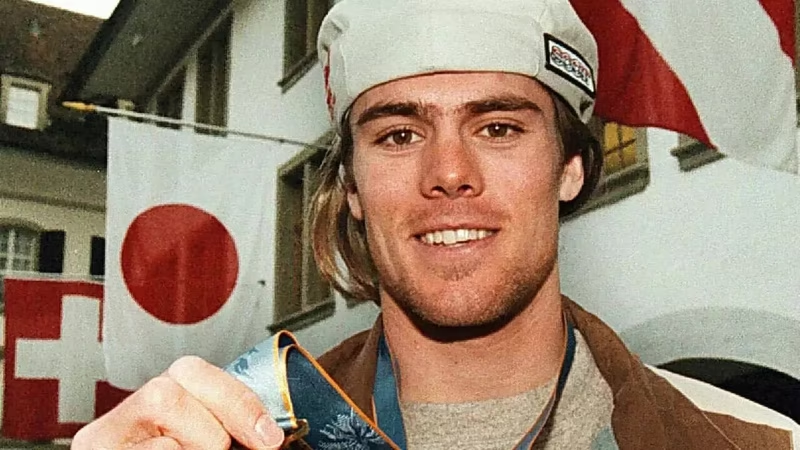
The global snowboarding community is reeling from heartbreaking news: Ueli Kestenholz dies at the age of 50 after being swept away by an avalanche while snowboarding in Switzerland’s Valais region. The pioneering Swiss athlete—best known for winning bronze in snowboarding’s Olympic debut at Nagano 1998—was airlifted to a hospital following the incident but succumbed to his injuries .
Kestenholz wasn’t just a medalist; he was a trailblazer who helped legitimize snowboarding as a serious competitive sport during its formative years. His death marks the end of an era for a generation that watched snowboarding evolve from counterculture pastime to Olympic spectacle.
Table of Contents
- Who Was Ueli Kestenholz?
- The Tragic Avalanche Incident
- Historic Olympic Bronze in 1998
- Legacy Beyond the Olympics: X Games and Innovation
- Global Reactions and Tributes
- Avalanche Risks in Alpine Sports
- Remembering a Pioneer
- Sources
Who Was Ueli Kestenholz?
Born on February 3, 1975, in Basel, Switzerland, Ueli Kestenholz grew up immersed in mountain culture. He began snowboarding in the early 1990s—a time when the sport was still viewed with skepticism by traditional ski resorts and mainstream sports bodies.
But Kestenholz possessed rare technical precision, creativity, and fearlessness. By the mid-90s, he was dominating international competitions, earning respect not just for his tricks but for his clean style and sportsmanship. He became a national hero in Switzerland and a respected figure worldwide.
The Tragic Avalanche Incident
According to Swiss authorities, the accident occurred on January 11, 2026, in the rugged backcountry near Zermatt—a region known for both its breathtaking terrain and high avalanche risk .
Kestenholz was snowboarding with a friend when a slab of snow broke loose above them. While his companion managed to escape with minor injuries, Kestenholz was fully buried. Rescue teams, including Rega (Swiss Air-Rescue), responded within minutes and located him using avalanche transceivers. He was airlifted unconscious to a hospital in Sion but could not be revived.
The Swiss Institute for Snow and Avalanche Research (SLF) later confirmed the avalanche was rated as “considerable” (Level 3 on a 5-point scale), triggered by recent heavy snowfall and wind-loading on north-facing slopes .
Historic Olympic Bronze in 1998
Kestenholz’s name was etched into history at the 1998 Nagano Winter Olympics—the first Games to include snowboarding. Competing in the men’s giant slalom event (a discipline since discontinued), he secured the bronze medal with a combined time of 2:14.67.
That podium—shared with gold medalist Ross Rebagliati of Canada and silver medalist Thomas Prugger of Italy—was monumental. It validated snowboarding’s place on the world’s biggest sporting stage and inspired countless young riders across Europe and North America.
Notably, Kestenholz remained humble about his achievement. In a 2018 interview marking the 20th anniversary of Nagano, he said: “We weren’t trying to make history. We just loved riding. But if our success helped open doors for others, that’s the real victory.”
Legacy Beyond the Olympics: X Games and Innovation
While the Olympics brought him fame, Kestenholz thrived in the freeride and alpine snowboarding circuits. He was a regular competitor at the Winter X Games, where he earned multiple top-five finishes in snowboard cross and parallel giant slalom.
Beyond competition, he contributed to snowboarding’s evolution through gear development and coaching. He collaborated with Swiss brands on board design and later mentored young Swiss riders through national development programs. His influence extended far beyond his medal count.
Global Reactions and Tributes
News of Kestenholz’s death prompted an outpouring of grief:
- International Olympic Committee: “A true pioneer who helped shape Olympic snowboarding. Our hearts are with his family.”
- FIS (International Ski and Snowboard Federation): “Ueli embodied the spirit of snowboarding—bold, respectful, and passionate.”
- Ross Rebagliati (1998 Olympic Gold Medalist): “We shared a moment that changed our lives forever. Rest in power, brother.”
- Swiss Olympic Association: Announced plans for a memorial at the 2026 Winter Youth Olympics in Gangwon.
Avalanche Risks in Alpine Sports
Kestenholz’s death underscores the ever-present dangers of backcountry snowboarding—even for experts. According to the American Avalanche Association, over 150 people die annually in avalanches worldwide, with experienced recreationalists accounting for a significant portion of fatalities .
Key safety practices include:
- Checking daily avalanche forecasts (e.g., from SLF or Avalanche.org)
- Carrying essential gear: beacon, probe, shovel
- Never traveling alone in avalanche terrain
- Taking certified avalanche safety courses (like AIARE Level 1)
Tragically, even seasoned professionals like Kestenholz can fall victim to rapidly changing mountain conditions.
Remembering a Pioneer
Ueli Kestenholz’s legacy isn’t just a bronze medal—it’s the path he carved for future generations. He proved that snowboarding could be both rebellious and respectable, athletic and artistic. As the sport continues to evolve with new disciplines like slopestyle and big air, his foundational role remains undeniable.
In an era when Olympians are often defined by social media followings and endorsement deals, Kestenholz stood out for his quiet dedication to the craft. He rode for the love of it—and that, perhaps, is the purest form of greatness.
Sources
- [1] Times of India: Tragic! Olympic snowboard medalist Ueli Kestenholz dies in avalanche
- [2] Swiss Federal Institute for Snow and Avalanche Research (SLF): Avalanche Bulletin – January 11, 2026
- [3] American Avalanche Association: Avalanche Safety Resources
- [4] Olympics.com: Ueli Kestenholz – Athlete Profile
- [5] FIS Snowboard: Official FIS Snowboard Portal