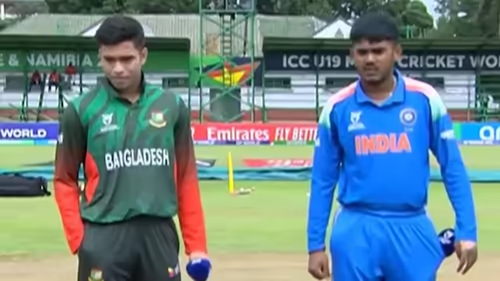
The spirit of cricket took a backseat this week as the U-19 World Cup became the latest stage for geopolitical friction. During the toss ahead of the high-stakes India vs Bangladesh match, both captains pointedly avoided the traditional pre-game handshake—a silent but deafening statement that sent shockwaves through the cricketing world .
This wasn’t just teenage awkwardness. It was a deliberate snub, steeped in the growing strain between New Delhi and Dhaka over recent months. For fans who hoped youth cricket would remain insulated from adult politics, this moment was a sobering reminder: even the game’s youngest ambassadors aren’t immune.
Table of Contents
- The Handshake That Wasn’t
- U-19 World Cup: Why It Matters More Than You Think
- A Pattern of Political Tensions in Cricket
- What Lies Behind the India-Bangladesh Strain?
- Fan Reactions and Social Media Fury
- Can Cricket Still Be a Bridge?
- Conclusion: Sport in the Shadow of Geopolitics
- Sources
The Handshake That Wasn’t
Footage from the toss went viral almost instantly. As ICC match referee stood by, Indian captain Uday Saharan and his Bangladeshi counterpart remained stone-faced, hands firmly at their sides. No eye contact. No nod. Just a cold, procedural confirmation of batting or fielding .
Compare this to past U-19 encounters—like the 2022 edition—where players exchanged smiles, pats on the back, and even swapped caps post-match. The contrast couldn’t be starker. This time, the atmosphere was tense, formal, and unmistakably political.
U-19 World Cup: Why It Matters More Than You Think
Often dismissed as “just kids’ cricket,” the U-19 World Cup is actually a critical pipeline for future stars. Virat Kohli, Kane Williamson, and Babar Azam all cut their teeth here. But beyond talent scouting, it’s also seen as a space for sportsmanship and cross-border camaraderie.
When that breaks down—as it did in this India Bangladesh U-19 match—it signals deeper fractures. The tournament isn’t just about runs and wickets; it’s a mirror reflecting real-world relationships. And right now, that reflection is grim.
A Pattern of Political Tensions in Cricket
This isn’t the first time handshakes have become diplomatic flashpoints:
- India vs Pakistan (senior teams): Since the 2019 Pulwama attack, Indian players have consistently skipped handshakes with Pakistani counterparts in ICC events.
- Australia vs Afghanistan (T20 World Cup 2024): Players avoided pleasantries amid Taliban-related human rights concerns.
- Russia vs Ukraine (various sports): Post-2022 invasion, most international athletes refuse any symbolic gestures toward Russian teams.
The handshake controversy cricket trend shows how global politics increasingly infiltrates even the most apolitical-seeming arenas. Youth tournaments are no longer safe havens.
What Lies Behind the India-Bangladesh Strain?
While the ICC hasn’t commented, sources point to escalating bilateral issues:
- Security concerns: India has raised alarms over alleged anti-India activities by certain groups operating from Bangladesh.
- Player release disputes: Several Bangladeshi cricketers playing in Indian domestic leagues faced delayed clearances, sparking frustration .
- Diplomatic chill: High-level talks have stalled over trade imbalances and water-sharing agreements on transboundary rivers.
Though neither cricket board has officially cited these reasons, the timing suggests they’re not coincidental. When national narratives turn frosty, even teenagers on a cricket field feel the chill.
Fan Reactions and Social Media Fury
Twitter erupted within minutes of the toss footage circulating. Indian fans praised the captain for “standing firm,” while Bangladeshi supporters called it “disrespectful to the game.” Hashtags like #NoHandshake and #CricketNotPolitics trended across South Asia.
Former cricketers weighed in too. Sourav Ganguly hinted at “larger forces at play,” while Mashrafe Mortaza lamented, “We’re losing the soul of sport.” The divide isn’t just between nations—it’s within the cricket community itself.
Can Cricket Still Be a Bridge?
Historically, cricket has eased tensions—think of the 2004 India-Pakistan series that thawed relations post-Kargil. But in today’s hyper-nationalist climate, that role is fading.
Still, hope remains. Grassroots exchanges, women’s cricket collaborations, and neutral-venue tournaments could rebuild trust. As one coach put it: “These boys didn’t choose this tension. They inherited it. Our job is to give them a reason to shake hands again.”
Conclusion: Sport in the Shadow of Geopolitics
The skipped handshake at the U-19 World Cup is more than a breach of etiquette—it’s a symptom of a fraying regional relationship. While the ICC promotes “cricket for good,” real-world politics keeps pulling the game into its orbit.
For now, the message is clear: when nations drift apart, even their youngest athletes pay the price. Whether future tosses will see restored pleasantries depends less on cricket boards and more on diplomats in New Delhi and Dhaka.
Sources
- Times of India: Handshake drama returns! India, Bangladesh captains refuse pleasantries at U-19 World Cup
- ESPNcricinfo: U-19 World Cup 2026 – Toss Controversy Sparks Debate
- The Daily Star: Bangladesh-India Relations Cast Shadow Over U-19 Clash
- [INTERNAL_LINK:icc-u19-world-cup-history]
- [INTERNAL_LINK:india-bangladesh-cricket-rivalry]