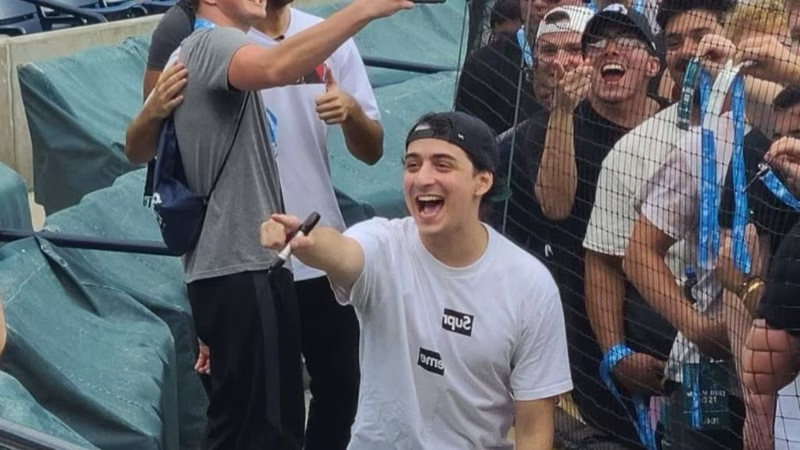
The digital battlefield of livestreaming just got murkier. Popular Twitch streamer and content creator Matthew “Cloakzy” Welch has raised urgent concerns about a surge in Twitch viewbotting—a practice where channels artificially inflate their viewer count using bots or automated scripts.
In a recent stream and social media posts, Cloakzy pointed to multiple new Twitch channels—many with little to no established audience—suddenly reporting viewer counts in the thousands, even tens of thousands, while broadcasting mundane or low-effort content. “These numbers don’t add up,” he said, noting the disconnect between viewership and actual chat activity, which remained eerily silent .
This isn’t just about inflated stats. It’s about fairness, visibility, and the survival of honest creators in an increasingly competitive landscape. And despite Twitch’s repeated promises to crack down on fraud, Cloakzy’s observations suggest the problem is not only alive but thriving.
Table of Contents
- What Is Twitch Viewbotting?
- Cloakzy’s Alarm Bells: Suspicious Channels on the Rise
- Twitch viewbotting: Why It Hurts Legitimate Streamers
- Twitch’s Anti-Fraud Efforts: Are They Working?
- How Streamers and Viewers Can Fight Back
- The Bigger Picture: The Ethics of Digital Fame
- Conclusion: A Call for Transparency and Integrity
- Sources
What Is Twitch Viewbotting?
Twitch viewbotting refers to the use of automated software—bots—that simulate real human viewers on a livestream. These bots connect to a channel, inflate the viewer count, and sometimes even mimic chat behavior to appear legitimate.
Why do streamers resort to this? Because on Twitch, visibility is everything. Higher viewer counts can:
- Trigger algorithmic recommendations (“More Popular” or “Just Chatting” tabs)
- Attract real viewers through the “bandwagon effect”
- Make a channel appear more influential to potential sponsors or brand deals
Services promising thousands of fake viewers are readily available online for as little as $10—a small price to pay for the illusion of success.
Cloakzy’s Alarm Bells: Suspicious Channels on the Rise
Cloakzy, known for his transparency and deep understanding of the streaming ecosystem, didn’t just vent—he documented. He shared screenshots and live comparisons showing obscure channels with 5,000–15,000 viewers while established mid-tier creators struggled to hit 500.
“If they have 10,000 viewers, where’s the chat? Where are the follows? Where’s the engagement?” he asked, highlighting a key red flag: real viewers interact. Bots don’t .
His concerns resonate with many in the community who feel the platform’s discovery system is being gamed, pushing authentic creators further into obscurity.
Twitch viewbotting: Why It Hurts Legitimate Streamers
The damage goes far beyond skewed metrics. Here’s how viewbotting actively harms honest creators:
- Algorithmic Displacement: Fake-high-viewership channels get prioritized in recommendations, stealing exposure from real talent.
- Brand Deal Inequity: Advertisers may choose inflated channels over genuinely engaged ones, misallocating marketing budgets.
- Moral Demoralization: Watching unknowns “succeed” overnight through cheating can crush the motivation of hardworking streamers.
- Erosion of Trust: Viewers begin to question every high-viewership stream, tainting the entire platform’s credibility.
For many small streamers, this isn’t just unfair—it’s career-ending.
Twitch’s Anti-Fraud Efforts: Are They Working?
Twitch has publicly stated it uses “automated systems and manual reviews” to detect and remove fake viewers. In 2021, it even removed view counts from public display for a time to reduce “view-chasing” behavior .
Yet, as Cloakzy’s findings suggest, the cat-and-mouse game continues. Bot developers adapt quickly, using residential IP proxies and slower bot patterns to mimic human behavior. Meanwhile, Twitch’s enforcement appears reactive—not proactive.
According to a 2023 report by Digital Trends, third-party analytics firms estimate that up to 25% of mid-tier streamer viewership may be artificially inflated . That’s a staggering figure for a platform claiming to champion “community and authenticity.”
For more on digital platform integrity, see our feature on [INTERNAL_LINK:online-creator-economy-challenges].
How Streamers and Viewers Can Fight Back
While the burden shouldn’t fall solely on users, the community can help:
- Report Suspicious Channels: Use Twitch’s reporting tool under “Spam or Inappropriate Behavior.”
- Promote Authenticity: Share and support streamers who focus on genuine engagement over flashy numbers.
- Educate New Viewers: Help newcomers understand that low-viewer streams often offer the most authentic experiences.
- Use Third-Party Tools: Sites like SullyGnome or LiveTracker can help spot inconsistencies in follower/viewer ratios.
The Bigger Picture: The Ethics of Digital Fame
At its core, the Twitch viewbotting crisis reflects a deeper cultural problem: our obsession with metrics as proxies for worth. In an attention economy, numbers become currency—and when currency is faked, the whole system devalues.
As platforms like Twitch, YouTube, and Kick battle for creator loyalty, transparency and fair play must be non-negotiable. Otherwise, the most talented voices will remain unheard, drowned out by the noise of artificial popularity.
Conclusion: A Call for Transparency and Integrity
Cloakzy’s intervention is more than gossip—it’s a wake-up call. The prevalence of Twitch viewbotting threatens the very foundation of what makes livestreaming special: real-time human connection.
Twitch must respond with more than platitudes. It needs real-time bot detection, transparent enforcement reports, and stronger support for creators building audiences the right way. Until then, the integrity of the platform—and the livelihoods of thousands of streamers—remains at risk.
Sources
- Times of India: Twitch streamer Cloakzy raises concerns over viewbotting
- Twitch Blog: A New Approach to Viewer Counts (2021)
- Digital Trends: The Rise of Engagement Fraud in Livestreaming (2023 Report)