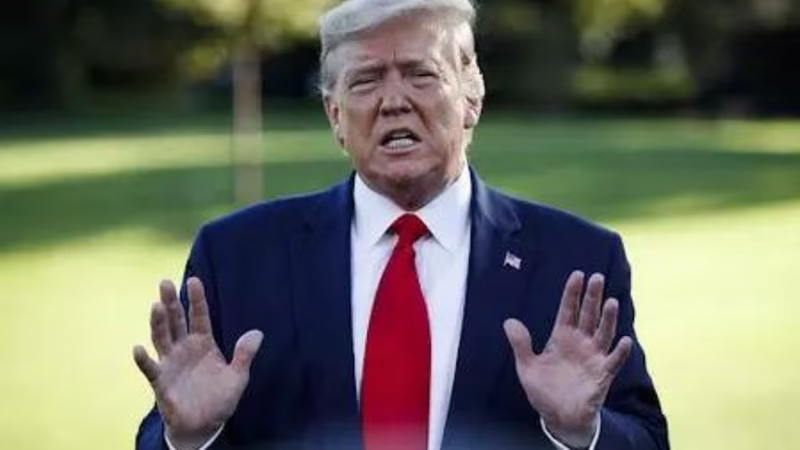
In the high-stakes world of politics, a president’s health isn’t just a personal matter—it’s a matter of national security. So when photos of President Donald Trump with large, dark bruises on his hands began circulating, it was more than just gossip; it was a flashpoint for serious public concern.
Trump’s response? A now-infamous quip about wanting “nice, thin blood,” blaming the bruising on his daily aspirin habit. But in an era where trust in official statements is at an all-time low, many are left wondering: is aspirin really the full explanation for Trump’s hand bruises, or is there more to the story? We dive deep into the facts, the medical context, and the surrounding rumors to give you a clear, expert-backed analysis.
Table of Contents
- What Trump Said About His Hand Bruises
- The Medical Truth About Aspirin and Bruising
- Trump Health Rumors: The Dozing-Off Claim
- CT Scan vs. MRI: What Trump Really Had
- Why The Public Is Skeptical
- Conclusion: Separating Fact from Fiction
- Sources
What Trump Said About His Trump Hand Bruises
Facing a wave of speculation, President Trump directly addressed the visible bruising on his hands. He stated that the primary cause is his self-prescribed, high-dose aspirin regimen, which he takes to keep his blood “thin.” In his own words, he claimed, “I don’t want thick blood… They say aspirin is good for” various health benefits, including preventing clots .
He went a step further, suggesting he takes *more* aspirin than his doctors recommend, framing it as a proactive health choice . This explanation was offered alongside a dismissal of other health concerns, attempting to project an image of a man in full control of his physical well-being.
The Medical Truth About Aspirin and Bruising
Trump’s explanation isn’t entirely without merit. From a medical standpoint, there’s a direct link between aspirin and increased bruising. Aspirin is a blood thinner; it works by inhibiting platelets, the components in your blood that help it clot. When your blood doesn’t clot as easily, even minor bumps that you wouldn’t normally notice can lead to significant bruising .
However, medical experts raise an eyebrow at the *severity* and *persistence* of the bruising seen on the President. While aspirin can make bruising more likely, the large, dark hematomas on his hands have led some to question if other factors are at play, such as an unusually high dosage, an interaction with other medications, or an underlying condition that affects blood vessels or platelet function. The White House has previously offered a different explanation, suggesting the bruises were from “shaking so many hands” , which only adds to the confusion.
Trump Health Rumors: The Dozing-Off Claim
The hand bruises are just one piece of a larger health puzzle. In December 2025, viral videos and photos from a cabinet meeting showed Trump appearing to nod off while Senator Marco Rubio was speaking . These images sparked a fresh wave of health rumors, with many accusing the President of dozing off for extended periods during official functions .
Trump has vehemently denied these claims, asserting that his mental acuity is sharper than ever. He stated, “right now, I think I’m sharper than I was 25 years ago,” directly countering the narrative that his age or health is a liability . This clash between visual evidence and official denial has become a central theme in the public’s perception of his current state.
CT Scan vs. MRI: What Trump Really Had
Adding another layer of complexity, Trump clarified that a recent medical imaging test was a CT scan, not an MRI as some reports had claimed. This distinction is medically significant.
Here’s a quick breakdown of the key differences:
| Feature | CT Scan | MRI |
|---|---|---|
| Best for | Bones, internal bleeding, lung and chest imaging, cancer detection | Soft tissues, brain, spinal cord, ligaments, and tendons |
| Speed | Very fast (seconds to minutes) | Slower (can take 30-60 minutes) |
| Radiation | Uses ionizing radiation | No radiation; uses magnetic fields |
CT scans are often used in emergency settings for their speed and ability to image bone and detect acute issues like bleeds or fractures . MRIs, on the other hand, provide unparalleled detail of soft tissues like the brain, which is often the focus of neurological health concerns . The White House’s initial ambiguity about the type of scan—first calling it “advanced imaging” —has fueled speculation about what specific health issue they might have been investigating.
Why The Public Is Skeptical
The public’s skepticism stems from a pattern of inconsistent messaging. The shifting explanations—from “shaking too many hands” to a high-dose aspirin regimen—create a lack of trust. Furthermore, the choice of a CT scan over an MRI for a routine check-up on a man of his age is unusual, as Mayo Clinic guidelines typically don’t recommend such advanced imaging for asymptomatic individuals . This, combined with the visual evidence from the cabinet meeting, creates a perfect storm of doubt.
For readers interested in the broader context of presidential transparency, our deep dive into [INTERNAL_LINK:presidential-health-transparency-history] offers valuable historical perspective.
Conclusion: Separating Fact from Fiction
While it’s medically plausible that a high aspirin intake could contribute to bruising, the totality of the evidence—persistent visible injuries, ambiguous medical testing, and concerning public behavior—leaves a gap between Trump’s simple explanation and the public’s need for transparency. Presidential health is a critical issue, and in the absence of a clear, consistent, and detailed account from official medical channels, speculation is inevitable. The “Trump hand bruises” saga is less about a single symptom and more about the larger question of accountability and truth in the highest office.
Sources
- Times of India. “‘Want nice, thin blood’: Donald Trump blames hand bruises on aspirin…”
- AFP via Getty Images. “Trump blames aspirin for the bruises on his hands.”
- Medical News Today. “What President Donald Trump’s Hand Bruising Tells Us About…”
- WebMD. “CT Scan vs. MRI: Which Imaging Technology Is Right for You?”
- Associated Press. “Trump at a Meeting Dozed Off for an Hour: Fact or Fiction?”
- Mayo Clinic. “CT Scans vs. MRIs: Differences, Benefits, and Risks.”