Tragedy in Tiruvallur: Community in Panic Over Suspected Water Contamination
Tension gripped Karlambakkam Colony in Tamil Nadu’s Tiruvallur district after two residents died and more than ten others were rushed to hospitals with severe vomiting and diarrhea. The community’s immediate suspicion? Tiruvallur water contamination from the local drinking supply .
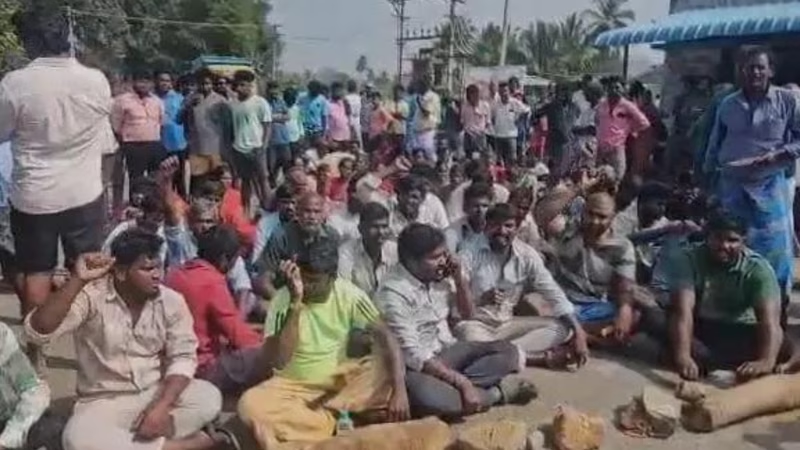
Enraged and fearful, residents staged a dramatic blockade on a major highway, holding placards and demanding urgent government intervention. While preliminary medical reports suggest the deaths might not be directly linked to water, the incident has reignited long-standing concerns about water quality, infrastructure neglect, and public health preparedness in rapidly urbanizing peri-urban zones.
Table of Contents
- What Happened in Karlambakkam Colony?
- Protests, Panic, and Public Outcry
- Government and Health Authorities Respond
- What Do Water Tests Reveal?
- Symptoms of Waterborne Illness: What to Watch For
- Deeper Issues: Aging Infrastructure and Urban Neglect
- How to Protect Yourself from Contaminated Water
- Conclusion: A Wake-Up Call for Water Safety
- Sources
What Happened in Karlambakkam Colony?
On December 26, 2025, multiple families in Karlambakkam Colony began reporting acute gastrointestinal distress—violent vomiting, watery diarrhea, and high fever. Within hours, over a dozen people, including children and elderly residents, were admitted to nearby government hospitals .
Tragically, two patients—a 42-year-old man and a 68-year-old woman—succumbed to their symptoms. Given the sudden, clustered nature of the illnesses, residents immediately suspected the municipal water supply, which many described as having an unusual odor and color in recent days.
Protests, Panic, and Public Outcry
Fueled by grief and fear, hundreds of residents took to the streets, blocking the Chennai–Tirupati National Highway. They accused local authorities of ignoring repeated complaints about water quality and demanded immediate action.
“We’ve been complaining for months about the smell and taste,” said one protester. “Now two of our neighbors are dead. Who’s next?” The blockade lasted several hours until police and district officials promised a full investigation and emergency water tankers.
Government and Health Authorities Respond
The Tamil Nadu Health Department swiftly deployed a rapid response team. Samples of blood, stool, and water were collected for lab analysis. Meanwhile, the Municipal Administration Department announced the suspension of the local water supply and initiated flushing of pipelines .
However, in a surprising twist, senior health officials stated that initial autopsies “do not conclusively point to water contamination” as the cause of death. They noted that one victim had pre-existing heart conditions, and tests for common waterborne pathogens like cholera and E. coli were negative in early screenings .
What Do Water Tests Reveal?
Preliminary water tests conducted by the Public Health Engineering Department showed elevated levels of total coliform bacteria—a key indicator of fecal contamination—but not at acutely lethal levels .
Experts caution that coliform presence doesn’t always cause death but can trigger severe illness in vulnerable populations. Final lab results, including tests for heavy metals, pesticides, and viral agents, are expected within 72 hours.
Symptoms of Waterborne Illness: What to Watch For
If you suspect water contamination, be alert for these symptoms:
- Watery or bloody diarrhea
- Persistent vomiting
- High fever (>101.5°F)
- Severe abdominal cramps
- Dehydration (dry mouth, dizziness, reduced urination)
Seek medical help immediately if symptoms last more than 24 hours or affect infants, elderly, or immunocompromised individuals.
Deeper Issues: Aging Infrastructure and Urban Neglect
Karlambakkam Colony, like many peri-urban areas around Chennai, has expanded faster than infrastructure can keep up. Many neighborhoods rely on aging pipelines, unauthorized borewells, or mixed water sources—creating perfect conditions for contamination.
A 2023 report by the Central Pollution Control Board found that over 40% of groundwater samples in Tiruvallur district exceeded safe limits for nitrates and coliforms . This incident may be a symptom of a much larger systemic failure.
How to Protect Yourself from Contaminated Water
While waiting for official updates, residents can take these steps:
- Boil all drinking water for at least one minute.
- Use certified water purifiers with RO+UV technology.
- Avoid ice made from tap water.
- Report unusual taste, odor, or color to local authorities immediately.
- Store emergency water in clean, sealed containers.
[INTERNAL_LINK:how-to-test-home-water-quality] For long-term safety, consider installing a home water testing kit.
Conclusion: A Wake-Up Call for Water Safety
Whether or not the Tiruvallur water contamination is confirmed as the direct cause of these deaths, the community’s fear is real—and justified. This tragedy underscores an urgent need for investment in water infrastructure, real-time monitoring, and transparent communication between authorities and citizens. Clean water is not a luxury; it’s a fundamental right. And in Karlambakkam Colony, that right feels dangerously fragile.
Sources
- Times of India: “2 die after drinking contaminated water in Tiruvallur, over 10 in hosp” .
- Tamil Nadu Health Department – Press Statement (Dec 27, 2025) .
- Government Hospital Tiruvallur – Preliminary Medical Bulletin .
- Public Health Engineering Department (PHED) – Water Quality Test Memo .
- Central Pollution Control Board – Groundwater Quality Report 2023 .
- [INTERNAL_LINK:waterborne-diseases-in-india]
- [INTERNAL_LINK:tamil-nadu-public-health-crisis]