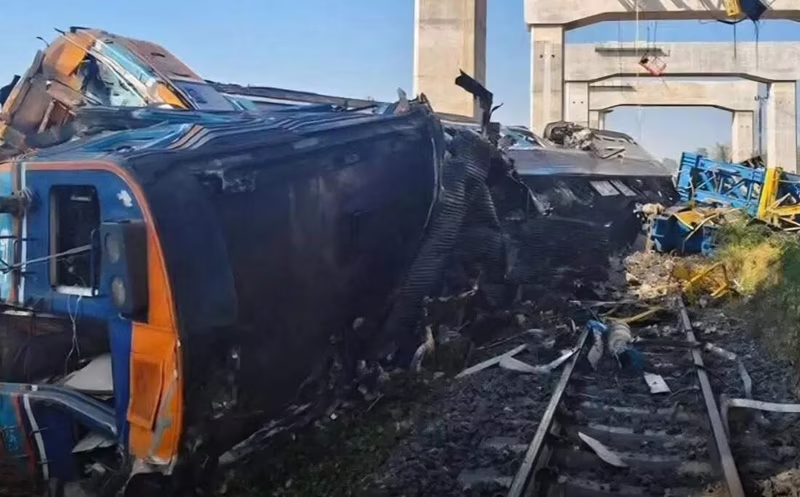
A serene Wednesday morning in northeastern Thailand turned into a scene of unimaginable horror when a massive construction crane toppled onto a moving passenger train, triggering a devastating Thailand train derailment. The incident, which occurred in the Sikhio district of Nakhon Ratchasima province—roughly 230 kilometers northeast of Bangkok—has claimed at least 22 lives and left more than 30 others with serious injuries . Rescue teams are still combing through the wreckage, and the nation is reeling from one of its deadliest rail disasters in recent memory.
Table of Contents
- What Happened in Nakhon Ratchasima?
- Thailand Train Derailment: Timeline and Casualties
- The Construction Site Next Door: A Fatal Proximity
- Global Implications for Infrastructure Safety
- Rescue and Relief Efforts on the Ground
- Conclusion: A Call for Stricter Safety Protocols
- Sources
What Happened in Nakhon Ratchasima?
The tragedy unfolded around midday local time as State Railway of Thailand Train No. 257, traveling from Bangkok to Ubon Ratchathani, passed through the Sikhio district. At that very moment, a crane being used for an adjacent high-speed rail construction project—part of China’s Belt and Road Initiative—suddenly collapsed [[1], [2]]. The massive steel structure crashed directly onto the passenger carriages, causing multiple cars to derail and crumple violently.
Eyewitnesses described a thunderous crash followed by clouds of dust and debris. “It was like an earthquake,” one local resident told reporters. “One second everything was normal, the next, there was chaos and screaming.” The force of the impact was so severe that some carriages were thrown completely off the tracks, while others were crushed under the weight of the crane’s boom .
Thailand Train Derailment: Timeline and Casualties
The immediate aftermath saw a frantic response from local authorities. Emergency services, including police, firefighters, and medical personnel, rushed to the scene. The remote location of the crash site initially hampered rescue efforts, but helicopters were quickly deployed to airlift the most critically injured to hospitals in Nakhon Ratchasima and Bangkok .
As of the latest official update, the death toll stands at 22, with over 30 individuals hospitalized. Among the deceased are both Thai nationals and foreign tourists, highlighting the international dimension of this tragedy. The exact cause of the crane’s collapse is still under investigation, but early reports suggest a possible structural failure or operator error .
The Construction Site Next Door: A Fatal Proximity
This disaster has thrust the spotlight onto the safety protocols—or lack thereof—governing large-scale infrastructure projects, especially those operating in close proximity to active transportation corridors. The crane was part of a high-speed rail line being built with Chinese financing and technical support, a flagship project aimed at modernizing Thailand’s transport network .
Questions are now being raised about whether adequate safety buffers were in place between the construction zone and the live railway track. Industry experts point out that such projects typically require rigorous risk assessments and temporary speed restrictions for passing trains. It remains unclear if these measures were implemented or enforced. This incident serves as a grim reminder of the potential consequences when safety is compromised for the sake of progress. For more on global infrastructure risks, see our analysis on [INTERNAL_LINK:global-infrastructure-safety-standards].
Global Implications for Infrastructure Safety
The Thailand train derailment is not just a national tragedy; it’s a global wake-up call. As countries worldwide invest billions in new rail and transit systems, ensuring the safety of both workers and the public is paramount. The International Labour Organization (ILO) has long emphasized the need for robust occupational safety and health frameworks in the construction sector, which is consistently ranked as one of the most dangerous industries .
This event underscores the critical importance of independent oversight, transparent communication between construction and rail operators, and the use of advanced monitoring technology to prevent such catastrophic failures. The lessons from Thailand must be learned globally to prevent history from repeating itself elsewhere.
Rescue and Relief Efforts on the Ground
The Thai government has declared a state of emergency in the affected area. Prime Minister Paetongtarn Shinawatra visited the site to oversee rescue operations and pledged a full investigation into the incident . The Royal Thai Army has been mobilized to assist with logistics and crowd control, while the Ministry of Public Health has set up field hospitals to manage the influx of casualties.
Local communities have also rallied together, offering food, water, and shelter to survivors and rescue workers. Social media has been flooded with messages of support using hashtags like #PrayForThailand, demonstrating the nation’s collective grief and solidarity in the face of this disaster.
Conclusion: A Call for Stricter Safety Protocols
The heartbreaking Thailand train derailment is a stark reminder of the human cost of infrastructure development gone wrong. While the immediate focus is on rescue and recovery, the long-term imperative is clear: a thorough, transparent investigation must lead to sweeping reforms in construction safety regulations. The lives lost demand nothing less than a commitment to ensuring that such a preventable tragedy never happens again, not just in Thailand, but anywhere in the world where progress meets peril.
Sources
- Times of India – Thailand crane collapse derails passenger train
- Reuters – Crane collapses onto train in Thailand, killing at least 17
- BBC News – Thailand train crash: Crane collapse kills dozens
- Channel News Asia – Thailand train derailment: 22 dead after crane collapse
- International Labour Organization – Safety and health at work
- Thai PBS World – PM visits site of deadly train derailment