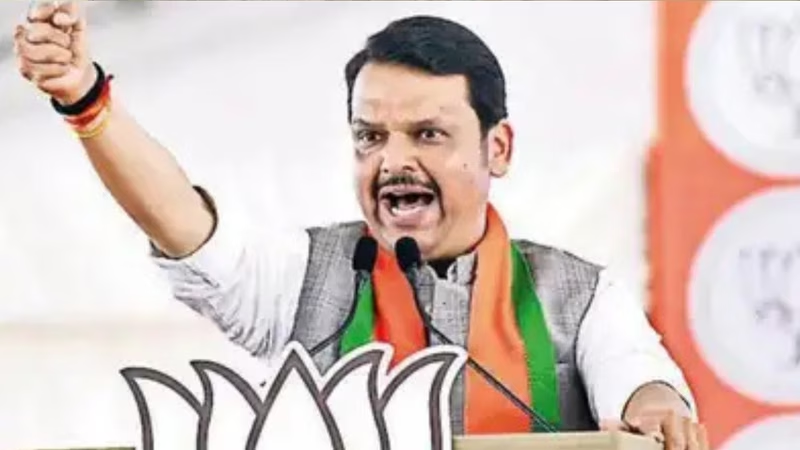
Political earthquakes are nothing new in Maharashtra, but the latest tremor from Chief Minister Devendra Fadnavis has sent shockwaves through the state’s corridors of power. In a striking statement, Fadnavis has declared that the Thackeray name—once synonymous with Mumbai’s political soul—has lost its luster. His message is clear: the era of the ‘Thackeray brand’ is over, and the BJP-led Mahayuti alliance is ready to claim the future.
Fadnavis didn’t just stop at rhetoric. He made a specific and politically charged promise: the next Mayor of Mumbai will be a Marathi Hindu. This declaration, aimed squarely at the heart of regional identity politics, comes as the BJP positions itself as the true inheritor of Maharashtra’s nativist legacy. Let’s unpack what this means for the city’s upcoming civic elections and the broader battle for Maharashtra’s soul.
Table of Contents
- Fadnavis’s Bold Declaration: What ‘Thackeray No Longer a Brand’ Really Means
- The ‘Marathi Hindu’ Card: A Strategic Masterstroke?
- Is the Uddhav-Raj Thackeray Alliance a Real Threat?
- Fadnavis’s Infrastructure Legacy: Building a Credibility Wall
- The Road to the Mumbai Civic Elections: Key Battlegrounds
- Conclusion: A New Political Equation for Mumbai
- Sources
Fadnavis’s Bold Declaration: What ‘Thackeray No Longer a Brand’ Really Means
The phrase “Thackeray no longer a brand” is more than just political mudslinging; it’s a calculated attempt to rewrite Maharashtra’s political narrative. For decades, the Thackeray family name—first Bal Thackeray, then Uddhav—commanded an almost mythical authority over Mumbai’s Marathi-speaking populace. Their word was law on issues of identity, development, and local control.
By making this statement, Fadnavis is signaling that this emotional hold has weakened. He’s banking on a new generation of voters who prioritize governance, infrastructure, and economic opportunity over legacy. His assertion is that the BJP, through its track record in government, has now become the party that delivers for the Marathi manoos, not just speaks for them. This is a direct challenge to the core of the Shiv Sena’s historical appeal.
The ‘Marathi Hindu’ Card: A Strategic Masterstroke?
Fadnavis’s promise of a Marathi Hindu mayor is a deliberate and potent political move. It’s a direct echo of the rhetoric that built the original Shiv Sena. By adopting this language, the BJP is attempting to outflank its rival on its own turf. The strategy hinges on the idea that the current Shiv Sena, under Uddhav Thackeray, has drifted from its core Marathi-Hindu base by forming alliances with parties like the NCP and Congress.
This promise serves several purposes:
- It reclaims the nativist narrative that defined Mumbai’s politics for half a century.
- It creates a clear, identity-based contrast with the Thackeray-led Maha Vikas Aghadi (MVA), which is a coalition of ideologically diverse parties.
- It energizes the BJP’s existing base while potentially attracting disenchanted Shiv Sainiks who feel their identity politics have been diluted.
This move is high-risk, high-reward, but it shows the BJP is ready to play hardball on the identity front.
Is the Uddhav-Raj Thackeray Alliance a Real Threat?
Certainly, the recent public meeting between cousins Uddhav and Raj Thackeray has sent jitters through the BJP camp. On the surface, a united Thackeray front could pose a formidable challenge, potentially consolidating the Marathi vote that is currently split between Uddhav’s Shiv Sena (UBT) and Raj’s Shiv Sena (R). However, Fadnavis is betting that this unity is more theatrical than substantive.
Years of bitter rivalry, conflicting ideologies (especially on issues like Hindutva), and deep personal animosities make a genuine, stable alliance between the two factions highly unlikely. Fadnavis’s confidence suggests the BJP believes this show of unity is a temporary, desperate measure that won’t hold in the long, grueling run-up to the polls. The BJP’s strategy is to wait for the cracks to reappear, as they inevitably have in the past.
Fadnavis’s Infrastructure Legacy: Building a Credibility Wall
To back up his bold claims, Fadnavis is pointing to a tangible record of delivery. He is now taking public credit for overcoming bureaucratic and legal hurdles to complete some of Mumbai’s most ambitious infrastructure projects. Two key examples he highlights are:
- Atal Setu: This vital sea link has significantly decongested north-south traffic in the city.
- Coastal Road: A transformative project that promises to revolutionize connectivity along the western coastline.
By positioning himself as the ‘doer’—the leader who cuts through red tape and gets things built—Fadnavis is crafting a narrative of effective governance. This contrasts with the image of the Thackeray camp, which, during its 2019-2022 stint in power, was often seen as being mired in coalition politics and indecision. This focus on concrete achievements is a key pillar of his ‘Thackeray no longer a brand’ argument.
The Road to the Mumbai Civic Elections: Key Battlegrounds
The fight for the Mayor’s post is symbolic of the larger battle for control of the Brihanmumbai Municipal Corporation (BMC), Asia’s richest civic body. The upcoming elections will be a major referendum on the performance of all parties. Key battlegrounds to watch include the traditional strongholds of both Thackeray factions in central and western Mumbai, as well as the BJP’s growing influence in the suburbs.
The Mahayuti alliance (BJP, Eknath Shinde’s Shiv Sena, and NCP-Ajit Pawar) will be counting on a wave of support from voters who see them as the engine of Mumbai’s development. The Thackeray camp, meanwhile, will need to translate their recent unity into a cohesive campaign that can overcome the BJP’s organizational might and Fadnavis’s narrative of a faded brand.
Conclusion: A New Political Equation for Mumbai
Devendra Fadnavis’s statement that “Thackeray no longer a brand” is a defining moment in Maharashtra’s political evolution. It’s a confident, even arrogant, assertion that the old order has passed and a new one, led by the BJP, has arrived. By coupling this with the promise of a Marathi Hindu mayor and a strong record on infrastructure, Fadnavis is presenting a complete political package. Whether Mumbai’s voters buy this new narrative will be the central drama of the next electoral cycle.
For more on Maharashtra’s political landscape, check out our analysis on [INTERNAL_LINK:maharashtra-2026-elections-outlook] or [INTERNAL_LINK:impact-of-shiv-sena-split].
Sources
- Times of India: ‘Thackeray no longer a brand’: Fadnavis says Mumbai mayor will be Marathi Hindu
- Election Commission of India: Official Election Data and Guidelines (High-authority source for election context)