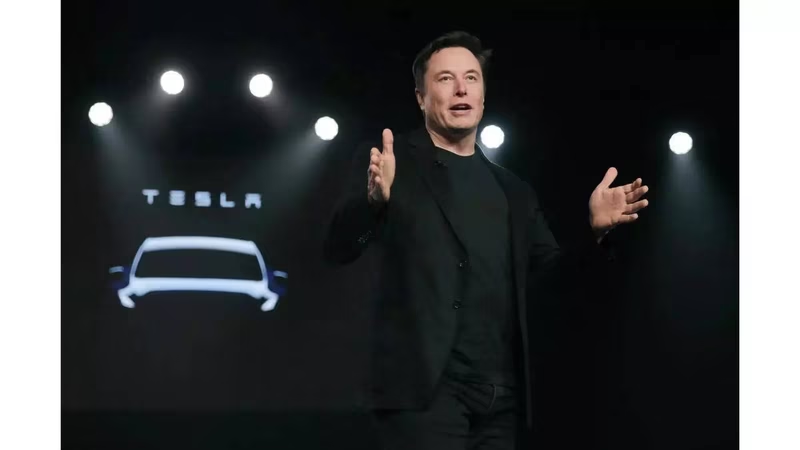
Imagine a world without Tesla. No Model S, no Cybertruck, no global EV revolution. That reality was a hair’s breadth away in 2008. A newly surfaced clip from that year shows a visibly strained and furious Elon Musk delivering an unforgettable, and frankly, brutal, ultimatum to his Tesla leadership team: “If somebody can’t get happy, get divorced” . This wasn’t just a motivational speech; it was a desperate plea from a man whose entire world was collapsing around him.
Table of Contents
- On the Brink of Total Collapse
- The Infamous ‘Get Divorced’ Ultimatum
- The Tesla Roadster’s Costly Nightmare
- SpaceX: The Other Front in a Two-War Battle
- Leadership Under Fire: What This Moment Reveals
- From Brink of Ruin to Global Dominance
On the Brink of Total Collapse
The year 2008 is often cited by Elon Musk himself as “the worst year of my life” . It’s easy to see why. He was simultaneously fighting to keep two of his most ambitious ventures, Tesla and SpaceX, from going completely bankrupt. His personal life was imploding with a divorce from his first wife, Justine, which was finalized that same year . Financially, he was tapped out. Musk had poured his entire fortune from the PayPal sale into these two companies, and both were hemorrhaging cash at an alarming rate .
The pressure was immense. Tesla had only enough cash in its reserves to last for a few more weeks . The future of electric vehicles, a dream Musk had staked his reputation and fortune on, was hanging by a thread.
The Infamous ‘Get Divorced’ Ultimatum
The newly revealed footage captures Musk at his most raw and unfiltered. Faced with executives who seemed demoralized by the company’s dire straits, he drew a hard line. “It’s not OK to be unhappy and part of this company,” he stated firmly. His message was clear: the mission was too critical, the stakes too high for anyone who wasn’t fully, passionately committed. His solution for those who couldn’t muster that commitment? “If somebody can’t get happy, get divorced” .
This quote, delivered with a mix of frustration and conviction, perfectly encapsulates the extreme pressure-cooker environment at Tesla during the Tesla 2008 crisis. It wasn’t just a comment on workplace morale; it was a reflection of Musk’s own state of mind, juggling a failing marriage and two failing companies .
The Tesla Roadster’s Costly Nightmare
The root of Tesla’s financial woes was its first car, the Roadster. The project was plagued with massive cost overruns and engineering disasters. The early prototypes were so unreliable they kept breaking down, and the final production models faced a crisis of their own when a major batch was rejected due to defective parts .
Engineers were reportedly quitting on a weekly basis, disillusioned by the chaos . The company had burned through its cash reserves developing the expensive Roadster and was left with a mere $9 million to its name . They needed a lifeline, and fast. The fear was palpable, with internal messages warning that if the Roadster couldn’t sustain the company by March, “that’s it” .
SpaceX: The Other Front in a Two-War Battle
While the Tesla 2008 crisis was unfolding, Musk was also commanding the front lines of a second, equally desperate battle at SpaceX . The private space company had just suffered its third consecutive failed launch of the Falcon 1 rocket. With its funds exhausted, SpaceX was on the absolute brink of closure .
Musk’s focus was split. His personal fortune was gone, invested entirely in these two failing ventures. A failure at either company would have been catastrophic, not just for him, but for the future of private spaceflight and the electric car industry. In December 2008, both companies were simultaneously on the verge of financial collapse .
Leadership Under Fire: What This Moment Reveals
The “get divorced” comment, while harsh, reveals a core tenet of Musk’s leadership philosophy during existential crises: absolute, unwavering commitment to the mission. He wasn’t just building a car company; he was fighting for the survival of a vision for a sustainable future. He believed that anyone on his team needed to share that same level of conviction or step aside. This high-stakes, high-pressure approach is a recurring theme in his career, as detailed in Ashlee Vance’s authoritative biography .
This moment wasn’t about being a tyrant; it was about survival. In a situation where a single misstep could mean the end of everything, Musk demanded a team that was all-in, with no room for doubt or distraction. His own personal sacrifice, including his divorce, was proof of his own commitment .
From Brink of Ruin to Global Dominance
The story, of course, has a legendary ending. Just days after this crisis meeting, SpaceX’s fourth Falcon 1 launch was a success, securing a crucial $1.6 billion NASA contract that saved the company . Tesla, against all odds, managed to close its Series E funding round shortly after, narrowly avoiding bankruptcy .
The Tesla 2008 crisis is more than just a historical footnote; it’s a masterclass in resilience, leadership under extreme duress, and the sheer force of will required to change the world. The angry man on that 2008 video wasn’t just a CEO; he was a man with his back against the wall, fighting for his life’s work. And he won.
Sources
- Times of India – Original Article: https://timesofindia.indiatimes.com/
- Vox – “Elon Musk’s Nightmare Year”: https://www.vox.com/
- Vanity Fair – “I Was a Starter Wife”: https://www.vanityfair.com/
- Ashlee Vance’s Biography: Elon Musk: Tesla, SpaceX, and the Quest for a Fantastic Future
- Business Insider – Tesla’s Near-Bankruptcy History: https://www.businessinsider.com/