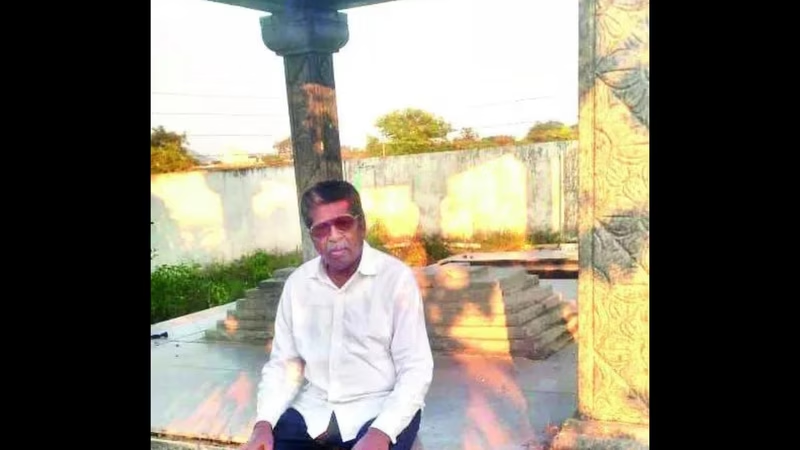
In a quiet corner of Jagtial district, Telangana—roughly 200 kilometers from Hyderabad—an 80-year-old man named Nakka Indrayya tends to a most unusual garden. But instead of flowers or vegetables, he’s nurturing his own granite grave. Every day, he walks to the site, cleans it, and sits beside it in quiet reflection. “Home I dug for myself,” he calls it—a phrase that’s both haunting and deeply human .
Why would someone spend their golden years building their final resting place? For Indrayya, it’s not a morbid obsession, but a practical and emotional act of love. Having experienced loss early in life, he’s determined not to burden his children with funeral arrangements or expenses. And in doing so, he’s sparked a national conversation about death, duty, and dignity in modern India.
Table of Contents
- Who Is Nakka Indrayya?
- The Grave That Cost Rs 12 Lakh
- Why He Decided to Builds Own Grave
- Cultural and Religious Context in Telangana
- The Psychology of Preparing for Death
- How Much Does a Grave Cost in India?
- Conclusion: A Lesson in Love and Letting Go
- Sources
Who Is Nakka Indrayya?
Nakka Indrayya, now 80, is a retired resident of Lakshmipuram village in northern Telangana. He’s not a celebrity, politician, or religious figure—just an ordinary man with an extraordinary perspective on mortality. According to local reports, he personally oversaw the construction of his grave, which is over 6 feet long and 5 feet deep, built entirely from durable granite to ensure it won’t decay .
What makes his story even more remarkable is his daily ritual: he visits the grave, sweeps the area, waters the surrounding plants, and often sits there in peaceful contemplation. This isn’t grief—it’s preparation. And in a society where death is often shrouded in taboo, Indrayya’s openness is both radical and refreshing.
The Grave That Cost Rs 12 Lakh
Building a permanent grave from granite is no small feat—financially or logistically. Indrayya reportedly spent around Rs 12 lakh (approximately $14,500 USD) on the project, hiring a skilled mason from Tamil Nadu to ensure quality craftsmanship .
For context, this is a significant sum in rural India. Most traditional Hindu funerals involve cremation, not burial, and even when burial is practiced, graves are often simple and temporary. A permanent granite tomb is more akin to a mausoleum—an investment usually reserved for the wealthy or spiritually elevated (like saints or gurus).
Why He Decided to Builds Own Grave
Indrayya’s motivation is deeply personal. Having lost loved ones early in life, he understands the emotional and financial strain that funeral arrangements can place on families. “I don’t want my children to worry,” he told reporters . “This is my gift to them—peace of mind.”
His proactive approach reflects a growing, albeit quiet, trend in India: advance funeral planning. While still uncommon, more elderly individuals are beginning to document their wishes, pre-pay for services, or even prepare their final resting places—much like people in Western countries who pre-plan funerals.
This act also speaks to a broader shift in how aging Indians view autonomy and responsibility. Rather than waiting passively for death, Indrayya is taking control—on his own terms.
Cultural and Religious Context in Telangana
In most of India, especially among Hindus, cremation is the norm. The body is seen as a temporary vessel; the soul must be released quickly through fire to begin its next journey toward moksha (liberation) . Burial is more common among Muslims, Christians, and certain tribal or regional communities.
However, Telangana—like much of South India—has diverse traditions. While mainstream Hindu practice favors cremation, some local customs, particularly in rural areas, include burial for elders, saints, or those who died under specific circumstances (e.g., before marriage or from certain illnesses) .
Indrayya’s choice of burial, then, may reflect either a personal spiritual belief or a regional variation. His grave resembles a samadhi—a meditative tomb often built for yogis or ascetics who are believed to have attained a high state of consciousness at death . By constructing such a structure, he may be making a quiet spiritual statement about his life’s journey.
The Psychology of Preparing for Death
Contrary to popular belief, preparing for death doesn’t increase anxiety—it often reduces it. Studies show that individuals who engage in practical and emotional death preparedness report lower psychological distress, better quality of life, and a greater sense of peace .
According to mental health experts, pre-planning funerals or building one’s own grave can:
- Provide a sense of control in an uncertain life stage
- Reduce emotional and financial burden on family members
- Facilitate meaningful conversations about legacy and values
- Help individuals process their own mortality with dignity [[31], [33]]
In Indrayya’s case, his daily visits to the grave aren’t signs of depression—they’re acts of mindfulness. He’s not running from death; he’s making peace with it.
How Much Does a Grave Cost in India?
Indrayya’s Rs 12 lakh tomb is far above average. For most Indians, burial costs are minimal:
| Expense | Average Cost (INR) |
|---|---|
| Basic grave digging | ₹1,000 |
| Wooden planks for lining | ₹3,500–4,000 |
| Permanent grave (e.g., in church parish) | ₹30,000–50,000 |
| Custom granite tomb (like Indrayya’s) | ₹12,00,000+ |
Source: Compiled from funeral cost analyses [[25], [28]].
Most Hindu families spend between ₹10,000–50,000 on last rites, which typically include cremation, rituals, and community meals . Indrayya’s expenditure is thus an outlier—a testament to his dedication and resources.
Conclusion: A Lesson in Love and Letting Go
Nakka Indrayya’s story isn’t just about a man who builds own grave. It’s about responsibility, foresight, and unconditional love. In a world that often avoids talking about death, he’s modeling how to face it with grace.
While some may see his actions as strange or even unsettling, they reflect a profound truth: preparing for the end can be one of the most generous gifts we give our families. As more Indians live longer and grapple with aging populations, Indrayya’s story could inspire a new conversation about elder care, autonomy, and legacy.
Perhaps the real takeaway isn’t in the granite, but in the gesture—a father’s final act of care, long before his last breath.
For more on cultural shifts in end-of-life planning in India, see our related piece on [INTERNAL_LINK:elderly-care-trends-in-india].
Sources
- Times of India: “‘Home I dug for myself’: Telangana man builds his ‘final resting place’; tends to it daily” – https://timesofindia.indiatimes.com/… [[1], [4], [5]]
- Hindu Funeral Rites and Cultural Practices – https://www.hinduwebsite.com/… [[12], [19]]
- “The Psychological Benefits of Pre-Planning Your Funeral” – National Funeral Directors Association
- “Funeral Costs in India: A Detailed Breakdown” – Various regional reports [[25], [28]]