The cricket world is facing a potential crisis that could shake the foundations of the upcoming T20 World Cup. In a dramatic escalation that has sent shockwaves through international cricket, the Bangladesh Cricket Board (BCB) has formally refused to send its national team to India for their scheduled matches, sending a second letter to the International Cricket Council that leaves no room for ambiguity about their position .
This isn’t just a routine complaint or diplomatic negotiation—it’s a full-blown standoff that threatens the very integrity of the tournament. The BCB’s hardened stance comes just weeks before the first ball is bowled, with Bangladesh now officially requesting that all their group stage matches be relocated from Kolkata and Mumbai to Colombo, Sri Lanka. The reason cited? Unresolved security concerns that have been brewing beneath the surface of India-Bangladesh cricket relations for months .
Table of Contents
- The Core Issue: Unresolved Security Concerns
- The Mustafizur Rahman Factor: How IPL Release Changed Everything
- ICC’s Firm Stance: What Happens Next?
- Historical Tensions: India-Bangladesh Cricket Relations
- Impact on T20 World Cup Schedule and Integrity
- Possible Solutions and Path Forward
- Conclusion: A Defining Moment for International Cricket
- Sources
The Core Issue: Unresolved Security Concerns
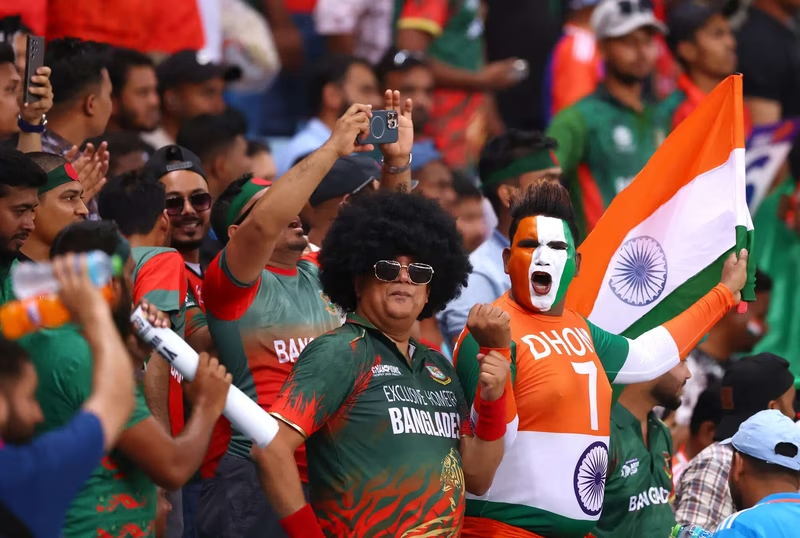
At the heart of this controversy lies a deep-seated security concern that the BCB claims has not been adequately addressed by Indian authorities. According to multiple sources close to the board, Bangladesh officials have repeatedly raised issues about the safety protocols and security arrangements for their players, support staff, and fans during their scheduled matches in India .
The BCB has been particularly concerned about potential hostile crowd behavior and the lack of guaranteed protection measures. These concerns aren’t entirely unfounded—cricket matches between India and Bangladesh have occasionally been marred by tense atmospheres, with fans sometimes crossing the line from passionate support to intimidating behavior. The board has reportedly pointed to specific incidents from previous tours where Bangladeshi players felt unsafe or uncomfortable .
What makes this situation particularly delicate is that security concerns in cricket often blur the lines between legitimate safety issues and political tensions. The BCB has been careful to frame their request purely in terms of player welfare, but many observers see this as part of a broader pattern of deteriorating relations between the two cricket boards.
The Mustafizur Rahman Factor: How IPL Release Changed Everything
While security concerns provided the framework for this dispute, the timing and intensity of the BCB’s ultimatum appear to be directly linked to a separate but equally controversial issue: the release of star pacer Mustafizur Rahman from his Indian Premier League contract with Kolkata Knight Riders .
Rahman, affectionately known as “The Fizz” by fans, had been a key player for KKR and one of the most popular Bangladesh players in the IPL. His sudden release—reportedly due to his nationality rather than performance—struck a nerve not just with the BCB, but with the entire Bangladesh cricketing community. The incident became a matter of national pride, with many viewing it as a slight against Bangladeshi cricketers in general.
The fallout was immediate and severe:
- Bangladesh’s government imposed a nationwide ban on IPL broadcasts
- Public sentiment turned sharply against Indian cricket administrators
- The BCB’s trust in the BCCI’s goodwill was significantly damaged
- Players began questioning their safety in India more openly
Cricket analysts widely agree that the Mustafizur Rahman controversy was the catalyst that transformed simmering security concerns into an open diplomatic crisis. As one senior BCB official reportedly told colleagues, “If they don’t value our players in their own league, how can we trust them to protect our team in their country?”
ICC’s Firm Stance: What Happens Next?
Facing immense pressure to maintain the tournament schedule, the ICC has delivered a clear and uncompromising response to the BCB’s demands. According to sources within the governing body, the ICC has formally rejected Bangladesh’s request to shift venues, citing the logistical impossibility of such a change so close to the tournament start date .
The ICC’s position rests on several key points:
- No official security advisory has been issued for India that would warrant venue changes
- The tournament schedule has been finalized and broadcast deals locked in
- Venue shifts would create massive financial and operational challenges
- Setting a precedent could encourage similar demands from other teams
However, the ICC has also indicated it’s willing to work with both boards to address specific security concerns through enhanced protocols and guarantees. This diplomatic approach shows they recognize the seriousness of the situation while maintaining their authority over tournament operations [INTERNAL_LINK:icc-governance-structure].
Historical Tensions: India-Bangladesh Cricket Relations
This standoff didn’t emerge in a vacuum. The relationship between Indian and Bangladeshi cricket has been complex and often strained over the years. While both nations share a deep passion for cricket, their cricketing relationship has been marked by several flashpoints:
- 2015 World Cup semi-final: Bangladesh felt aggrieved by controversial umpiring decisions
- 2017 India tour of Bangladesh: Series was nearly cancelled due to security concerns
- 2019 Nidahas Trophy: Political tensions spilled over into cricketing events
- IPL participation issues: Bangladeshi players often face scrutiny over participation
The underlying issue is that Bangladesh cricket has grown significantly in recent years, with the Tigers now expecting to be treated as equals rather than junior partners in the cricketing world. This growing confidence has sometimes clashed with India’s dominant position in global cricket administration and commercial interests .
Impact on T20 World Cup Schedule and Integrity
If Bangladesh follows through on their threat and refuses to play in India, the consequences for the T20 World Cup would be severe and far-reaching. The tournament’s integrity, broadcast schedules, and commercial partnerships would all face significant disruption.
The most immediate impact would be on the group stage format. Bangladesh is scheduled to play important matches against strong opponents, and forfeiting these games would not only disadvantage other teams but could also affect qualification scenarios. Broadcasters who have paid billions for global rights would face scheduling nightmares, while sponsors who have invested heavily in the tournament would see their exposure diminished .
Beyond the logistical challenges, there’s the question of sporting fairness. Teams prepare for years for World Cups, and having one team withdraw on principle—however justified their concerns might be—sets a dangerous precedent for future tournaments. The ICC would face intense scrutiny over whether they prioritized commercial interests over player safety, or vice versa.
Possible Solutions and Path Forward
Despite the current impasse, several potential solutions could still salvage the situation:
| Potential Solution | Pros | Cons |
|---|---|---|
| Enhanced security guarantees | Addresses BCB’s primary concerns; maintains schedule | May not satisfy Bangladesh’s national pride concerns |
| Neutral venue compromise | Finds middle ground; shows ICC flexibility | Logistically complex; sets precedent |
| High-level diplomatic intervention | Leverages political relationships; shows seriousness | May be seen as politicizing sports |
| Mustafizur Rahman compensation | Addresses underlying grievance; builds trust | May appear to reward political pressure |
The most likely path forward involves a combination of enhanced security measures and high-level diplomatic engagement. The ICC could work with Indian authorities to provide unprecedented security guarantees for the Bangladesh team, including dedicated protection details, controlled access to venues, and direct communication channels for any concerns that arise [INTERNAL_LINK:cricket-security-protocols].
Conclusion: A Defining Moment for International Cricket
This T20 World Cup standoff represents more than just a scheduling dispute—it’s a test of how international cricket governance handles conflicts between sporting integrity, player welfare, and geopolitical realities. The BCB’s second letter shows they’re not bluffing; they’re prepared to sacrifice their World Cup participation rather than compromise on their principles.
For the ICC, this is a leadership moment that will define their credibility as a global governing body. Their response will set precedents for how future conflicts are handled and demonstrate whether they can balance the interests of all member nations or simply cater to the most powerful boards.
As cricket fans around the world wait anxiously for resolution, one thing is clear: the beautiful game is at a crossroads. How this crisis is resolved will not only determine the fate of this T20 World Cup but could reshape the power dynamics of international cricket for years to come. The next few days will be crucial in determining whether cricket’s greatest festival can proceed as planned, or if we’ll witness an unprecedented boycott that changes the sport forever.
Sources
- Times of India: T20 WC standoff: B’desh sends second letter to ICC, reiterates venue shift from India
- ESPNcricinfo: Bangladesh threaten to withdraw from T20 World Cup over security concerns
- ICC Official Website: ICC confirms T20 World Cup 2026 schedule and venues
- Cricbuzz: Mustafizur Rahman’s IPL release sparks diplomatic crisis between BCB and BCCI
- The Guardian: T20 World Cup faces crisis as Bangladesh refuses to play in India over security fears