Table of Contents
- Bangladesh Exit Shakes Up T20 World Cup 2026
- Why Did Bangladesh Refuse to Play in India?
- How Scotland Earned Their Spot
- The New Group C Lineup and Fixtures
- Broader Implications for Cricket Diplomacy
- Conclusion: A Tournament Transformed
- Sources
Bangladesh Exit Shakes Up T20 World Cup 2026
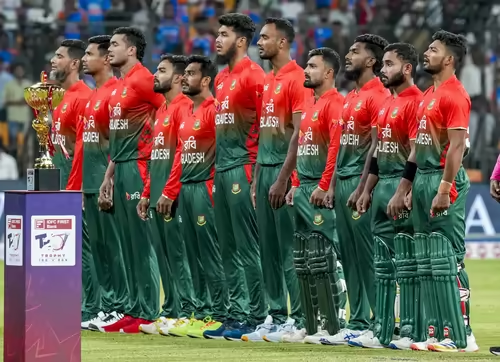
The stage was set for a thrilling T20 World Cup 2026, co-hosted by India and Sri Lanka. But a political storm has forced a last-minute, unprecedented change. In a move that has sent shockwaves through the cricketing world, Bangladesh has officially pulled out of the tournament, citing unresolved security concerns about playing in India . The International Cricket Council (ICC) has acted swiftly, confirming that Scotland will step in as their replacement in Group C .
This isn’t just a simple team swap; it’s a complex saga of geopolitics, player safety, and the ICC’s authority clashing with a national board’s stance. For fans eagerly awaiting the February 7th kickoff, the question is no longer just who will win, but how this dramatic prelude will shape the entire competition.
Why Did Bangladesh Refuse to Play in India?
The Bangladesh Cricket Board (BCB) has been firm in its position. Despite repeated and detailed security assurances from both the ICC and the Board of Control for Cricket in India (BCCI), the BCB maintained that the “security risk situation in India has not changed” . They formally requested the ICC to relocate their matches to Sri Lanka or another neutral venue, a request that was ultimately denied .
The ICC, after its own independent and comprehensive assessment, concluded that there was “no credible or verifiable security threat” to the Bangladesh team, officials, or fans . Their evaluation rated the overall security risk for the tournament in India as “low to moderate,” a profile consistent with many other major international sporting events .
This fundamental disagreement left the ICC with no choice. When a team refuses to participate despite being provided with what the governing body deems sufficient guarantees, the tournament’s integrity must be preserved. Thus, Bangladesh was officially removed from the competition .
How Scotland Earned Their Spot
With the spot in Group C suddenly vacant, the ICC turned to its contingency plans. Scotland, who had narrowly missed out on direct qualification, was the next-highest ranked T20I team in the official pathway . This wasn’t a random selection; it was a clear, merit-based decision rooted in the existing qualification structure.
For Scottish cricket, this is a monumental opportunity. It’s a chance to compete on the sport’s biggest stage against giants like England and the West Indies. Their inclusion maintains the competitive balance of the group and ensures the tournament schedule can proceed without major disruption, as all other match details remain unchanged .
You can learn more about the qualification journey for teams like Scotland in our guide on [INTERNAL_LINK:icc-t20-world-cup-qualification-pathways].
The New Group C Lineup and Fixtures
The most immediate impact is on the composition of Group C. The revised lineup now features:
- England
- West Indies
- Nepal
- Scotland (replacing Bangladesh)
This creates a fascinating new dynamic. While Bangladesh was seen as a strong contender to advance, Scotland brings a different style of play and a massive underdog story. Their matches, particularly against Nepal and the West Indies, are now must-watch fixtures.
The ICC has confirmed that the published schedule for Group C remains intact. This means venues, dates, and broadcast times are all locked in, providing much-needed stability for fans and broadcasters alike .
Broader Implications for Cricket Diplomacy
This incident transcends the boundary ropes. It highlights the fragile intersection of sport and international relations. The BCB’s decision, while framed around player welfare, has significant diplomatic and financial repercussions. They stand to lose crucial ICC funding and face potential sanctions for breaching their participation agreement .
Former India captain Mohammad Azharuddin was blunt in his assessment, stating that “Bangladesh would be the only team to lose if they withdraw from the T20 World Cup” . The loss is not just in prize money, but in global exposure, player development, and their standing within the international cricket community.
For the ICC, this is a test of its governance. Its firm stance, backed by an external security audit, reinforces its role as the ultimate authority in maintaining a level playing field for all participants. You can read the ICC’s full charter on its official website, a high-authority source for understanding its protocols.
Conclusion: A Tournament Transformed
The T20 World Cup 2026 will now be remembered not just for its on-field action, but for the historic off-field drama that preceded it. Bangladesh’s exit is a self-inflicted wound with long-term consequences, while Scotland’s entry is a testament to perseverance and the meritocratic spirit of the game. As fans, we are left with a revamped Group C and a powerful reminder that in modern cricket, the game is often influenced by forces far beyond the pitch.