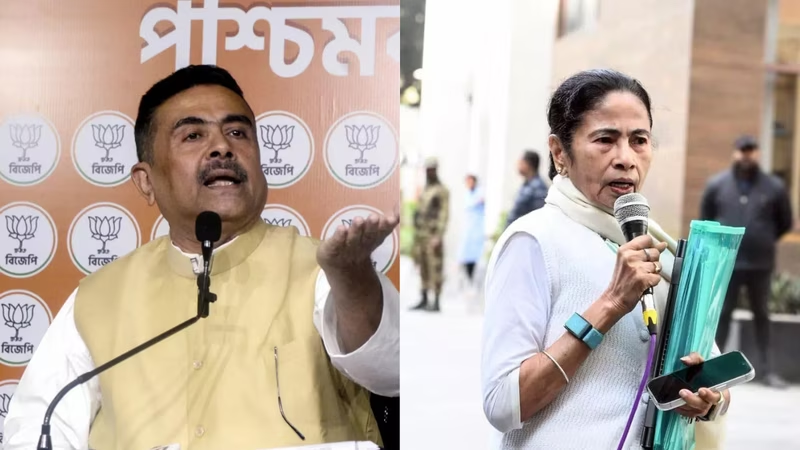
The political temperature in West Bengal is soaring as a fierce war of words erupts between Chief Minister Mamata Banerjee and Opposition Leader Suvendu Adhikari over the ongoing Special Intensive Revision (SIR) of electoral rolls. At the heart of this storm is a formal letter from Adhikari to the Election Commission of India (ECI), where he categorically rejects Banerjee’s explosive allegations, calling them “desperate” and “pure fiction” designed to derail a critical democratic process .
Table of Contents
- The SIR Controversy Explained
- Suvendu Adhikari’s Scathing Rebuttal
- Mamata Banerjee’s Allegations: A Recap
- Why the SIR Process is Critical for 2026
- The Broader Political Implications
- Conclusion
- Sources
The SIR Controversy Explained
The Special Intensive Revision (SIR) is a standard procedure undertaken by the ECI to ensure the electoral roll is an accurate and up-to-date record of all eligible voters. The process involves field verification, public hearings, and the correction of errors like duplicate entries or names of deceased individuals . In West Bengal, this exercise has become highly contentious, with reports suggesting around 58 lakh names have been flagged for potential deletion . The final electoral roll is expected to be published on February 14, 2026 .
Suvendu Adhikari Refutes Banerjee’s Claims
In his letter to the Chief Election Commissioner, Suvendu Adhikari launched a multi-pronged attack on the Trinamool Congress (TMC) government. He accused Mamata Banerjee of making “inaccurate claims” about the SIR process to create a false narrative of victimhood among her supporters . Adhikari argued that the Chief Minister’s public statements were not just misleading but were a deliberate attempt to “intimidate” Booth Level Officers (BLOs) who are on the front lines of this revision process .
He further contended that Banerjee’s actions constitute “a direct and unwarranted interference in the duties of Booth Level Officers,” which is a serious breach of the model code of conduct and undermines the autonomy of the ECI . Adhikari urged the Commission to take strong action to protect its officials and ensure the integrity of the electoral process remains intact.
Mamata Banerjee’s Allegations: A Recap
Chief Minister Mamata Banerjee has been vocal in her criticism of the SIR, alleging it is a politically motivated operation aimed at mass disenfranchisement of her party’s voters. She has gone so far as to call the exercise “unconstitutional” and a “huge scam using AI” designed to delete legitimate voters rather than correct the rolls [[6], [11]]. Her government has even threatened legal action and public protests, including a potential gherao of the ECI office, to halt the process .
Banerjee’s core argument is that the SIR seems “to be meant for deletion, not inclusion,” suggesting a systematic bias against her voter base . This has created a climate of fear and uncertainty among many citizens who are now scrambling to attend public hearings to prove their eligibility to vote .
Why the SIR Process is Critical for 2026
The stakes for this SIR are incredibly high, as it will form the basis for the voter list in the crucial 2026 West Bengal Assembly elections. A clean and accurate electoral roll is fundamental to a free and fair election. The ECI has a constitutional mandate to maintain these rolls, and any attempt to obstruct this process is seen as a direct challenge to the democratic framework of the country.
Here’s why the current situation is so significant:
- Electoral Integrity: An inflated or inaccurate voter list can lead to electoral malpractices. The SIR aims to rectify this.
- Public Trust: The controversy has eroded public trust in the system. Both parties are trying to position themselves as the true defenders of democracy.
- Legal Precedent: The TMC’s threats of legal action could set a new precedent for how state governments interact with the ECI during sensitive electoral processes .
The Broader Political Implications
This clash is more than just a bureaucratic dispute; it’s a strategic battle for the soul of West Bengal’s electorate. For the BJP, represented by Suvendu Adhikari, a clean voter list is seen as essential to level the playing field against the incumbent TMC. They view Banerjee’s protests as a sign of panic, fearing that the removal of dubious or duplicate entries will weaken her traditional vote bank.
Conversely, the TMC is framing the SIR as an assault on the rights of the common people, particularly minorities and the poor, who they claim are disproportionately affected by the deletions. This narrative is a powerful tool for mobilizing their core supporters and painting the BJP and the ECI as anti-people forces.
This entire episode highlights the intense political polarization in the state and the lengths to which parties will go to secure an advantage. For a deeper dive into the history of electoral battles in West Bengal, see our analysis on [INTERNAL_LINK:west-bengal-election-history].
Conclusion
The standoff between Suvendu Adhikari and Mamata Banerjee over the SIR is a defining moment for West Bengal’s democracy. While Adhikari champions the ECI’s authority and the need for a pristine voter list, Banerjee champions the cause of citizens she believes are being unjustly targeted. As the February 14 deadline for the final roll looms, the pressure on the Election Commission to act with absolute impartiality has never been greater. The outcome of this conflict will undoubtedly shape the political landscape of the state for years to come.