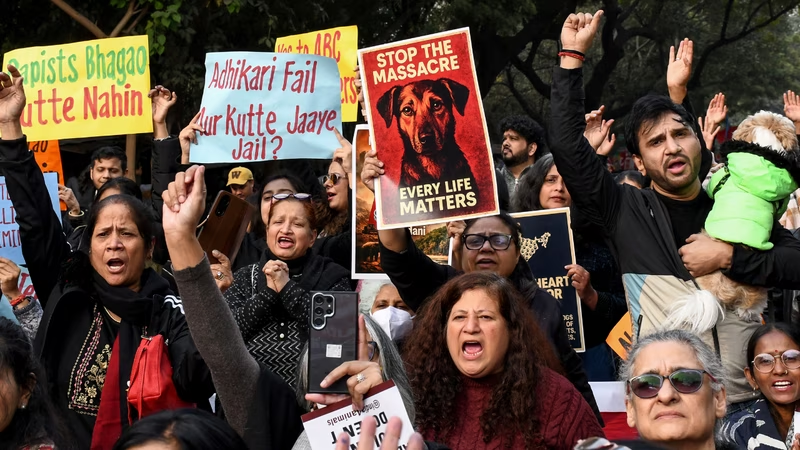
The image of kind-hearted citizens feeding stray dogs is common across Indian cities. But when those same dogs maul a child or knock down an elderly pedestrian, who is responsible? The Supreme Court of India has now drawn a hard line—and its message is clear: compassion without accountability is dangerous.
During a recent hearing on public interest litigation concerning escalating stray dog bites, a two-judge bench delivered a scathing critique of both state inaction and the unchecked activities of informal dog-feeding groups. The court warned that if states fail to enforce existing animal control laws, they will be liable to pay “heavy compensation” to victims’ families—especially in cases involving fatalities .
Table of Contents
- The Court’s Stinging Remarks to Dog Feeders
- What Are the Animal Birth Control (ABC) Rules?
- Why States and Municipalities Are Failing
- The Alarming Rise in Stray Dog Attacks
- Legal Precedent: Compensation for Victims
- A Balanced Way Forward: Compassion + Control
- Sources
The Court’s Stinging Remarks to Dog Feeders
Perhaps the most viral moment from the hearing came when the bench turned its attention to well-meaning but unregulated individuals who feed strays without taking responsibility for their behavior or sterilization status.
“If you are so attached to these dogs, why don’t you take them to your house?”
This rhetorical question cut to the heart of a growing urban dilemma. While feeding animals is protected under Article 51A(g) of the Constitution as a fundamental duty, the court emphasized that this right does not extend to creating public hazards. Feeding packs of unsterilized, territorial dogs in residential lanes, parks, or near schools—without coordinating with municipal authorities—can exacerbate aggression and territoriality, leading to tragic outcomes .
What Are the Animal Birth Control (ABC) Rules?
India already has a legal framework: the Animal Birth Control (Dogs) Rules, 2001, updated in 2023. These rules, issued under the Prevention of Cruelty to Animals Act, mandate that:
- Municipal bodies must implement ABC programs—capturing, sterilizing, vaccinating (especially against rabies), and releasing (CNVR) stray dogs.
- Feeding should only occur after dogs are sterilized and vaccinated.
- Aggressive or rabid dogs must be humanely euthanized per WHO guidelines.
Yet, compliance is patchy at best. Many cities lack dedicated animal welfare cells, veterinary infrastructure, or trained personnel—leaving the system reliant on NGOs and volunteers who often operate without oversight.
Why States and Municipalities Are Failing
The Supreme Court flagged systemic negligence:
- Budget neglect: Less than 0.5% of municipal budgets are typically allocated to animal welfare.
- Poor data tracking: Most cities don’t maintain accurate records of dog populations, sterilization rates, or bite incidents.
- Political sensitivity: Authorities fear backlash from animal rights groups, leading to inaction even when public safety is at risk.
The Alarming Rise in Stray Dog Attacks
The human cost is mounting. According to the National Rabies Control Programme, India accounts for nearly 36% of global rabies deaths—most linked to dog bites . Recent incidents include:
- A 5-year-old boy killed in Chennai after being attacked by a pack near his home.
- An 80-year-old woman in Delhi left with severe injuries after a stray knocked her down.
- Multiple schoolchildren requiring post-exposure prophylaxis (PEP) after encounters during morning commutes.
These aren’t isolated events—they’re symptoms of a broken system.
Legal Precedent: Compensation for Victims
The Supreme Court’s warning isn’t empty. In past rulings, courts have ordered municipal corporations to pay compensation ranging from ₹5 lakh to ₹20 lakh in fatal dog bite cases, citing “failure to perform statutory duties” under the ABC Rules .
Now, the apex court is signaling it will enforce this more rigorously—potentially opening floodgates for civil suits against negligent local bodies.
A Balanced Way Forward: Compassion + Control
The solution isn’t to vilify animal lovers—but to institutionalize responsibility. Experts recommend:
- Community ABC drives: Partnering NGOs with municipalities for door-to-door sterilization campaigns.
- Designated feeding zones: Away from schools, hospitals, and high-footfall areas.
- Digital tracking: Using apps to log sterilized dogs with QR-coded collars.
- Public awareness: Teaching children safe behavior around strays.
True compassion means ensuring dogs are healthy, non-aggressive, and not a threat to vulnerable citizens. For more on humane urban wildlife management, see our guide on [INTERNAL_LINK:responsible-pet-ownership-and-community-safety].
Final Thoughts
The Supreme Court’s intervention on stray dog bites is a wake-up call. It challenges India to move beyond emotional debates and build a scientific, accountable, and humane system that protects both animals and people. As the court implied: love for animals must come with responsibility—not just sentiment.
Sources
- Times of India. “‘Take them to your house’: SC questions dog feeding groups; compensation warning for states.” https://timesofindia.indiatimes.com/…
- Ministry of Fisheries, Animal Husbandry and Dairying. “Animal Birth Control (Dogs) Rules, 2023.” https://dahd.nic.in/
- World Health Organization (WHO). “Rabies Fact Sheet.” https://www.who.int/
- Supreme Court of India Judgments on Municipal Liability in Dog Bite Cases .