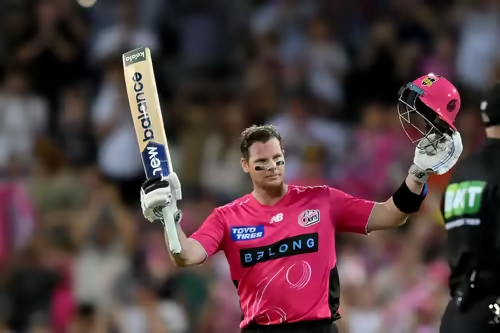
Steve Smith’s ‘Didn’t Want to Screw Up’ Confession: The Real Story Behind the Babar Azam BBL Row
The Big Bash League (BBL) is no stranger to high-octane drama, but the recent Sydney derby between the Sixers and the Thunder delivered a moment of pure, unscripted tension that has since become the talk of the cricketing world. At its heart was a split-second decision by Australian legend Steve Smith that left his Pakistani teammate Babar Azam visibly frustrated and fans across the globe buzzing. Now, Smith has finally broken his silence, offering a candid and strategic explanation for the move that ignited the Steve Smith Babar Azam BBL row.
Table of Contents
- The Controversial Moment: What Actually Happened?
- Smith’s Strategic Revelation: “I Didn’t Want to Screw Up”
- Babar’s Frustration and the Century Partnership
- The Record-Breaking Over That Changed Everything
- Why This Tactic Is a Double-Edged Sword in T20 Cricket
- Conclusion: The Genius and the Grit of Steve Smith
- Sources
The Controversial Moment: What Actually Happened?
The incident occurred during the 11th over of the Sydney Sixers’ chase against the Sydney Thunder. The Sixers were cruising, with Smith and Babar Azam in the middle of a formidable partnership. Babar, on 47 off 38 balls, faced three consecutive dot balls from Chris Green. On the final delivery of the over, with a single available, Babar looked to rotate the strike. However, Smith, at the non-striker’s end, sent him back .
This seemingly small act of refusing the single was a massive tactical call. It meant Smith would face the entirety of the next over, a high-risk, high-reward strategy that left Babar visibly unhappy on the field .
Smith’s Strategic Revelation: “I Didn’t Want to Screw Up”
In the aftermath of the match, Smith addressed the elephant in the room. His explanation was refreshingly honest and rooted in deep game awareness. “I didn’t want to screw up,” Smith confessed, referring to the pressure of the situation . He elaborated that he felt the bowler for the next over, Tanveer Sangha, was one he could target effectively. By keeping the strike, he aimed to maximize the scoring potential during the Power Surge, a critical phase in any T20 innings.
“I just felt like I had a good plan against him,” Smith added, showcasing the calculated mind of a player who has been at the top of the game for over a decade . This moment perfectly encapsulates the complex dynamics of the Steve Smith Babar Azam BBL row—a clash not of egos, but of two elite players with different perspectives on the optimal path to victory.
Babar’s Frustration and the Century Partnership
While the refusal stung in the moment, it’s important to note that this incident happened within the context of a highly successful 105-run partnership between the two stars . Babar Azam, known for his elegant stroke play, was building his own innings meticulously. Being denied the strike after a tough over likely felt like a personal slight, even if it was purely tactical from Smith’s end.
Reports suggest there was some tension in the dressing room post-match, with Babar feeling disrespected by the decision . However, the ultimate result—a five-wicket win for the Sixers—validates Smith’s gamble, even if it came at a temporary cost to team harmony.
The Record-Breaking Over That Changed Everything
Smith’s faith in his own ability was spectacularly rewarded. In the very next over, bowled by Tanveer Sangha, Smith unleashed a breathtaking assault. He smashed four consecutive sixes, amassing a record-breaking 32 runs in just six deliveries . This single over not only erased any doubt about his decision but also effectively sealed the game for the Sydney Sixers.
This incredible feat turned Smith from a potential villain into the undeniable hero of the match. He went on to score a blistering century from just 42 balls, completely upstaging even his fellow Australian superstar, David Warner . The narrative shifted instantly: the Steve Smith Babar Azam BBL row was no longer just about a snub, but about a masterstroke of tactical genius.
Why This Tactic Is a Double-Edged Sword in T20 Cricket
Smith’s decision highlights a fascinating and often risky element of modern T20 captaincy and batting:
- High Risk, High Reward: Keeping strike against a specific bowler can lead to a game-breaking over, as it did here. But if the batter fails, it can stall the innings and create internal friction.
- Player Autonomy vs. Team Cohesion: In a format where partnerships are key, an individualistic decision can disrupt the flow and trust between batting partners.
- The Power of Confidence: Only a player of Smith’s calibre and self-belief would have the conviction to make such a call. For a less experienced player, it could be seen as reckless.
This incident serves as a case study for [INTERNAL_LINK:t20-cricket-strategy] and the immense pressure on star players to deliver in clutch moments.
Conclusion: The Genius and the Grit of Steve Smith
The Steve Smith Babar Azam BBL row is more than just a piece of cricketing gossip; it’s a window into the intense, high-stakes world of professional sport. Smith’s admission of wanting to avoid a mistake reveals a human vulnerability beneath the superstar persona. His subsequent, explosive over demonstrates the extraordinary talent that makes him a global icon. While the moment may have caused a ripple of discord, the outcome—a dominant victory built on a record-breaking innings—speaks volumes. In the end, Smith’s gamble wasn’t just about not screwing up; it was about seizing the moment with unmatched brilliance.