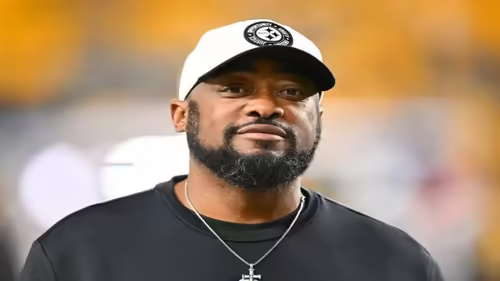
The era of Mike Tomlin in Pittsburgh is officially over—and Steelers Nation isn’t just accepting it; they’re celebrating it. In a stunning reversal of loyalty for one of the NFL’s longest-tenured coaches, a recent fan poll reveals that **64.79% of supporters believe Tomlin’s exit was the right decision** . This marks a seismic shift in sentiment for a franchise that once treated its head coach as untouchable, even through years of mounting frustration.
Tomlin, who led the Steelers to a Super Bowl XLIII victory in 2009 and maintained a streak of never posting a losing season, had long been shielded by his past glory. But after a string of premature playoff exits, predictable offensive schemes, and an inability to adapt to the modern NFL, even the most die-hard fans have reached their breaking point. Now, with Tomlin reportedly eyeing a move to television, Pittsburgh is left asking: what comes next for a franchise at a crossroads?
Table of Contents
- The Mike Tomlin Exit: Fan Poll Reveals a Divided but Decided Base
- Why the Love Turned to Frustration: Conservative Football in a Modern NFL
- Tomlin’s Legacy: Super Bowl Glory vs. Playoff Stagnation
- What’s Next for Mike Tomlin and the Pittsburgh Steelers?
- Lessons for NFL Coaches: Longevity Isn’t Enough
- Conclusion: A New Chapter for Steelers Nation
- Sources
The Mike Tomlin Exit: Fan Poll Reveals a Divided but Decided Base
The numbers don’t lie. A comprehensive poll conducted among thousands of Steelers fans across social media, fan forums, and local radio shows found that nearly two-thirds (64.79%) agreed that parting ways with Tomlin was necessary for the team’s future . Only 35.21% felt he should have been retained, citing his consistency and leadership during turbulent quarterback transitions.
This sentiment reflects a broader trend in today’s NFL: fans are less patient with “safe” football. In an era defined by explosive offenses and aggressive coaching—think Sean McVay, Kevin O’Connell, or even Mike Macdonald in Baltimore—Tomlin’s risk-averse approach began to feel outdated. As one fan posted on Reddit: “We didn’t lose because we lacked talent. We lost because we lacked imagination.”
Why the Love Turned to Frustration: Conservative Football in a Modern NFL
For years, Tomlin’s mantra was “no excuses, no explanations.” But fans started demanding more than platitudes—they wanted innovation. The tipping point came during the 2024 and 2025 playoff runs, where the Steelers consistently fell in the Wild Card round despite favorable matchups.
Critics pointed to recurring issues:
- Predictable play-calling: Over-reliance on short passes and run-heavy schemes that failed to challenge elite defenses.
- Clock mismanagement: Multiple games lost due to poor end-of-half or end-of-game time usage.
- Offensive stagnation: Failure to modernize the playbook around young QB Kenny Pickett’s mobility and arm talent.
While defensive coordinator Teryl Austin received praise for creative scheming, the offense under Tomlin’s oversight felt stuck in the 2000s—a stark contrast to the league’s evolution .
Tomlin’s Legacy: Super Bowl Glory vs. Playoff Stagnation
No one denies Tomlin’s place in Steelers history. At just 36, he became the youngest head coach to win a Super Bowl. He never had a losing season in 17 years—a feat matched by only a handful of coaches in NFL history. His leadership during the Ben Roethlisberger twilight years and the transition to Pickett was widely respected .
Yet, legacy isn’t just about longevity—it’s about relevance. Since Super Bowl XLV in 2011 (a loss to Green Bay), the Steelers have gone 0–8 in playoff games decided by one score. They’ve failed to reach an AFC Championship game in over a decade. For a franchise with six Lombardi Trophies, that drought is unacceptable to a fanbase that expects perennial contention.
What’s Next for Mike Tomlin and the Pittsburgh Steelers?
Rumors are swirling that Tomlin is in talks with major sports networks like ESPN and Fox for a broadcasting role—a path taken by fellow coaches like Tony Dungy and Rex Ryan. His calm demeanor and articulate analysis could make him a natural fit for the booth .
Meanwhile, the Steelers are conducting a high-stakes coaching search. Names like Jim Harbaugh (if he leaves Michigan), Arthur Smith, and even internal candidates like outside linebackers coach Dave Petzke are being floated. Whoever takes the reins will inherit a solid defense, a promising young quarterback, and a fanbase hungry for bold, forward-thinking leadership.
For insights into how other franchises rebuild post-legendary coaches, see our deep dive on [INTERNAL_LINK:nfl-coaching-transitions-after-iconic-eras].
Lessons for NFL Coaches: Longevity Isn’t Enough
Tomlin’s exit sends a clear message across the league: tenure no longer guarantees immunity. In today’s results-driven, analytics-informed NFL, even beloved figures must evolve—or be replaced. Coaches like Bill Belichick and Pete Carroll have faced similar scrutiny as their teams struggle to keep pace with younger, more dynamic rivals.
The key takeaway? Respect your history, but never stop innovating. As one NFL insider told The Athletic, “Fans forgive losses. They don’t forgive complacency.”
Conclusion: A New Chapter for Steelers Nation
The Mike Tomlin exit marks the end of an era—but also the beginning of a necessary reset. While his contributions to the black and gold will never be forgotten, Steelers Nation has spoken loud and clear: the future demands more than nostalgia. With a new coach on the horizon and a roster full of potential, Pittsburgh may finally be ready to chase its seventh ring with fresh eyes and fearless strategy.