Introduction: A Record Year Ends with a Sharp Pullback
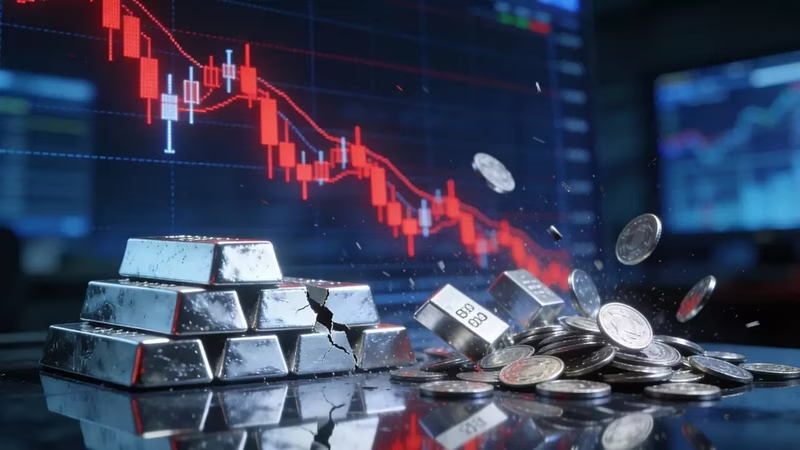
The final hours of 2025 on the trading floor delivered a shock to silver investors. After a historic rally that saw the white metal soar to unprecedented heights, a sudden and severe silver price crash sent markets reeling. On the last trading day of the year, silver futures on the Multi Commodity Exchange (MCX) plunged by a staggering 6%, equivalent to a drop of over Rs 15,000 per kilogram . This dramatic pullback, following an all-time high of ₹2,54,174 per kg just days earlier, has left investors scrambling to understand what happened and, more importantly, what’s next .
Table of Contents
- The Year-End Selloff: What Triggered the Crash?
- Historical Context: A Banner Year for Silver
- Key Factors Behind the Silver Price Crash
- The Gold-Silver Correlation in 2025
- Outlook for 2026: Time to Buy the Dip?
- Summary
- Sources
The Year-End Selloff: What Triggered the Crash?
The primary driver behind the sharp price correction was a wave of aggressive profit-booking. After a phenomenal run-up of over 160% in 2025, many traders and institutional investors chose to lock in their substantial gains before the year closed . This is a common market phenomenon, especially after a record-breaking performance.
Compounding the issue was the characteristic of year-end trading: thin market volumes. With many participants on holiday, even a moderate amount of selling pressure can cause outsized price movements, leading to heightened volatility . The combination of these two factors created the perfect storm for the silver price crash we witnessed on December 31, 2025.
Historical Context: A Banner Year for Silver
To fully appreciate the significance of this crash, it’s crucial to understand the context of silver’s performance in 2025. The year was nothing short of spectacular for the metal. Global spot prices for silver surged, with some sources noting prices trading well above $39 per ounce for the year, a massive increase from 2024’s levels .
In India, the rally was even more pronounced. The MCX March 2026 silver futures contract hit an all-time high of ₹2,54,174 per kg on December 29, 2025, a level never before seen in the Indian commodity market . This historic run was fueled by a powerful cocktail of geopolitical tensions, strong industrial demand (especially from the solar and electronics sectors), and a major surge in investment interest.
Key Factors Behind the Silver Price Crash
While profit-booking was the immediate spark, several underlying macroeconomic factors set the stage for this retreat:
- Shifting Fed Rate Cut Expectations: For much of 2025, markets were betting heavily on multiple interest rate cuts from the U.S. Federal Reserve. Lower rates typically weaken the U.S. dollar and make non-yielding assets like gold and silver more attractive . However, by year-end, these expectations began to moderate. Any perceived delay or reduction in the scale of these cuts can dampen the enthusiasm for precious metals .
- Technical Overbought Conditions: After such a steep and prolonged rally, silver was in a technically overbought territory. This means its price had risen far and fast, making a correction a natural and almost necessary part of the market cycle to establish a healthier base for future growth.
- Global Economic Uncertainty: While geopolitical tensions supported the rally earlier in the year, any signs of de-escalation or improved economic data can temporarily reduce the safe-haven appeal of silver.
The Gold-Silver Correlation in 2025
Silver rarely moves in isolation. Its price is closely tied to its more famous sibling, gold. The final days of 2025 saw a similar, though less severe, pullback in gold prices. On December 30, 24-carat gold in India slipped by Rs 305 per gram . This parallel movement underscores the shared drivers of both precious metals, primarily the U.S. dollar’s strength, real interest rates, and global risk sentiment. When the narrative shifts for one, it almost always impacts the other.
Outlook for 2026: Time to Buy the Dip?
So, what does this silver price crash mean for your portfolio in 2026? The answer, as with most things in finance, is nuanced.
For long-term investors, this sharp correction could present a strategic buying opportunity. The fundamental drivers that powered silver’s rally in 2025—robust industrial demand, its role as a hedge against inflation and geopolitical risk, and its status as a store of value—are not going away. In fact, the ongoing energy transition is expected to significantly increase demand for silver in solar panels for years to come.
However, short-term traders should be cautious. The market will now be highly sensitive to U.S. economic data and every communication from the Federal Reserve regarding its interest rate policy. Volatility is likely to remain elevated in the early part of the new year.
For more insights on navigating the commodity markets, check out our guide on [INTERNAL_LINK:investing-in-precious-metals].
Summary
The year-end silver price crash was a dramatic but largely expected correction after a record-shattering 2025. Driven by aggressive profit-booking and influenced by moderating expectations for U.S. interest rate cuts, the 6% plunge should be seen as a market reset rather than a fundamental reversal of the metal’s positive long-term outlook. Investors should focus on the powerful underlying demand drivers and use this dip as a moment for careful, strategic planning rather than panic.
Sources
- Times of India. “Silver price crash today: White metal plunges Rs 15,000 — what’s the outlook?” https://timesofindia.indiatimes.com/…
- “Silver prices crash by Rs 15000 on last trading day of 2025.” Business Standard
- “Silver Price Hits Record High in India.” Moneycontrol
- “Gold and silver advance on Fed rate cut expectations.” Reuters
- Kitco. “Daily Silver Price History.” https://www.kitco.com/