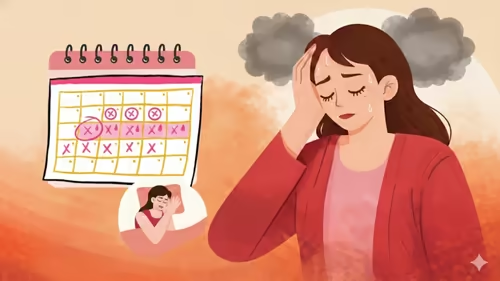
Let’s cut through the noise. You’re not just ‘feeling a bit off.’ The crushing fatigue that makes your morning coffee feel like a Herculean task, the sudden wave of heat that drenches you in a board meeting, the terrifying blankness when you can’t recall a colleague’s name—these aren’t quirks. These are menopause symptoms, and they’re spilling over into every corner of your life, from your professional credibility to your most intimate relationships. And in a world that often equates a woman’s value with her youth, you’re told to suffer in silence. Enough is enough.
Table of Contents
- The Invisible Workplace Burden
- When Home Isn’t a Sanctuary: Menopause and Relationships
- The Brain Fog Battle: Your Mind on Menopause
- Why Silence is the Real Enemy (Especially in India)
- Reclaiming Your Power: A Practical Guide
- Conclusion: You Are Not Alone
- Sources
The Invisible Workplace Burden
Your office should be a place of productivity, not a minefield of triggers. Yet for millions of women, it’s exactly that. Research shows a direct, significant link between the severity of menopause symptoms and reduced work performance, increased absenteeism, and even decisions to stall or abandon career progression . Imagine trying to lead a high-stakes presentation while battling a hot flash that feels like your skin is on fire, or struggling to focus on a complex spreadsheet because your brain is wrapped in cotton wool . This isn’t a lack of competence; it’s a biological reality that’s rarely accommodated. The result? Women feel forced to hide their symptoms, power through the discomfort, and risk being labeled as “difficult” or “unreliable” when their performance inevitably dips .
When Home Isn’t a Sanctuary: Menopause and Relationships
If work is a battlefield, home should be the safe haven. But menopause doesn’t clock out at 5 PM. The same hormonal chaos that disrupts your focus at the office can ignite mood swings, anxiety, and a plummeting libido at home. Partners, often unprepared and uninformed, may misinterpret these changes as personal rejection or a sign of a failing relationship. The emotional labor of managing your own symptoms while also managing your partner’s confusion or frustration is immense. This disconnect can create a chasm of misunderstanding, leaving women feeling isolated even in their own living rooms.
The Brain Fog Battle: Your Mind on Menopause
Perhaps one of the most distressing and misunderstood aspects of perimenopause is cognitive change, often dubbed “brain fog.” It’s that frustrating inability to find the right word, to remember why you walked into a room, or to maintain concentration on a simple task . This isn’t a sign of declining intelligence; it’s a direct neurological consequence of fluctuating estrogen and progesterone levels . Many women report their brains feeling like “cotton wool,” a sensation that can be deeply alarming and erode self-confidence . In a professional world that prizes sharpness and quick thinking, this symptom can be particularly devastating, making women question their very identity and capabilities.
Why Silence is the Real Enemy (Especially in India)
The physical and cognitive challenges are hard enough. But in India, they’re compounded by a deep-seated societal stigma. Menopause is often treated as a private, even shameful, subject—a topic to be whispered about, if at all . This cultural silence means women are woefully unprepared for what’s coming. They don’t know what’s normal, what’s a red flag, or where to seek help . This lack of open dialogue leaves them vulnerable, isolated, and more likely to internalize their struggles as personal failings rather than a natural life stage . The taboo extends into the workplace, where asking for a fan or a flexible schedule can feel like an impossible request, further entrenching the cycle of silence and suffering .
Reclaiming Your Power: A Practical Guide
Knowledge is your first weapon. Understanding that your symptoms are real, valid, and shared by millions is a powerful first step. Here’s how to move forward:
- Talk to Your Doctor: Don’t suffer in silence. Discuss your symptoms openly. Hormone Replacement Therapy (HRT) is a safe and effective option for many, and your doctor can help you weigh the benefits and risks. The North American Menopause Society is a fantastic, high-authority resource for evidence-based information.
- Communicate at Home: Have an honest conversation with your partner. Share articles, explain what you’re going through, and ask for their patience and support. Let them be your ally, not your adversary.
- Advocate for Yourself at Work: If you feel safe, consider speaking to HR or a trusted manager. Frame your needs around productivity: “A desk fan will help me stay focused during long meetings.” You have a right to a supportive work environment.
- Build Your Toolkit: Lifestyle changes can make a huge difference. Prioritize sleep, manage stress through yoga or meditation, and maintain a healthy diet. For more on holistic wellness during this transition, see our guide on [INTERNAL_LINK:holistic-wellness-for-women-over-40].
Conclusion: You Are Not Alone
Menopause is not an ending; it’s a profound transition. The menopause symptoms you’re experiencing are a signal from your body, not a sentence. By breaking the silence, seeking support, and demanding the accommodations you deserve—at work, at home, and in your own mind—you can navigate this chapter with dignity, strength, and even a renewed sense of self. Your worth has never been tied to your hormones, and it’s time the world—and you—remembered that.
Sources
[1] O’Neill, M.T. et al. (2023). Impact of menopausal symptoms on work and careers.
[5] Johanson Sturesson, S. (2025). Women’s experience of the impact of work environment.
[11] “Early menopause in India is more common than you think,” Times of India.
[13] “From Stigma to Support: Reframing Menopause in India,” The Wire.
[14] “Breaking India’s silence on menopause,” BBC News.
[17] “Addressing the Overlooked Health Needs of Menopausal Women,” WHO.
[20] “Navigating Brain Fog: Cognitive Changes During Perimenopause,” Mayo Clinic.
[24] “Brain Fog in Perimenopause: Why Hormones Matter,” Harvard Health.
[28] “Brain fog,” NHS UK.