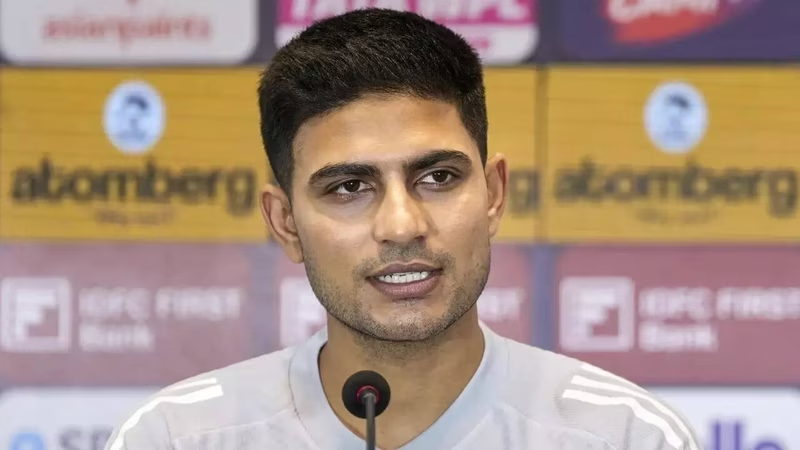
The axe has fallen, and it’s landed squarely on one of India’s most promising young stars. Shubman Gill, the 26-year-old batting sensation who leads India in the longer formats, has been shockingly omitted from the national squad for the upcoming T20 World Cup. The news sent ripples through the cricketing fraternity, leaving fans and experts alike scrambling for answers. In a poignant response, Gill himself has turned to the concept of ‘destiny,’ accepting the decision with a stoic grace that belies the magnitude of the snub.
Table of Contents
- The Official Word: Form Over Future?
- Shubman Gill T20 World Cup Snub: The Numbers Don’t Lie
- Inside the Selection Room: A Divisive Decision
- Gill’s Response and the Path Forward
- Conclusion: What This Means for Indian Cricket
- Sources
The Official Word: Form Over Future?
The Board of Control for Cricket in India (BCCI) has officially cited “poor form and team combination considerations” as the primary reasons for Gill’s exclusion . This rationale, while standard procedure, feels particularly jarring given Gill’s status as a mainstay in the ODI and Test sides. His role as vice-captain in the longer formats underscores his leadership potential and technical prowess, qualities that are often transferable across all three formats.
The decision appears to be a stark departure from the long-term vision many believed the selectors were building around Gill. It signals a clear pivot towards a more aggressive, power-hitting lineup for the shortest format, prioritizing immediate impact over future-proofing the squad.
Shubman Gill T20 World Cup Snub: The Numbers Don’t Lie
While Gill’s overall T20I record—869 runs in 36 matches at an average of 28.03 and a strike rate of 138.59—is respectable, it’s his recent performances that have raised serious red flags for the selectors. The data paints a concerning picture of a batter struggling to find his rhythm in the high-octane T20 environment.
In his last 15 T20I innings, Gill managed just 291 runs at a meager average of 24.25 . A closer look at his recent scores reveals a string of low returns: 20(9), 10(7), 5(8), and 4(3) are not the kind of starts a top-order batter can afford in a tournament setting . This stark contrast to his dominant performances in ODIs and Tests highlights a specific challenge he faces in adapting his game to the unique demands of T20 cricket.
The selectors seem to have opted for players like Sanju Samson and Rishabh Pant, who offer a more explosive and consistent threat in the middle order, even if their averages are sometimes volatile. This move suggests a belief that the current T20 landscape requires batters who can clear the ropes from ball one, a skill Gill has yet to consistently showcase at the international level.
Inside the Selection Room: A Divisive Decision
Rumors from within the BCCI corridors suggest that Gill’s exclusion was far from a unanimous verdict. Reports indicate that the decision was contentious, with sources claiming that “three selectors didn’t want Shubman Gill in the squad” . This internal division adds another layer of intrigue to the saga, implying that the final call may have been a compromise rather than a clear strategic directive.
Compounding the controversy is the manner of the communication. It’s been reported that Gill was not informed of his omission in advance and only learned about it “hours before the announcement” . Such a lack of direct communication from the board to one of its senior-most players is seen by many as a significant lapse in protocol and respect, further fueling the narrative of a poorly handled situation.
Gill’s Response and the Path Forward
Faced with this professional setback, Gill’s public response has been one of remarkable maturity. By invoking ‘destiny,’ he has chosen a path of acceptance rather than public complaint. This dignified silence speaks volumes about his character and his understanding of the brutal realities of elite sport.
For Gill, the road ahead is clear, albeit challenging. He must now use this time to go back to the drawing board, analyze his T20 game, and work on bridging the gap between his classical technique and the unorthodox, high-risk shots demanded by the format. His success in the IPL with the Gujarat Titans will be under intense scrutiny, as it will be his primary platform to force his way back into the national T20 reckoning. This period could be a defining one in his career—a chance to either reinvent himself as a complete cricketer or risk being pigeonholed as a specialist for the longer formats.
Conclusion: What This Means for Indian Cricket
The Shubman Gill T20 World Cup snub is more than just the omission of a single player; it’s a statement of intent from the Indian selectors. It shows a willingness to make tough, short-term decisions for what they believe is the best chance of winning the coveted trophy. While it may be a blow to Gill’s immediate T20 ambitions, it also serves as a stark reminder to every player in the national setup that no one’s place is guaranteed, regardless of their stature in other formats. The ultimate test of this decision will come on the field in the Caribbean. If India lifts the trophy, the selectors will be hailed as visionary. If they falter, questions about the wisdom of leaving out a talent like Gill will inevitably resurface. For now, all eyes are on Gill as he navigates this crossroads in his illustrious career.