Introduction: A Clash of Tech Titans’ Philosophies
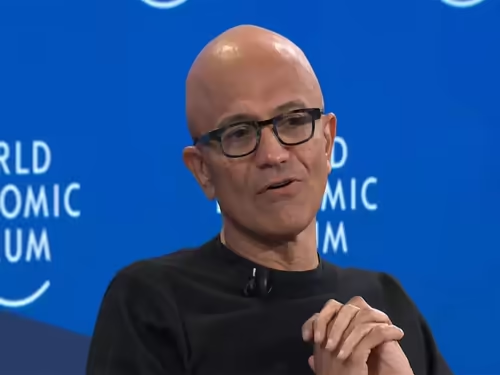
In the hushed, high-stakes corridors of the World Economic Forum in Davos 2026, a quiet but profound ideological battle was reignited. Microsoft CEO Satya Nadella, a figure known for his empathetic leadership, offered a perspective that stood in stark contrast to the long-held dogma of billionaire investor Peter Thiel. While not a direct attack, Nadella’s comments were a clear philosophical counterpoint, setting the stage for a critical conversation about what truly drives success in today’s hyper-competitive tech landscape .
Table of Contents
- The Nadella Doctrine: Competition as a Catalyst
- Thiel’s “Zero to One” Mantra: Why Competition is for Losers
- Satya Nadella Peter Thiel: A Philosophical Showdown
- What This Means for the Future of Tech
- Conclusion: Two Paths, One Destination?
- Sources
The Nadella Doctrine: Competition as a Catalyst
For Satya Nadella, the engine of Microsoft’s 2026 strategy isn’t fueled by a desire to crush rivals, but by an unwavering obsession with the customer. Speaking at WEF, he emphasized that Microsoft’s success hinges on understanding and fulfilling customer needs above all else . He didn’t dismiss competition; instead, he reframed it as a positive, necessary force.
“Intense rivalry keeps us honest and agile,” Nadella implied, suggesting that the pressure from competitors like Google, Amazon, and a resurgent Apple pushes Microsoft to innovate faster and deliver more genuine value . His vision is one of a dynamic ecosystem where competition drives everyone to be better, ultimately benefiting the end-user. This customer-first approach has been the cornerstone of his leadership, swapping Microsoft’s old ‘Microsoft-first’ playbook for one centered on collaboration and user-centric solutions .
Thiel’s “Zero to One” Mantra: Why Competition is for Losers
Peter Thiel’s philosophy, famously laid out in his book “Zero to One,” presents a radically different view. For Thiel, competition is not a catalyst but a destructive force that erodes profits, stifles creativity, and leads companies down a path of incremental, me-too innovation . His core belief is simple and brutal: “Competition is for losers.”
Thiel argues that the most valuable and successful businesses are monopolies. These aren’t the evil, price-gouging kind, but companies that have created something so unique and valuable that they own their market category. By escaping the bloody battlefield of competition, these monopolies can focus their resources on long-term, groundbreaking innovation without the constant pressure of rivals breathing down their neck . Success, in Thiel’s world, comes from finding a small pond where you can be the biggest fish and building an unassailable moat around your business .
Satya Nadella Peter Thiel: A Philosophical Showdown
The tension between these two viewpoints is where the real intrigue lies. Nadella’s stance at Davos felt like a direct, albeit polite, rebuttal to Thiel’s anti-competitive ethos. In an industry increasingly dominated by a few giants, Nadella is advocating for a healthy, regulated rivalry that serves as a check on power and a driver of progress.
Consider the AI race. Thiel’s philosophy might encourage a company to lock its AI technology away, creating a proprietary monopoly. Nadella’s Microsoft, however, has pursued a strategy of open partnerships (like its deep ties with OpenAI) and integration, betting that a thriving, competitive AI ecosystem will create more value for its cloud and enterprise customers than a walled garden ever could .
This isn’t just theoretical. It’s a practical blueprint for navigating the complex tech markets of 2026, where trust, agility, and real-world impact are becoming more important than raw market share .
What This Means for the Future of Tech
So, who is right? The answer likely depends on the context.
- For startups: Thiel’s advice is golden. Focus on a niche, solve a unique problem, and aim to dominate it before anyone else notices. Avoid head-on collisions with established players.
- For tech giants like Microsoft: Nadella’s approach is essential for survival. At their scale, they operate in massive, overlapping markets where competition is unavoidable. Their focus must shift from simply winning to continuously evolving and serving their vast customer base better than anyone else.
The future of tech may well be a hybrid of both philosophies. Companies will need Thiel-like ambition to create breakthrough innovations (going from 0 to 1), but they will also need Nadella-like empathy and agility to scale those innovations in a competitive, customer-driven world (going from 1 to n).
Conclusion: Two Paths, One Destination?
The Satya Nadella Peter Thiel debate isn’t about who’s definitively correct. It’s a reflection of two valid, yet opposing, strategies for achieving greatness in business. Nadella champions a world where competition is a forge that tempers a company’s resolve and sharpens its focus on the customer. Thiel envisions a world where true innovators escape the forge altogether, building their own perfect, uncontested reality.
As we move deeper into the AI-driven economy of 2026 and beyond, the companies that can master elements of both philosophies—creating unique, defensible value while remaining relentlessly focused on their users—will be the ones that define our future. For now, the conversation sparked in Davos serves as a vital reminder that the path to innovation is never a single, straight line.
Sources
- Original Article: Times of India
- Nadella’s WEF Remarks: World Economic Forum [[1], [17]]
- Thiel’s Philosophy: Investopedia on Peter Thiel [[7], [8], [12]]
- Microsoft’s Strategy: IMD on Microsoft’s Ecosystem Playbook