Table of Contents
- The End of a Pioneering Journey
- Saina Nehwal: Historic Firsts That Changed Indian Sport
- From ‘Sania Mix-Ups’ to National Hero
- The Grit Behind the Glory
- Inspiring a Generation and Beyond
- What Next for the Badminton Legend?
- Conclusion: A Legacy Written in Shuttlecocks
- Sources
The End of a Pioneering Journey
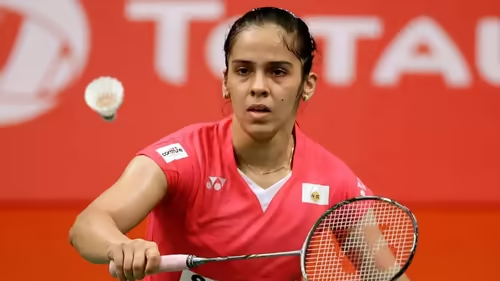
The Indian sporting world is bidding a heartfelt farewell to one of its most iconic figures. At 35, Saina Nehwal has officially announced her retirement from international badminton, closing a chapter that not only defined her life but also transformed the landscape of women’s sport in India . Her decision marks the end of an era—one characterized by relentless determination, historic milestones, and a quiet revolution that brought badminton from the sidelines to the center stage of national attention.
Nehwal’s retirement isn’t just about the absence of a player; it’s about the departure of a trailblazer who paved the way for every young girl who ever picked up a racquet and dared to dream big. Her legacy extends far beyond medals—it’s etched in the very culture of Indian athletics.
Saina Nehwal: Historic Firsts That Changed Indian Sport
When we talk about Saina Nehwal, we’re talking about a woman who didn’t just compete—she broke barriers. Her career is a masterclass in being the “first” in a system that often resisted change. Here are the landmark achievements that cemented her place in history:
- Olympic Pioneer: In 2012, at the London Olympics, Saina became the first Indian woman to win a medal in badminton, claiming bronze—a moment that sent the nation into celebration and proved Indian women could excel on the global stage .
- World No. 1: In April 2015, she reached the pinnacle of the BWF rankings, becoming the first Indian woman ever to be ranked World No. 1 in badminton—a feat that silenced critics and inspired a new generation .
- World Championship Finalist: She was also the first Indian woman to reach the final of the BWF World Championships (2015), showcasing her ability to compete with the absolute best under the brightest lights .
- Commonwealth & Asian Games Gold: Her cabinet includes gold from the 2010 Commonwealth Games and the 2014 Asian Games—rare continental dominance for an Indian shuttler .
From ‘Sania Mix-Ups’ to National Hero
Remember the early days? When news anchors would confuse her with tennis star Sania Mirza, calling her “Sania Nehwal”? Those awkward mix-ups were more than just funny errors—they reflected how little visibility women’s badminton had in India at the time. But Saina didn’t wait for recognition; she earned it, one match at a time.
Her rise coincided with India’s growing appetite for individual sports success. While cricket dominated headlines, Saina carved out her own space through sheer consistency and fighting spirit. She wasn’t always the flashiest player, but her court coverage, tactical intelligence, and never-say-die attitude made her a fan favorite. Over time, the “Sania mix-up” vanished—and “Saina Nehwal” became a household name synonymous with excellence .
The Grit Behind the Glory
Beneath the medals and accolades was a career marked by setbacks. Injuries, coaching changes, and intense competition from rising stars like P.V. Sindhu tested her resolve. Yet, she kept coming back—whether it was recovering from a serious knee injury or battling through form slumps in her late 20s and early 30s.
Her resilience was perhaps her greatest gift to Indian sport. She showed that longevity isn’t just about talent—it’s about discipline, mental toughness, and an unwavering love for the game. Even when she wasn’t winning titles, her presence in tournaments lifted the standard of competition and kept Indian badminton in the global conversation.
Inspiring a Generation and Beyond
It’s impossible to overstate Saina Nehwal’s role in popularizing badminton across India. Before her, the sport was niche. After her, academies sprouted in small towns, parents enrolled their daughters in coaching camps, and brands invested in women shuttlers.
She directly paved the way for P.V. Sindhu’s silver at Rio 2016 and subsequent successes. As Sindhu herself has acknowledged, Saina’s breakthroughs made it easier for others to follow. This mentor-mentee-turned-rival dynamic became one of Indian sport’s most compelling narratives—a healthy competition that elevated the entire ecosystem .
What Next for the Badminton Legend?
While she’s stepping away from competitive play, Saina Nehwal is unlikely to disappear from public life. With her experience, she’s a natural fit for roles in sports administration, coaching, or even policy-making to improve grassroots infrastructure. She’s also been vocal about athlete welfare and gender equity in sport—causes she may champion more actively in retirement.
For fans eager to relive her greatest moments, our [INTERNAL_LINK:saina_nehwal_career_highlights] archive offers a deep dive into her most iconic matches and interviews.
Conclusion: A Legacy Written in Shuttlecocks
Saina Nehwal’s retirement isn’t just the end of a career—it’s the closing of a foundational chapter in Indian sports history. She didn’t just win matches; she changed mindsets. She proved that an Indian woman from Haryana could stand atop the world rankings and hold her own against the best. Her journey from those early “Sania mix-ups” to sporting immortality is a testament to what’s possible with grit, grace, and unwavering belief. As the next generation of shuttlers takes the court, they do so on a path she helped build—one rally at a time.
Sources
- The Times of India: From Sania mix-ups to sporting immortality – farewell Nehwal
- BWF Official Rankings Archive, April 2015
- International Olympic Committee – London 2012 Badminton Results
- BWF World Championships 2015 Final Match Report
- For authoritative context on global badminton, see the Badminton World Federation (BWF) official site.