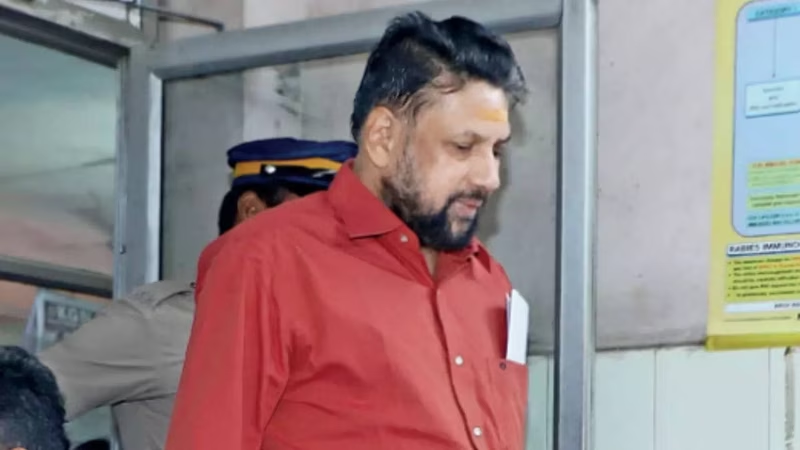
In a development that has shaken one of India’s most revered pilgrimage sites, the chief priest of Sabarimala Temple, Kandararu Rajeevaru, has been taken into custody in connection with the explosive Sabarimala gold theft case. The arrest, carried out by Kerala’s Special Investigation Team (SIT), marks a dramatic escalation in a scandal that blends religious sanctity, alleged corruption, and brazen violations of centuries-old ritual protocols .
At the heart of the controversy is the unauthorized removal and replating of sacred temple idols with gold—work reportedly conducted not within the sanctified temple complex, but at private workshops in Thrissur and Ernakulam. Even more damning, investigators allege Rajeevaru didn’t just overlook this breach; he gave what they describe as “silent permission,” effectively enabling a scheme that may have siphoned off lakhs worth of temple gold.
Table of Contents
- What Happened: The Idol Replating Scam
- Who Is Kandararu Rajeevaru—and Why His Arrest Matters
- The Role of Unnikrishnan Potti: Prime Accused
- Ritual Violations and Religious Outcry
- Sabarimala Gold Theft Case: Investigation Timeline
- Legal and Administrative Fallout
- Broader Implications for Temple Governance in Kerala
- Conclusion: A Crisis of Faith and Accountability
- Sources
What Happened: The Idol Replating Scam
According to SIT findings, several brass idols inside the Sabarimala temple were due for routine gold replating—a sacred process known as “thirumudi” or “swarna kavacham.” Traditionally, this work must be performed within the temple premises under strict priestly supervision and ritual purity.
However, investigators discovered that the idols were secretly transported to external workshops run by goldsmiths linked to Unnikrishnan Potti, a prominent Thrissur-based jeweler and the prime accused in the case. At these locations, the replating was allegedly done using substandard gold or even gold-plated alloys, while the original high-purity temple gold was diverted and sold on the open market.
Who Is Kandararu Rajeevaru—and Why His Arrest Matters
As the Tantri (chief priest) of Sabarimala, Rajeevaru holds immense spiritual authority. His role includes overseeing all rituals and ensuring adherence to Agama Shastra—the ancient texts governing temple conduct. His alleged complicity isn’t just a legal issue; it’s a profound betrayal of trust for millions of devotees who view Sabarimala as a divine abode, not an administrative asset.
The SIT contends that without Rajeevaru’s tacit approval, such a large-scale operation could not have occurred. His arrest sends a clear message: no position, however sacred, is above scrutiny when public trust and temple assets are at stake.
The Role of Unnikrishnan Potti: Prime Accused
Unnikrishnan Potti, a well-known figure in Kerala’s jewelry trade, was initially flagged after discrepancies emerged in gold procurement records submitted to the Travancore Devaswom Board (TDB)—the body managing Sabarimala. Investigators found that Potti’s firms received contracts worth over ₹2.5 crore for idol maintenance, yet delivered significantly less gold than invoiced .
Crucially, phone records and financial trails reveal frequent communication between Potti and Rajeevaru in the months leading up to the replating. Authorities suspect this relationship facilitated the entire scheme, with Potti handling logistics and profit-sharing, while Rajeevaru provided religious cover.
Ritual Violations and Religious Outcry
For devotees, the crime goes beyond theft—it’s sacrilege. Removing idols from the temple violates core tenets of Hindu worship, which hold that once consecrated, deities cannot be treated as mere objects. Performing replating outside the sanctum is considered spiritually polluting.
Religious scholars and temple rights activists have demanded immediate purification ceremonies (pratishta homam) and a complete audit of all temple artifacts. “This isn’t about money,” said Swami Vishwananda of the Kerala Dharma Sabha. “It’s about restoring the sanctity that was defiled.”
Sabarimala Gold Theft Case: Investigation Timeline
- October 2025: Routine audit by TDB flags irregularities in gold usage reports.
- November 2025: SIT formed under Kerala Police; forensic audit initiated.
- December 2025: Unnikrishnan Potti arrested; workshop raids uncover fake invoices.
- January 8, 2026: Kandararu Rajeevaru arrested after custodial interrogation of associates.
- January 10, 2026: Court remands both accused to judicial custody for 14 days.
Legal and Administrative Fallout
The arrests have triggered a chain reaction:
- The TDB has suspended all external maintenance contracts pending review.
- The Kerala High Court has taken suo motu cognizance, demanding a status report within two weeks.
- Opposition parties are calling for the resignation of the state’s Devaswom Minister.
Charges being framed include criminal conspiracy (IPC 120B), cheating (420), theft (379), and violations under the Prevention of Corruption Act. If convicted, both accused could face up to 7 years in prison.
Broader Implications for Temple Governance in Kerala
This scandal exposes systemic vulnerabilities in how Kerala’s temple wealth is managed. With over 3,000 temples under various Devaswom boards holding assets worth tens of thousands of crores, oversight remains fragmented and often politicized.
Experts advocate for reforms such as digitized inventory systems, third-party audits, and mandatory video documentation of all artifact handling—measures already implemented in Tamil Nadu’s HR&CE department [[EXTERNAL_LINK:https://hrce.tn.gov.in/]]. For more on temple administration reforms, see our feature on [INTERNAL_LINK:india-temple-wealth-management-reforms].
Conclusion: A Crisis of Faith and Accountability
The Sabarimala gold theft case is far more than a criminal investigation—it’s a test of institutional integrity and spiritual accountability. As the SIT digs deeper, the focus must remain not just on punishing the guilty, but on rebuilding the sacred trust between temples and the millions who place their faith in them. For Sabarimala’s devotees, justice won’t be served until both the stolen gold and the sanctity of their beloved shrine are fully restored.
Sources
- Times of India. “Sabarimala gold theft case: SIT arrests chief priest; links with Potti under probe.” https://timesofindia.indiatimes.com/…/articleshow/126446003.cms
- The Hindu. “Sabarimala Scam: How Temple Gold Was Diverted, Say Investigators.” January 9, 2026.
- Kerala Police – SIT Press Briefing Transcript, January 8, 2026.
- Hindu Religious and Charitable Endowments Department, Tamil Nadu. https://hrce.tn.gov.in/