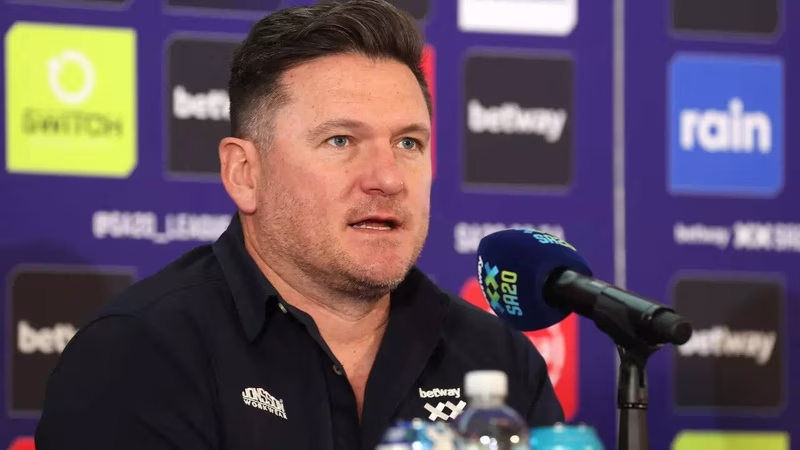
Rain may have dampened the pitches during the latest SA20 season, but it certainly didn’t dampen the league’s soaring commercial momentum. In a confident and revealing statement, SA20 League Commissioner Graeme Smith has declared that the tournament is enjoying “its strongest commercial year” to date—a bold claim that underscores just how rapidly this South African T20 franchise league has evolved since its 2023 debut .
Fueled by record-breaking ticket sales, surging broadcast viewership, and increasingly high-quality cricket, the SA20 is proving it’s far more than just another T20 offshoot. Backed by the financial muscle and operational expertise of India’s IPL franchises, the league is now setting its sights on ambitious new horizons—including potential team expansion and the launch of a dedicated women’s competition.
Table of Contents
- Why SA20 Is Having Its Strongest Commercial Year
- The IPL Effect: How Indian Ownership Changed the Game
- Beyond the Numbers: Fan Engagement and Cricket Quality
- Weathering the Storm: Rain and Resilience
- What’s Next? Expansion and a Women’s SA20 League
- Conclusion: SA20 as a Global T20 Powerhouse
- Sources
Why SA20 Is Having Its Strongest Commercial Year
When Graeme Smith—an iconic former Proteas captain turned league architect—says the SA20 is thriving commercially, he’s not speaking in vague terms. The evidence is in the data:
- Record Ticket Sales: Stadiums across South Africa saw unprecedented attendance, with multiple venues selling out well in advance of match days.
- Rising Viewership: Broadcast partners reported significant year-on-year growth in domestic and international audiences, particularly in key markets like India and the UK.
- Enhanced Sponsorship Value: Brands are increasingly viewing SA20 as a premium platform, leading to higher-value deals and longer-term partnerships.
This trifecta of success signals that the league has moved beyond novelty status and is now a serious player in the global sports entertainment market.
The IPL Effect: How Indian Ownership Changed the Game
A major catalyst behind SA20’s rapid ascent is its unique ownership model. Each of the six franchises is owned by an established IPL team—Chennai Super Kings, Mumbai Indians, Royal Challengers Bangalore, and others . This isn’t just about branding; it’s about importing a proven blueprint for success.
These IPL owners bring decades of experience in talent scouting, marketing, fan engagement, and stadium operations. They’ve helped professionalize every aspect of the SA20, from player auctions to social media strategy. As Smith noted, this backing has been “instrumental” in building credibility and attracting top-tier international players who might otherwise overlook a new league .
[INTERNAL_LINK:ipl-franchise-model-success] This symbiotic relationship also creates a seamless talent pipeline, with young South African prospects getting exposure to world-class coaching environments and potential IPL call-ups.
Beyond the Numbers: Fan Engagement and Cricket Quality
Commercial success in modern sport isn’t just about revenue—it’s about connection. The SA20 has excelled at creating a vibrant, inclusive atmosphere that resonates with local communities. From family-friendly zones to interactive fan zones and localized team identities, the league has made cricket feel accessible and exciting.
Equally important is the on-field product. The quality of cricket has noticeably improved since Season 1, with tighter matches, innovative batting, and strategic bowling. The presence of global stars like Kagiso Rabada, Faf du Plessis, and Rashid Khan—combined with emerging local talent—has raised the competitive bar significantly .
Weathering the Storm: Rain and Resilience
No season is perfect. The latest SA20 campaign faced repeated rain interruptions, forcing match postponements and logistical headaches. Yet, as Smith emphasized, the league’s underlying strength shone through: “Even with the weather challenges, our engagement metrics and commercial performance have never been stronger” .
This resilience speaks volumes about the robustness of the SA20 ecosystem. Fans kept showing up. Broadcasters maintained interest. Sponsors stayed committed. That level of trust doesn’t develop overnight—it’s earned through consistent delivery and transparent management.
What’s Next? Expansion and a Women’s SA20 League
Looking ahead, Smith hinted at two major developments on the horizon:
- Franchise Expansion: While no official timeline has been set, discussions are underway to add one or two new teams, potentially in cities like Bloemfontein or East London to broaden the league’s national footprint.
- Women’s SA20 League: Perhaps even more exciting is the serious consideration being given to launching a parallel women’s competition. This would align with global trends—like the WPL in India—and provide a massive boost to women’s cricket in South Africa .
Such moves wouldn’t just grow the league—they’d deepen its social impact, creating new pathways for female athletes and inspiring the next generation of fans.
Conclusion: SA20 as a Global T20 Powerhouse
The SA20’s journey from concept to commercial powerhouse in just three seasons is nothing short of remarkable. With Graeme Smith at the helm, IPL expertise in its DNA, and passionate fans filling stadiums, the league has cemented its place in the elite tier of global T20 competitions. As it eyes expansion and a potential women’s league, the SA20 isn’t just growing—it’s redefining the future of South African cricket on the world stage.
Sources
- ‘Commercially, we’re having our strongest year’ – Graeme Smith, Times of India
- SA20 League Structure and Franchise Owners, ESPNcricinfo
- How IPL Teams Are Building Global Empires, BBC Sport
- SA20 2025: Player Stats and Team Performance, Cricbuzz
- ICC Roadmap for Women’s Cricket Development, International Cricket Council (https://www.icc-cricket.com)