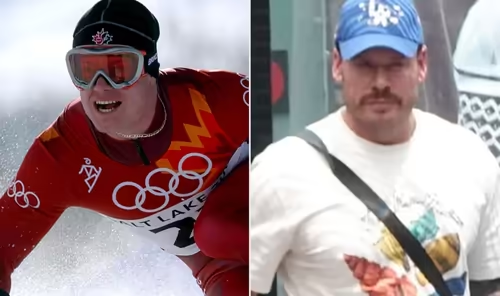
It’s a story that reads like a Hollywood thriller—but it’s all too real. Ryan Wedding, once a proud representative of Canada at the 2002 Winter Olympics in snowboarding, has been arrested after spending years as one of the FBI’s Ten Most Wanted fugitives. His alleged crimes? Orchestrating a sprawling transnational cocaine trafficking network and involvement in multiple murders across borders. This isn’t just a fall from grace—it’s a plunge into darkness that has left fans, law enforcement, and the sporting world stunned.
How does an Olympic athlete go from standing on the slopes of Salt Lake City to topping the FBI’s most dangerous list? The answer lies in a tangled web of ambition, addiction, and organized crime that unfolded over more than two decades. In this deep-dive investigation, we unpack the timeline, the charges, and the chilling transformation of a national athlete into an international criminal.
Table of Contents
- Who Is Ryan Wedding? The Olympic Beginning
- The Descent: Alleged Crimes and Fugitive Life
- Ryan Wedding’s Arrest: How He Was Finally Caught
- The FBI’s Most Wanted List: What It Means
- Why This Case Matters Beyond Headlines
- Lessons for the Sports World
- Conclusion: A Cautionary Tale of Talent and Temptation
- Sources
Who Is Ryan Wedding? The Olympic Beginning
Born in British Columbia, Canada, Ryan Wedding was a rising star in the early 2000s snowboarding scene. Known for his fearless style and technical precision, he earned a spot on Team Canada for the 2002 Winter Olympics in Salt Lake City. Though he didn’t medal, representing his country on the world’s biggest winter sports stage was a crowning achievement.
Back then, he was seen as part of a new generation of extreme athletes pushing boundaries—not just on the slopes, but in culture and lifestyle. But behind the adrenaline and accolades, sources suggest Wedding struggled with personal demons, including substance abuse and financial instability post-retirement—a common but often overlooked crisis among elite athletes .
The Descent: Alleged Crimes and Fugitive Life
According to U.S. federal prosecutors, Wedding’s criminal enterprise began in the late 2000s. What started as small-time drug distribution allegedly escalated into a sophisticated operation spanning Canada, the United States, and Mexico. Authorities claim he used his international travel history and connections from the sports world to move narcotics undetected.
The charges against him are severe:
- Conspiracy to distribute over 5 kilograms of cocaine
- Racketeering (RICO Act violations)
- Multiple counts of murder-for-hire linked to rival traffickers
- Money laundering through shell companies and cryptocurrency
By 2020, after failing to appear in court and vanishing during pre-trial proceedings, Wedding was added to the FBI’s Ten Most Wanted Fugitives list—a rare distinction usually reserved for terrorists and serial criminals .
Ryan Wedding’s Arrest: How He Was Finally Caught
After nearly six years on the run, Wedding was apprehended in early 2026 in a remote area of northern Mexico. According to the FBI, a tip from a former associate—possibly motivated by a $100,000 reward—led agents to a secluded ranch where he’d been living under a false identity.
He was found in possession of forged documents, encrypted phones, and a significant amount of cash. Notably, authorities say he had maintained a low profile, avoiding social media and even plastic surgery to alter his appearance—yet his distinctive snowboarding tattoo reportedly gave him away during a routine ID check .
The FBI’s Most Wanted List: What It Means
Being named to the FBI’s Ten Most Wanted list is no small matter. Established in 1950, the list has featured only around 500 individuals in its history—including Osama bin Laden and Whitey Bulger. Inclusion signifies that the person poses a serious threat to public safety and that their capture is a top national priority.
The FBI states that over 90% of those listed are eventually captured, often due to public tips. The bureau’s public campaign around Ryan Wedding included digital billboards, social media alerts, and even features on true-crime podcasts—all part of a strategy that ultimately paid off .
Why This Case Matters Beyond Headlines
This isn’t just about one man’s downfall. It raises critical questions:
- Athlete Aftercare: What support systems exist for Olympians after their competitive careers end?
- Border Security: How do transnational drug networks exploit legitimate travel histories?
- Public Trust: When heroes become villains, how does it impact youth who idolize them?
Organizations like the Canadian Olympic Committee have since emphasized mental health and career transition programs—but critics argue these efforts came too late for some .
Lessons for the Sports World
The Ryan Wedding saga should serve as a wake-up call. Athletic talent doesn’t immunize anyone from poor choices or systemic vulnerabilities. Sports federations must invest in:
- Long-term financial literacy training
- Substance abuse prevention and treatment
- Post-career mentorship and employment pathways
For more on athlete welfare, see our feature on [INTERNAL_LINK:mental-health-in-professional-sports].
Conclusion: A Cautionary Tale of Talent and Temptation
Ryan Wedding’s journey—from Olympic slopes to a federal prison cell—is a stark reminder that fame and skill offer no shield against moral collapse. His story isn’t just about crime; it’s about the fragility of identity when the spotlight fades. As legal proceedings unfold, the world watches not just for justice, but for lessons that might prevent another athlete from taking the same tragic path.
Sources
- Times of India: Ex-Olympic snowboarder Ryan Wedding arrested after shocking fall to FBI fugitive
- FBI Ten Most Wanted: FBI.gov – Ten Most Wanted Fugitives
- U.S. Department of Justice Indictment: DOJ Press Release on Ryan Wedding Charges
- Canadian Olympic Committee Athlete Support: Olympians.ca – Post-Career Resources