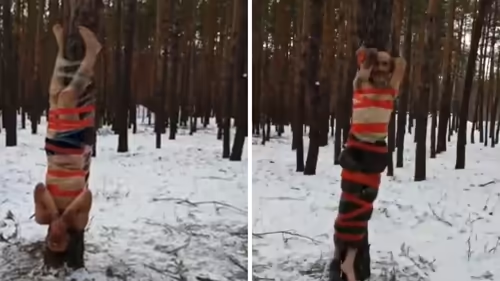
A new and deeply disturbing video has emerged from the front lines of the Russia-Ukraine war, depicting a scene that has sent shockwaves through the international community. The footage shows two Russian soldiers, half-naked and shivering, tied to a tree in sub-zero temperatures and forced to eat snow as a form of punishment. This brutal act, allegedly for charges of desertion and disobeying orders, offers a chilling glimpse into the desperate and often savage measures being employed within the Russian ranks.
The authenticity of the video has been widely circulated on social media and reported by multiple news outlets, with activists and analysts confirming its grim reality [[1]]. This incident is not an isolated event but appears to be part of a broader pattern of harsh, extrajudicial field punishments used to maintain discipline among a force grappling with massive losses and plummeting morale [[2]].
Table of Contents
- The Disturbing Footage: What We Know
- Why Are Russian Soldiers Deserting in Droves?
- Are Russian Soldiers Tied to Trees a Violation of International Law?
- The Deep-Rooted Culture of Dedovshchina
- Conclusion: A Brutal Reality of Modern Warfare
- Sources
The Disturbing Footage: What We Know
The video, which first appeared on Telegram channels linked to Russian military units, shows a commander overseeing what appears to be a makeshift field tribunal [[6]]. The two accused soldiers are stripped to their underwear, bound to a tree with their arms above their heads, and subjected to humiliation and physical torment in the freezing cold. Reports suggest the alleged offenses ranged from desertion to the theft of the commander’s personal property, like cannabis [[6]].
This method of punishment, known colloquially as “torture by cold,” is a terrifyingly effective tool of control. In such extreme conditions, hypothermia can set in rapidly, leading to organ failure and death. The public nature of the act serves as a stark warning to other soldiers contemplating disobedience or retreat.
Why Are Russian Soldiers Deserting in Droves?
The emergence of such brutal tactics is a direct symptom of a much larger problem for the Russian military: mass desertion. While exact figures are hard to verify, estimates from late 2025 suggest that as many as 70,000 Russian troops may have abandoned their posts in a single year [[17]]. This crisis of morale is fueled by a combination of factors:
- Poor Leadership and Equipment: Many conscripts and mobilized soldiers report being sent to the front with inadequate training, faulty equipment, and little strategic direction.
- Massive Casualties: Russia has suffered staggering losses since the full-scale invasion began, creating a pervasive sense of hopelessness and fear among the ranks [[15]].
- Lack of Motivation: For many forcibly conscripted Russians, the war holds no personal meaning, making them far more likely to flee than to fight to the death.
It’s worth noting that Ukraine is also facing its own significant challenges with desertion, with its defense minister reporting figures as high as 200,000 [[9]]. However, the methods of internal discipline appear to differ markedly.
Are Russian Soldiers Tied to Trees a Violation of International Law?
While the victims in this case are Russian soldiers punished by their own command, the incident still raises critical legal and ethical questions. The Geneva Conventions, the cornerstone of international humanitarian law, primarily protect individuals who are hors de combat (out of combat) and in the hands of an enemy power, such as prisoners of war (POWs) [[18]].
However, the core principles of humane treatment are not confined to enemy combatants. The conventions establish a fundamental standard for human dignity in conflict. The treatment shown in the video—subjecting individuals to cruel, inhuman, and degrading treatment—flies in the face of these universal principles. Article 13 of the Third Geneva Convention explicitly states that POWs “must at all times be humanely treated” and that any form of physical or mental torture is prohibited [[23]]. While this specific article applies to POWs, the spirit of the law condemns such brutality in all contexts of armed conflict.
The Deep-Rooted Culture of Dedovshchina
This incident cannot be viewed in isolation. It is a modern manifestation of a long-standing and deeply ingrained problem within the Russian military known as dedovshchina. This term refers to the systemic hazing, bullying, and abuse of junior conscripts by their more senior peers [[7]].
For decades, dedovshchina has been a notorious feature of Russian military life, often leading to severe injury, psychological trauma, and even death. The chaos and desperation of the war in Ukraine have seemingly amplified these brutal practices, allowing commanders to use extreme violence as a primary tool for maintaining order. This culture of impunity and violence from within is arguably as damaging to the Russian war effort as any external threat from Ukrainian forces.
Conclusion: A Brutal Reality of Modern Warfare
The video of the Russian soldiers tied to trees is more than just a shocking piece of footage; it is a powerful symbol of the war’s corrosive effect on humanity and military discipline. It reveals a force that is fracturing under the pressure of its own unsustainable strategy, resorting to medieval forms of punishment to keep its reluctant soldiers in line. As peace talks stall and the fighting continues, such acts of internal brutality will likely persist, painting a grim picture of the true cost of this devastating conflict.
Sources
- [[1]] TVP World: “Brutal: Video shows Russian ‘deserters’ tied upside down”
- [[2]] Medium: “Brutal Punishments for Desertion Reveal Russian Army’s Collapse”
- [[6]] The Sun: “Moment Putin’s barbaric troops tie half-naked comrades to trees”
- [[7]] Wikipedia: “Dedovshchina”
- [[9]] Anews: “Ukraine reports 200K desertions, 2M draft evaders”
- [[15]] UAWire: “Desertion rates soar: Russian soldiers flee front lines in Donetsk”
- [[17]] United24 Media: “Russian Military Faces Record Desertions as 70000 troops expected to abandon units in 2025”
- [[18]] Legal Information Institute: “Geneva Conventions and their additional protocols”
- [[23]] Office of the High Commissioner for Human Rights: “Geneva Convention relative to the Treatment of Prisoners of War”