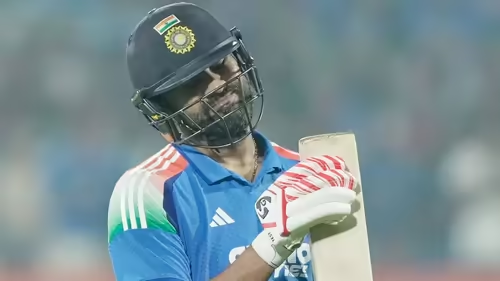
For over a decade, the name Rohit Sharma has been synonymous with explosive, boundary-laden batting. He was the ‘Hitman,’ the man who could dismantle any bowling attack on his day, the architect of three ODI double-centuries. But if you’ve watched India’s recent games against New Zealand, you might be wondering: where has that fearless aggressor gone?
In its place stands a more measured, almost restrained, version of the Indian captain. His cover drives are still elegant, but the ramp shots and audacious pulls have been replaced by a focus on occupation of the crease. This shift towards a more cautious batting style has sparked intense debate among fans and pundits alike. Is this the end of an era, or just a necessary tactical pivot?
Table of Contents
- The Numbers Don’t Lie: Rohit’s Strike Rate Slide
- Why is Rohit Sharma Batting Cautiously? The Official Explanation
- Beyond the Excuses: A Tactical Shift or Loss of Form?
- The Captain’s Burden: How Leadership Changes a Batsman
- What This Means for India’s World Cup Hopes
- Conclusion: Can the Hitman Make a Comeback?
- Sources
The Numbers Don’t Lie: Rohit’s Strike Rate Slide
While Rohit Sharma’s overall average remains a respectable figure, a closer look at his recent performances reveals a clear trend. His strike rate, once a formidable weapon in India’s top order, has seen a noticeable dip. In the high-octane world of modern ODI and T20 cricket, where run rates are paramount, this slowdown is impossible to ignore.
Fans who are used to seeing him race to a fifty in 30 balls are now watching him take 50 or more deliveries for the same milestone. The intent to dominate from the outset appears to have been dialed back significantly, leading to questions about his current role in the team’s batting blueprint.
Why is Rohit Sharma Batting Cautiously? The Official Explanation
The Indian team management, however, insists this isn’t a conscious strategic overhaul. According to assistant coach Ryan ten Doeschate, the primary reasons for this subdued aggression are external factors, not a change in mindset .
“It’s been a combination of things,” Ten Doeschate explained. “Firstly, the pitches we’ve encountered haven’t been your typical flat, batting paradises. They’ve offered a bit more for the bowlers, demanding greater respect. Secondly, and perhaps more importantly, Rohit hasn’t had a lot of match practice recently.”
The logic is sound. Without the rhythm of regular competitive cricket, even the greatest players can feel a bit rusty. In such conditions, on tricky surfaces, it’s natural for a batsman to prioritize building an innings over taking unnecessary risks. So, the Rohit Sharma batting cautiously narrative might be less about a new philosophy and more about a temporary state of adaptation.
Beyond the Excuses: A Tactical Shift or Loss of Form?
While the official line provides a plausible explanation, many analysts believe there’s more to the story. As a captain, Rohit’s responsibilities have evolved. He’s no longer just a batsman; he’s the leader of a young, dynamic side. This burden often subconsciously shifts a player’s focus from personal milestones to team stability.
Furthermore, age and experience can naturally lead to a more calculated approach. Having seen countless battles, a veteran player might choose to anchor the innings, allowing younger, more explosive talents like Shubman Gill or Yashasvi Jaiswal to play the aggressor roles around him. This could be a deliberate, unspoken strategy to balance the team’s batting order.
[INTERNAL_LINK:india-cricket-team-future-stars] This potential role redefinition is a common path for aging greats, but it’s a delicate balance to strike.
The Captain’s Burden: How Leadership Changes a Batsman
History is littered with examples of brilliant batsmen whose scoring rates slowed after taking on the captaincy. The mental load of managing a team, making constant tactical decisions, and shouldering the team’s success or failure can drain the mental energy required for free-flowing, instinctive stroke play.
Rohit, as a two-time T20 World Cup-winning captain, understands this pressure better than most. His cautious starts could be his way of ensuring he stays at the crease long enough to guide the team through the middle overs, a role that is just as valuable as a quickfire 50, albeit far less glamorous.
What This Means for India’s World Cup Hopes
For India’s upcoming campaigns, particularly in ICC events, this evolution in Rohit’s game presents both a challenge and an opportunity. The challenge is clear: if the top order doesn’t provide a strong platform in the powerplay, the middle order is under immense pressure.
However, the opportunity lies in creating a more resilient and multi-dimensional batting unit. If Rohit can provide a solid foundation while the likes of Suryakumar Yadav and Hardik Pandya unleash their power, India’s batting could become even more formidable and less reliant on one man’s explosive start.
Conclusion: Can the Hitman Make a Comeback?
The question on every fan’s mind is whether we’ll see the old ‘Hitman’ again. The answer likely lies in a blend of circumstances. On a flat pitch, with a bit of match practice under his belt, and with the team needing a quick start, the aggressive Rohit Sharma is undoubtedly still in there. The Rohit Sharma batting cautiously phase may simply be a pragmatic response to current conditions, not a permanent retirement of his most dangerous weapon. For India’s sake, and for the fans’ entertainment, let’s hope the switch can be flipped back on when it matters most.
Sources
- Times of India: A different Rohit Sharma: Why India’s opener is batting more cautiously now
- International Cricket Council (ICC): Official ICC Player Statistics
- ESPNcricinfo: Rohit Sharma Profile and Career Stats