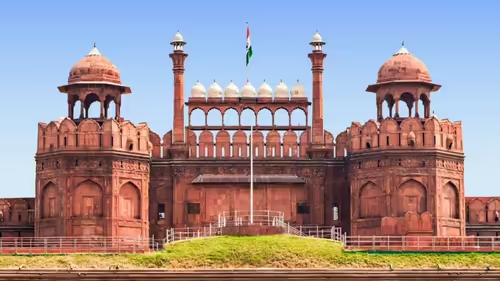
As India prepares to celebrate its 77th Republic Day with the iconic parade down Rajpath, a shadow looms over the capital. Top intelligence inputs have revealed a chilling warning: Khalistani and Bangladesh-based terror outfits are actively plotting attacks in Delhi and other major cities during the national holiday. The threat isn’t speculative—it’s operational, with operatives already believed to be embedded through criminal networks in Punjab and beyond .
Table of Contents
- Intel Warnings and the Nature of the Threat
- Who Are the Groups Behind the Republic Day Terror Threat?
- How Punjab Gangsters Are Being Used as Terror Operatives
- Delhi and National Security Response
- Broader Implications for India’s Internal Security
- What Citizens Should Know and Do
- Conclusion: Vigilance in the Face of Evolving Threats
- Sources
Intel Warnings and the Nature of the Threat
Multiple agencies—including the Intelligence Bureau (IB) and Research and Analysis Wing (R&AW)—have issued red alerts following intercepted communications and human intelligence reports. The core concern? A coordinated effort by transnational terror cells to exploit the high-profile nature of Republic Day celebrations to maximize psychological and media impact.
Unlike past threats that focused on border areas or religious sites, this one specifically targets symbolic centers of national power: New Delhi’s Kartavya Path (formerly Rajpath), government complexes, and even metro hubs. The modus operandi appears to involve low-intensity but high-disruption tactics—IEDs, drone-dropped explosives, or armed assaults—designed to create panic rather than mass casualties .
Who Are the Groups Behind the Republic Day Terror Threat?
Two distinct but increasingly interconnected networks are under scrutiny:
Khalistani Extremist Elements
Operating primarily from Canada, the UK, and Pakistan, groups like Sikhs for Justice (SFJ) and remnants of Babbar Khalsa International (BKI) have intensified propaganda campaigns calling for “disruption” on January 26. Indian agencies note a worrying trend: these outfits are no longer just fundraising abroad—they’re directly coordinating with on-ground criminal gangs in Punjab for logistics, safe houses, and weapon smuggling .
Bangladesh-Based Militant Networks
While less visible, Bangladesh-linked groups such as Jamaat-ul-Mujahideen Bangladesh (JMB) and factions aligned with ISIS-Khorasan have shown renewed interest in targeting India. Intelligence suggests they view Republic Day as an opportunity to strike at the heart of a “secular democracy” they oppose ideologically. Their entry points are often through West Bengal and Assam, but recent operations indicate deeper penetration into Delhi-NCR via sleeper cells .
How Punjab Gangsters Are Being Used as Terror Operatives
One of the most alarming revelations is the fusion of organized crime and terrorism. Punjab’s notorious gangsters—many with histories of extortion, arms trafficking, and drug smuggling—are now being recruited as “force multipliers” by terror handlers.
Why? Because they offer:
- Local knowledge: Familiarity with terrain, police routines, and escape routes.
- Access to weapons: Established black-market channels for firearms and explosives.
- Plausible deniability: Their criminal records mask terror intent, making detection harder.
This hybrid model—where a gangster might carry out a bombing not for ideology but for money or protection—represents a dangerous evolution in India’s internal security landscape .
Delhi and National Security Response
In response, security has been escalated to Z+ Plus levels across the capital:
- Drone-jamming systems deployed along the entire parade route.
- National Security Guard (NSG) teams on standby at multiple locations.
- AI-powered CCTV surveillance with facial recognition scanning crowds in real time.
- Joint ops between Delhi Police, IB, and Army’s Counter-Insurgency units in suspected hideouts.
Similar measures are underway in Mumbai, Chennai, and Kolkata, though Delhi remains the primary focus due to its symbolic and administrative significance.
Broader Implications for India’s Internal Security
This Republic Day terror threat underscores a troubling shift: the blurring line between transnational terrorism and domestic organized crime. As noted by the South Asia Terrorism Portal, such synergies make traditional counter-terrorism strategies less effective .
For more on India’s evolving security doctrine, see our analysis on [INTERNAL_LINK:india-counter-terrorism-strategy-post-2025].
What Citizens Should Know and Do
While authorities manage the operational response, public vigilance remains critical:
- Avoid unattended bags or vehicles near crowded venues.
- Report suspicious behavior to local police or via the National Cyber Crime Reporting Portal.
- Follow official updates from Delhi Police (@DelhiPolice) and MHA (@MHA_India) on social media.
- Do not share unverified rumors—misinformation can cause unnecessary panic.
Conclusion: Vigilance in the Face of Evolving Threats
The Republic Day terror threat is a stark reminder that national celebrations can also be moments of vulnerability. Yet, India’s robust intelligence apparatus and layered security protocols have consistently thwarted such plots in the past. As the tricolor unfurls on January 26, it will fly not just as a symbol of pride—but of resilience against those who seek to undermine it.
Sources
- Times of India: Republic Day alert: Intel flags terror threat from Bangladeshi, Khalistani outfits
- Ministry of Home Affairs (MHA): Official Statements on Internal Security
- South Asia Terrorism Portal (SATP): Analysis of Khalistani & Regional Militancy
- National Investigation Agency (NIA): Case Dossiers on Cross-Border Terror Links