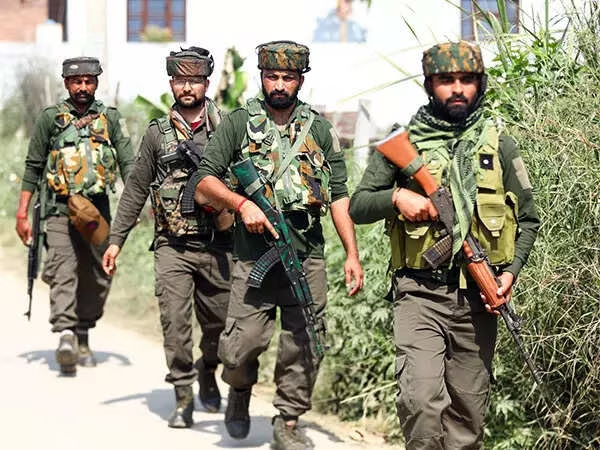
In the pre-dawn silence of January 1, 2026, the serene landscape of Poonch district in Jammu and Kashmir was shattered by a new and insidious threat. A drone, originating from across the Line of Control (LoC), infiltrated Indian airspace for over five minutes before dropping a sinister payload: an Improvised Explosive Device (IED) concealed in a tiffin box, along with ammunition rounds and narcotics . This brazen act has triggered a massive combing operation by the Indian Army, Special Operations Group, and local police, forcing us to confront a harsh reality: the rules of engagement on the LoC are being rewritten by unmanned aerial vehicles.
Table of Contents
- The Incident: Unfolding in Poonch
- Why the Poonch IED Drop Is a Game-Changer
- The Rising Drone Menace on the LoC
- Indian Army’s Counter-Drone Strategy
- What’s Next for Border Security?
- Conclusion: A New Frontier of Conflict
- Sources
The Incident: Unfolding in Poonch
The drone was detected in the Khadi Karmada area of Poonch, a region long familiar with cross-border tensions . Security forces were immediately alerted, and a large-scale cordon and search operation (CASO) was launched to secure the area and locate the dropped package . The recovery was swift and chilling: a bag containing an IED, hundreds of rounds of ammunition, and a significant quantity of narcotics .
This discovery is a stark reminder that the enemy’s tactics are evolving. Gone are the days when infiltration was solely a ground-based affair. The use of a drone to deliver a ready-to-use explosive device directly into Indian territory represents a significant escalation in both intent and capability. It’s a tactic designed to bypass traditional ground defenses and sow terror with pinpoint accuracy.
Why the Poonch IED Drop Is a Game-Changer
The Poonch IED drop is not just another border skirmish; it’s a strategic shift. Here’s why it matters:
- Stealth and Precision: Drones can fly at low altitudes, making them hard to detect by conventional radar. They can deliver their payload to a specific, pre-identified location, maximizing the element of surprise.
- Reducing Human Risk: For hostile actors, using a drone eliminates the need to send a human infiltrator, who could be captured or killed, providing valuable intelligence to Indian forces.
- Multi-Purpose Threat: The payload wasn’t just an IED; it included ammunition and drugs. This “one-stop-shop” delivery system funds terrorist activities (through drug sales) and directly arms them, all in a single, covert mission .
The Rising Drone Menace on the LoC
This incident is part of a disturbing trend. Over the past two years, the Indian Army has reported a sharp increase in drone sightings and neutralizations along the LoC. In fact, in a single year, security forces downed a staggering 237 drones linked to terrorist and hostile state activities .
Both India and Pakistan have been investing heavily in their unmanned aerial capabilities for reconnaissance and surveillance . However, the recent use of these drones for active offensive operations—like dropping IEDs and weapons—marks a dangerous transition from passive observation to active aggression. It’s a new frontier in air warfare for South Asia, with drones no longer just eyes in the sky but hands that deliver death .
Indian Army’s Counter-Drone Strategy
Faced with this evolving threat, the Indian military has been forced to adapt at an extraordinary pace. Their counter-drone strategy is multi-layered and increasingly sophisticated:
From Detection to Destruction
The primary defense is early detection. The army has been deploying a network of specialized radar systems, RF (radio frequency) detectors, and even electro-optical systems to spot these small, low-flying objects. Once detected, the response is swift. Indian forces have successfully used indigenously developed systems like the ‘Integrated Drone Detection and Interdiction System’ to bring down hostile drones .
Proactive Drills and Doctrines
It’s not just about technology. The army is also conducting dedicated counter-drone exercises, such as the recent two-day drill in the desert sector, to develop and refine tactical doctrines for this new form of warfare . These exercises are crucial for preparing troops to respond effectively in real-world scenarios.
Link to Broader Security Ops
Counter-drone efforts are now seamlessly integrated with broader counter-terrorism operations in Jammu and Kashmir. The intensified winter operations in districts like Kishtwar and Doda are now accompanied by a vigilant eye on the skies . This holistic approach is essential to disrupt the entire supply chain of terror.
What’s Next for Border Security?
The Poonch incident is a loud and clear warning. To stay ahead of this threat, India must accelerate its efforts in three key areas:
- Technology Investment: Continued R&D in AI-powered detection systems, drone-jamming technology, and even counter-drone drones that can physically intercept or capture hostile UAVs.
- International Collaboration: Partnering with global leaders in defense technology to acquire advanced systems and intelligence on emerging drone threats.
- Robust Legal Frameworks: Strengthening domestic laws to deal with the complex issue of drone-based smuggling and attacks, ensuring swift prosecution of those involved.
For readers interested in the broader implications of surveillance technology, our deep dive into [INTERNAL_LINK:modern-surveillance-state] offers valuable context.
Conclusion: A New Frontier of Conflict
The Poonch IED drop is a watershed moment. It confirms that the airspace over the LoC is now a contested domain, as critical as the land itself. While the Indian Army’s swift response in recovering the payload and launching a massive search operation is commendable, it’s a temporary solution to a rapidly growing problem. The security establishment must remain vigilant, innovative, and proactive. The future of border security in Jammu and Kashmir will be decided not just by the soldier on the ground, but by the systems that protect the skies above him.
Sources
- Times of India: Combing op in Poonch after drone drops ‘IED’ along LoC
- Hindustan Times: Pakistani Drone Drops IED, Ammunition, Drugs In J&K’s Poonch
- Institute for Defence Studies and Analyses: Military Drones in India and Pakistan
- The Defence Journal: Stepping Up Defense: Indian Forces Counter Drone Threat