Table of Contents
- The Headline-Grabber: More Than Just a Hat
- Decoding the PM Modi Republic Day Turban
- Why a Rajasthani Safa? The Cultural Significance
- A Decade of Draped Diplomacy: Modi’s Turban Legacy
- The Power of Cloth: Politics and Identity
- Conclusion: A Symbol for a Nation
- Sources
The Headline-Grabber: More Than Just a Hat
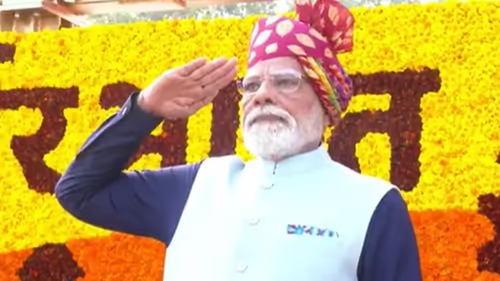
On a crisp January morning in 2026, as the nation celebrated its 77th Republic Day, all eyes weren’t just on the marching contingents or the flypast. They were fixed on Prime Minister Narendra Modi’s head. His choice of a vibrant red PM Modi Republic Day turban, streaked with golden-yellow and adorned with intricate zari motifs, was an instant showstopper. But this wasn’t mere pageantry. This carefully curated piece of headwear is a deliberate, strategic, and deeply symbolic act that speaks volumes about India’s cultural narrative and its leader’s vision.
Decoding the PM Modi Republic Day Turban
The turban in question is a classic Rajasthani safa, specifically crafted in the ancient Bandhej (or Bandhani) tie-dye technique. The dominant maroon-red base, a color often associated with valor and celebration in Rajasthan, is punctuated by bold streaks of mustard yellow—a hue that signifies energy and festivity . The addition of shimmering zari motifs elevates it from a simple folk accessory to a regal statement piece, reflecting the opulence of Rajputana royalty .
This safa was perfectly paired with his signature light blue Nehru jacket and a navy kurta-pyjama, creating a look that masterfully blends formal state attire with a strong, unapologetic nod to regional heritage. It’s a visual representation of the government’s “Ek Bharat, Shreshtha Bharat” (One India, Great India) initiative, showcasing how national pride can be woven from the diverse threads of local traditions .
The Art of Bandhej: A Heritage Crafted in Color
Bandhej is far more than just a pattern; it’s a centuries-old craft primarily from Gujarat and Rajasthan. The process involves meticulously tying thousands of tiny knots on the fabric before dyeing it. When the knots are untied, they reveal a stunning constellation of dots and patterns. Wearing a Bandhej safa on a national platform like Republic Day is a direct endorsement of this UNESCO-recognized intangible cultural heritage, bringing global attention to India’s artisanal legacy .
Why a Rajasthani Safa? The Cultural Significance
In Rajasthani culture, the safa is not merely a garment. It is a symbol of pride, honour, and nobility . Historically, the style, color, and way of tying a safa could convey a man’s social status, his community, his mood, and even the occasion he was attending. For a groom, a wedding safa is a sacred heirloom. For a leader, it becomes a crown of responsibility .
By choosing this specific headgear, PM Modi connects his modern leadership role with the historical gravitas of Rajput kings and chieftains. It’s a subtle yet powerful way of saying that the values of courage, hospitality, and dignity—core tenets of Rajputana culture—are also the bedrock of the modern Indian state.
A Decade of Draped Diplomacy: Modi’s Turban Legacy
This isn’t a one-off. Since his first Republic Day as Prime Minister in 2014, Modi has turned his headgear into a form of soft power diplomacy . Each year, his turban or cap is a carefully chosen ambassador for a different Indian state:
- 2021: A Halari Pagdi from Jamnagar, Gujarat, gifted by the royal family .
- 2020: A bright orange turban representing the spirit of ‘Swarnim Bharat’ (Golden India).
- 2015: Another vibrant Rajasthani Bandhani turban, setting a precedent for his future choices .
This consistent practice has transformed his PM Modi Republic Day turban into a highly anticipated annual event, sparking national conversations about India’s rich textile diversity and regional identities .
The Power of Cloth: Politics and Identity
Critics might dismiss this as a calculated political stunt, but its impact is undeniable. In a country as vast and varied as India, such a gesture serves as a powerful tool for cultural integration. It tells the people of Rajasthan that their heritage is seen and valued at the highest level of national governance. It educates the rest of the country about a tradition they might not be familiar with. And for the world, it projects an image of India that is both modern and deeply rooted in its past.
This strategy of using traditional attire as a political and cultural instrument is a hallmark of Modi’s public image, reinforcing a connection between contemporary governance and the nation’s timeless cultural roots .
Conclusion: A Symbol for a Nation
PM Modi’s red and yellow Rajasthani safa on Republic Day 2026 was much more than a stylish accessory. It was a meticulously chosen symbol that encapsulated heritage, regional pride, national unity, and a celebration of India’s artisanal genius. In a single piece of cloth, it told a story of a nation that honors its past while confidently marching towards its future. Whether you see it as a political statement or a cultural tribute, its significance in the tapestry of modern India is impossible to ignore.
Sources
- Republic World: Republic Day 2026: PM Modi Sports Multicoloured Pagdi
- Business Today: Republic Day 2026: PM Modi’s red yellow Bandhej safa steals the Kartavya Path spotlight
- Firstpost: Republic Day 2026: Why PM Modi’s Republic Day Safa continues to draw attention
- Zari Jaipur Blog: Bandhej: de-coding the traditional tie & dye art of rajasthan
- Manyavar Blog: The Cultural Heritage of the Rajputi Safa in Weddings
- [INTERNAL_LINK:indian-textile-heritage]
- [INTERNAL_LINK:republic-day-celebrations-history]