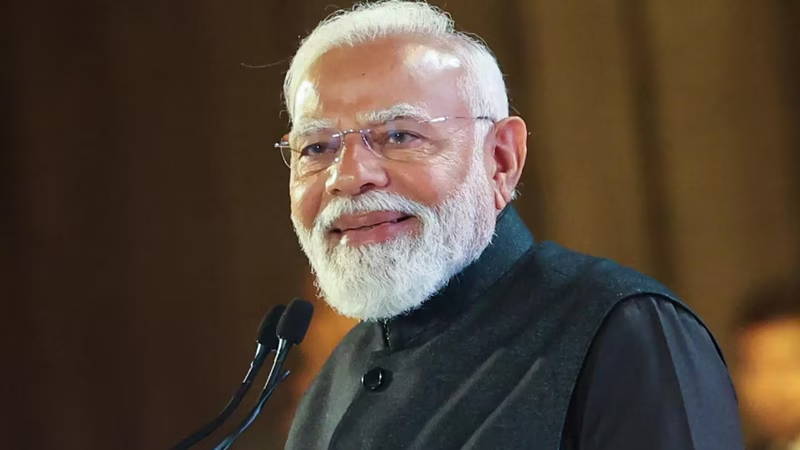
As the winter sun began its northward journey on January 14, 2026, millions across India woke up to the sweet aroma of sesame laddoos, freshly cooked pongal, and the joyous echoes of ‘Bihuwa!’—marking the arrival of Makar Sankranti, Pongal, and Magh Bihu. And right alongside them was Prime Minister Narendra Modi, who didn’t just send a tweet—but immersed himself in the spirit of these pan-Indian harvest festivals with a rare public celebration in Delhi.
In a move that blended tradition with national symbolism, PM Modi participated in a Pongal cooking event at his residence, shared festive greetings for all three regional variants of the same solar festival, and used the occasion to spotlight the unsung heroes behind the celebrations: India’s farmers. His message? That these festivals aren’t just about rituals—they’re living testaments to India’s agricultural soul, ecological wisdom, and cultural unity in diversity.
But why does this matter beyond the photo ops? Because in an era of rapid urbanization and climate uncertainty, PM Modi’s emphasis on harvest festivals carries deeper political, social, and environmental undertones. Let’s unpack what his celebration truly signifies—and why these ancient festivals are more relevant than ever.
Table of Contents
- What Happened During PM Modi’s Celebration?
- PM Modi Makar Sankranti Message Decoded
- The Three Faces of One Festival: Sankranti, Pongal, Bihu
- Why Harvest Festivals Matter in Modern India
- Honoring Farmers Beyond the Festive Season
- How Citizens Can Embrace These Traditions
- Conclusion: A Festival of Unity and Gratitude
- Sources
What Happened During PM Modi’s Celebration?
On the morning of January 14, PM Modi hosted a small but symbolic Pongal preparation at his official residence in New Delhi. Dressed in a crisp white kurta, he oversaw the traditional cooking of sweet pongal—a dish made of rice, jaggery, lentils, and milk—in a clay pot, allowing it to boil over as a sign of abundance (‘Pongalo Pongal!’).
He then released a multi-lingual video message extending warm wishes for:
- Makar Sankranti (celebrated in North and West India)
- Pongal (Tamil Nadu and parts of South India)
- Magh Bihu (Assam and Northeast India)
“These festivals remind us of our deep connection with nature, the cycles of the earth, and the dignity of labor,” he said, standing beside farmers from different states .
PM Modi Makar Sankranti Message Decoded
Modi’s statement wasn’t generic goodwill. It carried three strategic themes:
- Cultural Integration: By naming all three regional names, he reinforced the idea of “Ek Bharat, Shreshtha Bharat”—one India expressed through diverse traditions.
- Farmer-Centric Narrative: At a time when agricultural distress remains a national concern, linking festivals to farmers’ contributions is both empathetic and politically resonant.
- Eco-Consciousness: He highlighted how these festivals celebrate solar energy, water conservation, and seasonal eating—aligning with his government’s sustainability goals.
This approach mirrors his past engagements with Diwali (cleanliness), Holi (organic colors), and Chhath Puja (river rejuvenation)—using festivals as platforms for policy messaging.
The Three Faces of One Festival: Sankranti, Pongal, Bihu
Though known by different names, all three mark the same astronomical event: the sun’s transition into Capricorn (Makara), signaling longer days and the end of winter solstice.
- Makar Sankranti: Kite flying in Gujarat, khichdi in UP, til-gul (sesame-jaggery sweets) in Maharashtra.
- Pongal: Four-day celebration in Tamil Nadu featuring cattle worship (Mattu Pongal) and community feasts.
- Magh Bihu: Assamese festival with bonfires (Meji), traditional games, and homemade rice cakes (pitha).
[INTERNAL_LINK:regional-harvest-festivals-of-india-explained] offers a state-by-state guide to these vibrant traditions.
Why Harvest Festivals Matter in Modern India
Beyond ritual, these festivals encode practical wisdom:
- Nutrition: Sesame and jaggery boost immunity in winter.
- Water Management: Many rituals involve thanking rivers or wells.
- Community Bonding: Shared meals and public celebrations rebuild social fabric.
In a country where over 58% of the population still depends on agriculture, these festivals are not relics—they’re living cultural infrastructure.
For authoritative insights into India’s agrarian calendar, the Government of India’s Ministry of Agriculture portal details how traditional knowledge informs modern farming policies.
Honoring Farmers Beyond the Festive Season
While festive tributes are welcome, critics argue real respect lies in policy: fair MSP, crop insurance, and market access. PM Modi’s government has pushed initiatives like PM-KISAN and e-NAM, but farmer protests show gaps remain.
His Sankranti message, therefore, walks a fine line—celebrating farmers culturally while facing ongoing demands for structural reform.
How Citizens Can Embrace These Traditions
You don’t need to be a farmer to participate meaningfully:
- Buy directly from local farmers’ markets.
- Prepare traditional dishes using seasonal, organic ingredients.
- Share stories of your family’s festival customs on social media to preserve oral history.
- Donate to NGOs supporting rural education or sustainable farming.
Conclusion: A Festival of Unity and Gratitude
PM Modi’s celebration of PM Modi Makar Sankranti, Pongal, and Magh Bihu is more than ceremonial—it’s a call to reconnect with India’s agrarian roots and recognize the interdependence of culture, ecology, and economy. In honoring the sun, the soil, and the sower, these festivals offer a blueprint for a more grounded, grateful, and united nation.
Sources
- Times of India: “Happiness, prosperity: PM Modi wishes Makar Sankranti, Magh Bihu…” (January 14, 2026)
- Press Information Bureau (PIB) – Official Statement by PMO (Jan 14, 2026)
- Ministry of Agriculture & Farmers Welfare, Government of India
- Cultural Anthropology Journal: “Harvest Festivals as Social Cohesion Tools in Rural India” (2025)