Table of Contents
- A Landmark Ruling for Celebrity Rights
- What Are Pawan Kalyan Personality Rights?
- The Defendants: A Who’s Who of Tech and Commerce
- The Danger of AI and Deepfakes
- Why This Case Sets a Powerful Precedent
- What Happens Next?
- Conclusion
- Sources
A Landmark Ruling for Celebrity Rights
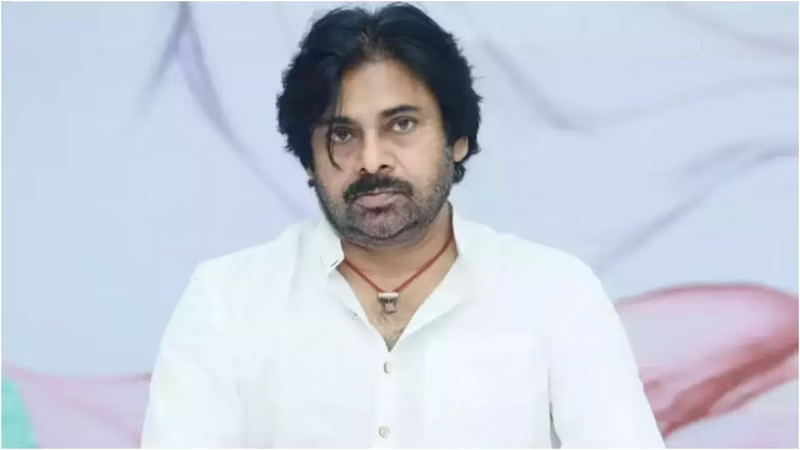
In a judgment that has sent ripples through the digital and e-commerce world, the Delhi High Court has issued a strong interim order in favor of Andhra Pradesh Deputy Chief Minister and megastar Pawan Kalyan. The court has found a “clear violation” of his Pawan Kalyan personality rights and has barred major players like Flipkart, Amazon, Meesho, Google, and Meta from using his name, image, likeness, or voice for any commercial purpose without his explicit permission .
This isn’t just a win for one celebrity; it’s a pivotal moment for the legal protection of personal identity in India’s rapidly evolving digital landscape. The court’s recognition of a “clear violation” sets a high bar for what constitutes an infringement, moving beyond simple copyright to the very essence of a person’s public persona.
What Are Pawan Kalyan Personality Rights?
Personality rights, sometimes called the “right of publicity,” are a form of intellectual property that protects an individual’s name, image, likeness, voice, and other identifiable aspects of their identity from being used commercially without their consent. For a figure as iconic as Pawan Kalyan, whose face and voice are instantly recognizable to millions, these rights are not just personal but have immense commercial value.
Prior to this case, the legal framework for personality rights in India was somewhat nebulous, often argued under the broader umbrellas of trademark law or the right to privacy under Article 21 of the Constitution. The Delhi High Court’s firm stance in this instance provides a much-needed, clear judicial affirmation of these rights as a distinct and enforceable legal concept, especially in the digital age [INTERNAL_LINK:what-are-personality-rights-in-india].
The Defendants: A Who’s Who of Tech and Commerce
The list of entities pulled into this legal battle reads like a roll call of the digital economy’s biggest names. The court’s order specifically targets:
- E-commerce giants: Flipkart, Amazon, and Meesho were likely cited for allowing third-party sellers on their platforms to use Pawan Kalyan’s image to promote unrelated products, from clothing to household goods .
- Tech and social media titans: Google and Meta (the parent company of Facebook, Instagram, and WhatsApp) were likely included for their role in hosting and amplifying this unauthorized content through search results and targeted ads .
The court’s decision to hold these platforms accountable is significant. It underscores the principle that they cannot simply hide behind their status as intermediaries; they have a responsibility to police the commercial misuse of identity on their vast networks.
The Danger of AI and Deepfakes
What makes this case particularly urgent and forward-looking is its explicit mention of the misuse of Pawan Kalyan’s voice in the context of artificial intelligence. The court order comes at a time when AI tools can generate incredibly realistic audio and video impersonations—so-called “deepfakes”—with frightening ease .
Imagine a fake advertisement where a digital clone of Pawan Kalyan endorses a dubious financial scheme or a harmful product. The potential for reputational and financial damage is enormous. By including voice and AI in its scope, the Delhi High Court has shown remarkable foresight, creating a legal shield not just against current abuses, but against the sophisticated threats of the immediate future.
Why This Case Sets a Powerful Precedent
This ruling is more than just a personal victory for Pawan Kalyan. It serves as a powerful deterrent and a legal blueprint for countless others.
Every public figure in India—from actors and athletes to politicians and business leaders—now has a stronger, court-backed position to defend their identity. It sends a clear message to e-commerce sellers and digital marketers that piggybacking on a celebrity’s fame without paying for it (or, more importantly, without their consent) is a legal minefield. It also puts pressure on the government to potentially enact more comprehensive legislation to codify these rights, similar to laws in the United States .
What Happens Next?
The interim order is just the beginning. The Delhi High Court has scheduled the next rounds of hearings for February 9 and May 12, 2026. During this period, the named companies will have the opportunity to formally respond to the allegations and seek relief from the court if they believe their use was legitimate .
However, the onus is now heavily on them to prove their case. In the meantime, the ban on unauthorized commercial use stands, offering Pawan Kalyan immediate protection. This case is being watched closely by the entire entertainment and legal fraternity as a potential watershed moment for digital rights in India.
Conclusion
The Delhi High Court’s strong stance in protecting Pawan Kalyan personality rights is a landmark judgment that transcends a single celebrity. It is a critical step in defining the boundaries of personal identity in an online world where it can be so easily copied, manipulated, and exploited for profit. By taking on tech giants, e-commerce platforms, and the emerging threat of AI, the court has delivered a powerful verdict that upholds the dignity and commercial value of an individual’s persona. This case will undoubtedly shape the legal landscape for years to come, empowering individuals to take control of their digital selves.
Sources
- Times of India: Delhi High Court spots clear violation of Pawan Kalyan’s personality rights
- Live Law: Delhi HC restrains Flipkart, Amazon from using Pawan Kalyan’s name, image
- Bar and Bench: Delhi HC issues notice in Pawan Kalyan’s suit against e-commerce platforms
- World Intellectual Property Organization (WIPO): Personality Rights and the Right of Publicity
- Supreme Court of India: Justice K.S. Puttaswamy (Retd.) vs Union Of India (Right to Privacy Judgment)