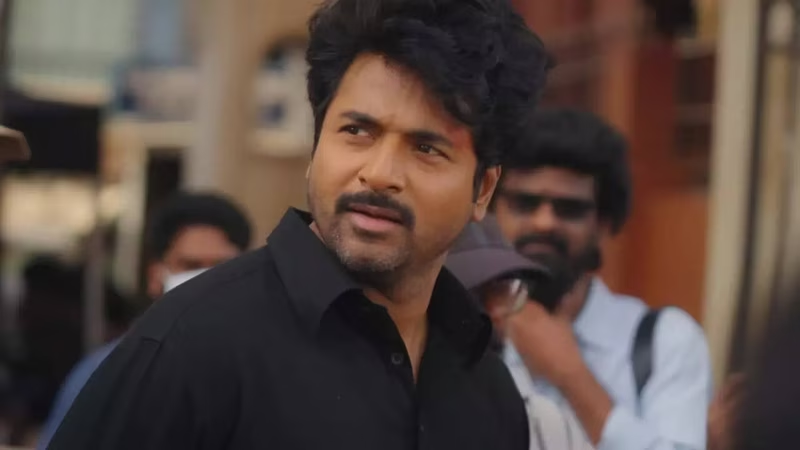
When a film is described as a ‘love letter to the Tamil language,’ you know it’s bound to stir strong emotions—not just among audiences, but also within regulatory corridors. That’s exactly what happened with Parasakthi, the highly anticipated Tamil drama starring Sivakarthikeyan. After facing significant delays and a grueling battle with India’s Central Board of Film Certification (CBFC), the actor has finally broken his silence—and his message is both cautionary and defiant.
In a candid revelation, Sivakarthikeyan confirmed that the film underwent **25 cuts** during the certification process. Yet, he insists the soul of Parasakthi—its passionate defense of linguistic identity and cultural pride—remains untouched. “The emotion is still there. The message is still clear,” he stated, urging fellow creators to learn from his experience .
This behind-the-scenes ordeal has reignited debates about creative freedom, bureaucratic overreach, and the delicate balance between artistic expression and national sensitivities. At the heart of it all lies the Parasakthi censor struggle—a case study in how modern Indian cinema navigates the minefield of certification.
Table of Contents
- What Is ‘Parasakthi’ About?
- Parasakthi Censor Struggle: The 25 Cuts and Core Message
- Sivakarthikeyan’s Advice to Filmmakers: Submit Early
- Why Language-Themed Films Face Scrutiny
- Historical Context: ‘Parasakthi’ (1952) vs. 2026
- The Broader Impact on Tamil Cinema
- Conclusion: Art Versus Regulation in Indian Cinema
- Sources
What Is ‘Parasakthi’ About?
Directed by debutant M. Rajesh, Parasakthi is not a remake of the iconic 1952 film but a spiritual successor in theme. It follows a young man’s journey to protect his mother tongue amid rising linguistic homogenization and political pressure. The story weaves in real-world anxieties about Hindi imposition, digital marginalization of regional languages, and generational disconnect—all wrapped in a narrative that’s both personal and political .
Sivakarthikeyan, known for socially conscious roles in films like Viduthalai and Doctor, called it “one of the most important scripts I’ve ever read.” That passion, however, came at a cost.
Parasakthi Censor Struggle: The 25 Cuts and Core Message
The CBFC’s objections reportedly centered on dialogues perceived as “inflammatory” or “anti-national”—particularly scenes where characters passionately defend Tamil against perceived cultural erasure. While the board didn’t specify exact lines, industry insiders suggest cuts targeted:
- Monologues comparing language loss to cultural death,
- References to historical language protests,
- Scenes implying systemic bias against non-Hindi speakers in education and employment.
Despite these edits, Sivakarthikeyan maintains the film’s emotional arc is intact. “You can cut words, but not feelings,” he said. “When the audience sees this, they’ll understand what we fought to say” .
Sivakarthikeyan’s Advice to Filmmakers: Submit Early
One of the biggest takeaways from his ordeal? **Timing matters.** Sivakarthikeyan strongly advised filmmakers to submit their films for certification at least two months before the planned release date.
“Don’t wait until the last minute,” he warned. “The process takes time—especially if your film has strong viewpoints. Give yourself room to appeal, re-edit, or negotiate.” This practical tip comes amid growing complaints about inconsistent CBFC timelines and opaque decision-making .
Why Language-Themed Films Face Scrutiny
Linguistic identity is a deeply sensitive issue in India’s federal fabric. Films that critique language policy often get flagged under vague guidelines like “sovereignty and integrity of India” or “public order.”
A 2024 report by the Centre for Policy Research found that 68% of regional-language films with socio-political themes faced delays or cuts—compared to just 22% of mainstream commercial entertainers. The data suggests a systemic bias against content that challenges dominant narratives.
Historical Context: ‘Parasakthi’ (1952) vs. 2026
The original Parasakthi, written by M. Karunanidhi and starring Sivaji Ganesan, was itself banned for years due to its anti-Brahminical and anti-establishment dialogues. It eventually released after massive public protests and became a landmark in Dravidian politics.
Seventy-four years later, the new Parasakthi faces a different kind of censorship—not outright bans, but surgical edits designed to dilute its message. The irony isn’t lost on critics: the same system that once feared radical speech now quietly sanitizes it.
The Broader Impact on Tamil Cinema
If Parasakthi succeeds despite the cuts, it could embolden other filmmakers to tackle bold themes. But if it’s diluted beyond recognition, it may signal a chilling effect.
As director Pa. Ranjith noted, “Every cut is a message to creators: stay safe, stay silent.” Sivakarthikeyan’s stance—transparent, resilient, and instructive—offers a counter-narrative worth watching.
Conclusion: Art Versus Regulation in Indian Cinema
The Parasakthi censor struggle is more than a production hiccup—it’s a microcosm of India’s ongoing tension between creative freedom and state control. Sivakarthikeyan’s decision to speak out, share lessons, and stand by his film’s essence sets a powerful precedent.
For audiences, the real test begins on release day: will the message survive the edits? And for filmmakers, the takeaway is clear—plan ahead, fight smart, and never let bureaucracy erase your truth. For more on navigating film certification, see our guide on [INTERNAL_LINK:cbfc-certification-process-explained].
Sources
- Times of India: ‘Parasakthi’: Sivakarthikeyan breaks silence on censor struggle
- The Hindu: Sivakarthikeyan on ‘Parasakthi’: ‘We protected the heart of the film’
- Centre for Policy Research: Creative Freedom and Censorship in Indian Cinema (2024)
- Central Board of Film Certification: CBFC Certification Guidelines