Table of Contents
- The Latest Salvo: PCB’s Promo
- The Roots of the Handshake Controversy
- Why a Simple Gesture Carries So Much Weight
- T20 World Cup 2026: The Stage is Set in Colombo
- Conclusion: More Than Just a Game
- Sources
The cricketing world is once again holding its breath as political tensions between India and Pakistan spill onto the pitch—or rather, just off it. In a move that’s equal parts marketing stunt and geopolitical jab, the Pakistan Cricket Board (PCB) has reignited the infamous handshake controversy through a promotional video for their recent T20 series against Australia . This isn’t just about a missed greeting; it’s a calculated reminder of a deep-seated rift that promises to make their upcoming T20 World Cup 2026 clash one of the most anticipated—and tense—matches in recent history.
The Latest Salvo: PCB’s Promo
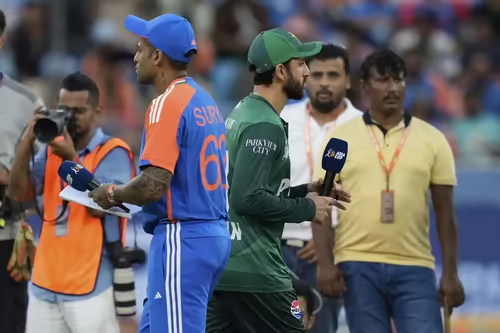
The PCB’s promotional clip for the Australia series featured a seemingly innocuous scene: a tourist in Pakistan forgetting to shake hands with a local. The accompanying text, however, delivered the sting: “Handshake bhool gaye aap?” (Did you forget to shake hands?) . For anyone following the subcontinent’s cricketing drama, the reference was unmistakable. It was a direct, albeit subtle, dig at the Indian team’s refusal to shake hands with their Pakistani counterparts during the ACC Asia Cup 2025 .
This promotional tactic has sparked a fresh wave of debate on social media, with many Indian fans calling it an unnecessary provocation that drags sport into the murky waters of politics . The PCB, by choosing this narrative, has effectively kept the handshake controversy alive in the public consciousness, ensuring it will be a major talking point leading up to the next India-Pakistan fixture.
The Roots of the Handshake Controversy
To understand the weight of this gesture, we need to go back to the source. The handshake snub wasn’t a random act of poor sportsmanship. It was a deliberate team decision made in the aftermath of the devastating Pahalgam terror attack in April 2025, which claimed the lives of 26 civilians . India held Pakistan-based groups responsible for the attack.
In response, the Indian government launched ‘Operation Sindoor’ in May 2025, conducting strikes on terrorist bases across the border . In this highly charged atmosphere, the Indian cricket team, led by captain Suryakumar Yadav, decided that a handshake would be seen as a sign of normalcy that simply didn’t exist . Their message was clear: they were dedicating their victory to the victims and the armed forces, and a friendly post-match ritual was out of the question .
The fallout was immediate. The Pakistan camp felt slighted, with some even threatening to leave the Asia Cup midway . The incident, which should have been a simple sporting exchange, became a global headline, illustrating just how deeply intertwined cricket and national sentiment are in this rivalry.
Why a Simple Gesture Carries So Much Weight
In most international sports, a handshake is a perfunctory, almost automatic show of respect. But in the context of the India Pakistan cricket rivalry, it’s anything but simple. Cricket matches between these two nations are rarely just about the game. They are proxy battles, laden with decades of political history, conflict, and national pride.
Here’s why the handshake matters so much:
- Symbol of Diplomacy: In the absence of formal diplomatic channels, cricket has often served as a backchannel for dialogue. A handshake can signal a thaw in relations.
- National Sentiment: The players are seen as representatives of their nation. Their actions on the field are scrutinized as reflections of the country’s stance.
- Media Amplification: Every micro-expression, every avoided glance, is magnified by a massive, passionate fanbase and a voracious media machine on both sides.
By refusing the handshake, India sent a powerful political message. By referencing it in their promo, Pakistan is attempting to frame that message as a breach of sporting etiquette, turning the tables in the court of public opinion.
T20 World Cup 2026: The Stage is Set in Colombo
All of this simmering tension is building towards a single, explosive event: the T20 World Cup 2026 group stage match between India and Pakistan. The ICC has confirmed the fixture will take place on February 15, 2026, at the R. Premadasa Stadium in Colombo, Sri Lanka .
This neutral venue adds another layer of complexity. Will the Indian team maintain their stance? Will the PCB use the build-up to further stoke the fires? The match is already one of the most anticipated on the calendar, but the handshake controversy has guaranteed it will be watched not just for its sporting merit, but for its political and cultural significance.
For fans of the game, it’s a frustrating reminder that their beloved sport is often held hostage by forces beyond the boundary ropes. Yet, it’s also a testament to the unique power of this particular rivalry. No other fixture in cricket commands such a blend of raw sporting passion and high-stakes national drama.
Conclusion: More Than Just a Game
The PCB’s promotional dig is more than just a cheeky marketing ploy; it’s a strategic move in a long-running narrative. The handshake controversy is a potent symbol of the fractured relationship between the two nations, and its resurrection ensures that the upcoming T20 World Cup clash will be about far more than just 20 overs of cricket. As we count down to February 15, 2026, the world will be watching—not just to see who wins the match, but to see what happens in the moments before and after, when a simple handshake could speak volumes. For a deeper look at the history of this intense rivalry, check out our guide on [INTERNAL_LINK:india-pakistan-cricket-history].
Sources
[1] Times of India. “Handshake row returns: Pakistan takes dig at India ahead of T20 World Cup – Watch”. https://timesofindia.indiatimes.com/sports/cricket/news/handshake-row-returns-pakistan-takes-dig-at-india-ahead-of-t20-world-cup-watch/articleshow/127173278.cms
[4] Various news reports on PCB’s promotional video.
[5] Reports on the Asia Cup 2025 handshake incident.
[6] Social media reaction to PCB’s promo.
[10] Coverage of Operation Sindoor and its context.
[13] Reporting on the Pahalgam terror attack.
[14] Statements from Indian cricket captain Suryakumar Yadav.
[15] Team India’s official stance on the handshake.
[17] ICC official announcement of the T20 World Cup 2026 schedule. https://www.icc-cricket.com/media-releases/3938345-icc-announces-schedule-for-icc-mens-t20-world-cup-2026