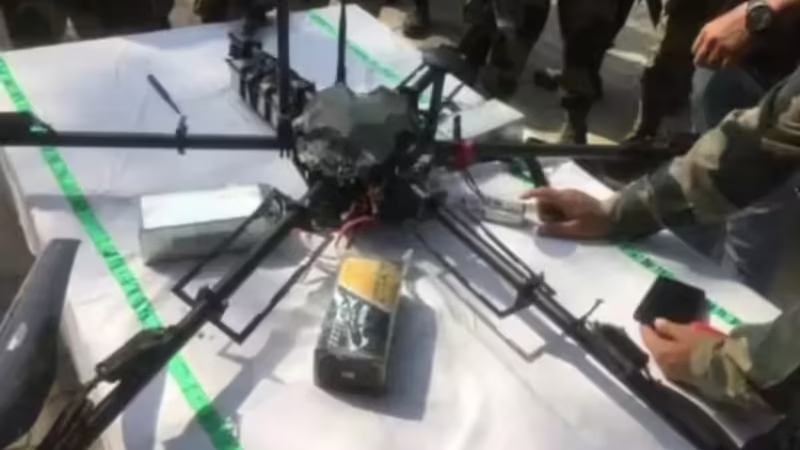
In the quiet fields of a Samba village in Jammu, an ominous discovery has sent shockwaves through India’s national security apparatus. Acting on a specific intelligence tip, security forces recovered a significant arms consignment that had been dropped by a drone originating from Pakistan .
This isn’t an isolated event—it’s part of a dangerous and growing trend where hostile elements are using unmanned aerial vehicles (UAVs) to bypass traditional border defenses and smuggle weapons, narcotics, and other contraband into Indian territory. The Pakistan drone arms drop in Samba is a stark reminder that the battlefield has moved to the skies, and India’s response must be equally agile and robust.
Table of Contents
- The Samba Incident: What Was Recovered?
- Why Pakistan Drones Are a Growing Threat
- How India Is Fighting Back: Counter-Drone Tech
- The Bigger Picture: Hybrid Warfare on the Border
- Impact on Local Communities in Jammu
- What Happens Next?
- Conclusion: Securing India’s Skies
- Sources
The Samba Incident: What Was Recovered?
Based on credible intelligence, a joint team of the Border Security Force (BSF) and local police launched a search operation in a village near Samba, close to the International Border (IB). Their efforts led to the recovery of a package containing:
- Several pistols and revolvers,
- Ammunition rounds,
- Magazines and other firearm accessories.
Initial forensic analysis confirmed that the weapons were of foreign origin, and technical evidence—including radar signatures and drone debris—pointed to the UAV having flown in from across the border in Pakistan . This marks yet another instance in a series of similar seizures in Punjab and Jammu over the past two years.
Why Pakistan Drones Are a Growing Threat
The use of drones for smuggling represents a strategic shift by anti-India elements. It’s a low-cost, low-risk method with a high potential payoff. Here’s why it’s so effective for them:
- Bypassing Ground Defenses: India’s border fencing and patrols are formidable, but they can’t stop something flying 200 feet above.
- Hard to Detect: Small, commercially available drones are difficult to spot on radar and can operate under the cover of darkness.
- Plausible Deniability: Pakistan can dismiss these incidents as “rogue elements,” avoiding direct state accountability.
According to data from the Ministry of Home Affairs, over 200 such drone sightings and interceptions were reported along the western border in 2023 alone—a number that has been steadily climbing since 2021 .
How India Is Fighting Back: Counter-Drone Tech
Recognizing the severity of this new front, India has been rapidly deploying a multi-layered counter-drone strategy. The BSF and the Indian Army are now equipped with a suite of advanced technologies:
- RF Jammers: Devices that disrupt the radio signal between the drone and its operator, forcing it to land or return.
- Drone Detection Radars: Specialized systems that can pick up the small radar cross-section of micro-drones.
- AI-Powered Surveillance: Integrating drone detection with existing CCTV and thermal imaging networks for real-time tracking.
- Kinetic Systems: In critical zones, laser-based or net-firing systems are being tested to physically neutralize hostile UAVs.
For a deeper look at India’s defense modernization, see our report on [INTERNAL_LINK:india-counter-drone-technology].
The Bigger Picture: Hybrid Warfare on the Border
This Pakistan drone arms drop is not just about a few guns; it’s a component of a larger hybrid warfare strategy. By arming local radicalized youth or sleeper cells, hostile agencies aim to fuel instability in sensitive regions like Jammu and Kashmir without engaging in direct military conflict.
The goal is to create a persistent, low-intensity threat that drains India’s resources, creates fear among civilians, and distracts from larger strategic objectives. It’s a tactic that blurs the lines between crime, terrorism, and state-sponsored aggression.
Impact on Local Communities in Jammu
For the villagers living near the IB, these incidents are deeply unsettling. Their farms and homes, once symbols of peace, are now potential drop zones for weapons of violence. The security forces have launched extensive awareness campaigns, urging locals to report any suspicious flying objects or unattended packages immediately.
Community cooperation has become a vital layer of defense. In many cases, it’s a vigilant farmer or shepherd who first spots the drone, providing the crucial tip that leads to a seizure.
What Happens Next?
The recovery in Samba will trigger several actions:
- A detailed forensic and technical investigation to trace the drone’s origin and the network behind it.
- An intelligence review to assess if more drops were planned for the same area.
- A potential diplomatic démarche to Pakistan, although past protests have yielded little result.
- An acceleration in the deployment of counter-drone grids along vulnerable sectors of the IB.
Conclusion: Securing India’s Skies
The arms consignment recovered from the Samba village is a clear and present danger, underscoring the urgent need to secure India’s airspace as diligently as its land borders. The Pakistan drone arms drop phenomenon is a symptom of a new kind of asymmetric warfare, one that demands constant innovation, investment, and vigilance. As technology evolves, so must our defenses. For the safety of our soldiers and citizens alike, the sky can no longer be the limit for our security strategy.
Sources
- Times of India: Arms consignment dropped by Pakistan drone recovered from Samba village
- The Hindu: BSF seizes Pakistani drone with pistols in Jammu
- Press Information Bureau (PIB): Ministry of Home Affairs on Drone Threats
- Institute for Defence Studies and Analyses (IDSA): Drone Warfare on the India-Pakistan Border