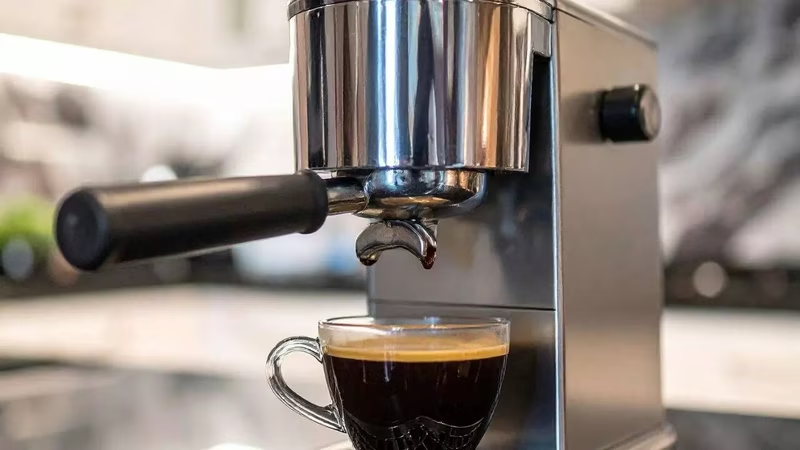
We all love that mid-morning pick-me-up from the office coffee machine. It’s convenient, social, and just what you need to power through that 3 PM slump. But what if your daily cup of joe is secretly working against your health? Recent research is sounding a major alarm: office coffee machine health risks are a very real, yet often overlooked, workplace hazard.
Table of Contents
- The Cholesterol Culprit in Your Cup
- Why Your Office Brew is (Dangerously) Different
- The Invisible Germ Factory in the Break Room
- Your Action Plan for a Healthier Brew
- Conclusion: Don’t Quit Coffee, Just Get Smarter
- Sources
The Cholesterol Culprit in Your Cup
Your office coffee machine health risks start with two unassuming compounds: cafestol and kahweol. These natural diterpenes found in coffee oils are powerful cholesterol elevators. Studies have consistently shown that they significantly raise LDL (“bad”) cholesterol and triglyceride levels in the blood .
While a single cup might not cause a dramatic spike, the problem is one of consistent, long-term exposure. For many professionals, that office coffee machine is their primary source of caffeine, meaning they could be ingesting these compounds daily for years. This chronic intake is a known risk factor for cardiovascular disease.
Why Your Office Brew is (Dangerously) Different
So, is all coffee bad for your cholesterol? Thankfully, no. The key difference lies in the filter. A standard paper drip coffee maker uses a paper filter that effectively traps the oily cafestol and kahweol, leaving you with a heart-healthier cup .
The trouble is, many office coffee machines—especially espresso machines, French press-style brewers, and pod systems that don’t use a full paper filter—do a poor job of removing these compounds. Swedish researchers found that coffee from common workplace machines contains dangerously high levels of these cholesterol-raising substances compared to properly filtered brews [[3], [4]].
One study starkly put it: participants who drank unfiltered coffee had the highest rates of heart disease and early mortality, while those who drank filtered coffee actually had lower mortality rates than non-coffee drinkers [[21], [26]]. The filtration method isn’t just a preference; it’s a critical health decision.
The Invisible Germ Factory in the Break Room
Beyond the chemical risks, the physical state of the machine itself is a major concern. Office coffee makers are notorious for being breeding grounds for bacteria, yeast, and mold. The warm, moist, and nutrient-rich environment—especially in the drip tray and grounds container—is a microbial paradise .
These machines are often on a “set it and forget it” maintenance schedule, which means they are rarely cleaned thoroughly. Over time, a slimy layer of microbes called a biofilm builds up inside the water lines and on internal surfaces . This microbial contamination in coffee makers is incredibly hard to remove and can harbor pathogens like E. coli and Listeria .
Regularly sipping coffee that has passed through this contaminated system can lead to gastrointestinal upset and, for those with compromised immune systems, more serious respiratory or other infections .
Your Action Plan for a Healthier Brew
Don’t panic and ditch your office coffee just yet. You can mitigate these office coffee machine health risks with a few smart strategies:
For the Coffee Itself
- Opt for Filtered Coffee: If your office offers a traditional drip coffee maker with a paper filter, that’s your safest bet. It removes up to 95% of the cafestol and kahweol .
- Be Wary of Espresso & Pods: While delicious, these methods retain most of the coffee oils. Enjoy them as an occasional treat, not your daily staple.
- Ask About the Machine Type: If you’re unsure, ask your office manager what kind of brewer they use. Knowledge is your first line of defense.
For Cleanliness
- Advocate for a Cleaning Schedule: Suggest that your office implement a weekly deep-clean routine. Critical parts like the drip tray, carafe, and water reservoir should be scrubbed with hot, soapy water.
- Monthly Descaling is a Must: Mineral buildup (limescale) not only affects taste but also provides a surface for biofilm to cling to. A monthly rinse with a vinegar solution or a commercial descaler is essential .
- Keep Your Own Mug Clean: Don’t forget your personal mug! The constant exposure to coffee oils can also harbor bacteria on its surface .
If your workplace is unresponsive, consider bringing your own pre-brewed coffee from home, where you have full control over both the brewing method and cleanliness.
Conclusion: Don’t Quit Coffee, Just Get Smarter
Coffee itself has many documented health benefits, from its rich antioxidant profile to its potential to boost cognitive function. The problem isn’t coffee; it’s the specific context of the office coffee machine health risks. By understanding the dangers of unfiltered brews and poor hygiene, you can take proactive steps to enjoy your caffeine fix without the hidden health tax. Talk to your colleagues, speak with management, and become an advocate for a healthier break room.
Sources
- Times of India: Hidden health risks of office coffee machines
- Urgert, R., & Katan, M. B. (1996). The cholesterol-raising factor from coffee beans. PMC.
- University of Gothenburg. (2025). Workplace coffee might increase your cholesterol levels.
- Tverdal, A., et al. (2020). Coffee consumption and mortality from cardiovascular diseases and all causes. American Heart Association.
- Zupančič, J., et al. (2018). Synergistic Interactions in Microbial Biofilms. International Journal of Food Microbiology.