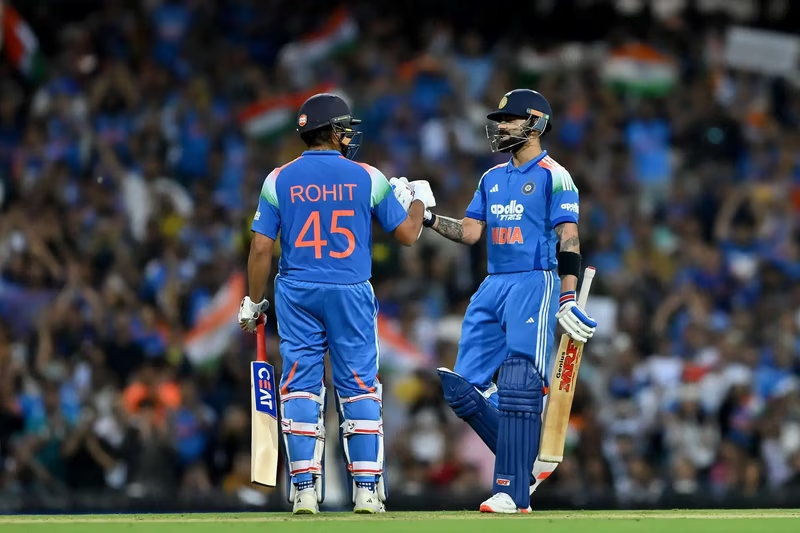
‘Why can’t we?’ It’s a simple, yet powerful, question that cuts through the noise of modern cricket’s chaotic calendar. And it’s coming from a voice that commands respect: former India star Irfan Pathan. His target? The baffling lack of ambition in international ODI scheduling that’s failing to capitalize on the final, golden years of two of the game’s greatest ever 50-over batters: Virat Kohli and Rohit Sharma .
At a time when many, including Ashwin, have sounded the death knell for the format, Pathan offers a counter-narrative filled with hope and a clear action plan. He sees not a dying format, but a sleeping giant—one that just needs the right spark, in the form of strategic ODI scheduling, to roar back to life .
Table of Contents
- The Kohli-Rohit Effect: A Renaissance for ODIs
- Irfan Pathan: ‘Why Can’t We Have More ODIs?’
- The Case for Longer Series and Multi-Team Tournaments
- Current ODI Scheduling: A Missed Opportunity
- A Blueprint for the Future of ODI Cricket
- Conclusion: Seize the Moment
- Sources
The Kohli-Rohit Effect: A Renaissance for ODIs
Let’s be honest. Bilateral ODI series often feel like an afterthought. Empty stands, players rotating in and out, and a general lack of narrative have plagued the format for years. But throw Virat Kohli or Rohit Sharma into the mix, and everything changes.
Whenever these two legends step onto the field for a 50-over game, stadiums fill up, TV ratings soar, and a sense of occasion returns . This isn’t just fan nostalgia; it’s a testament to their enduring class and marketability. Their love for the format is clear, and it’s reciprocated by the fans.
And it’s not just about drawing crowds. Their performances speak for themselves. As of early 2026, Rohit Sharma and Virat Kohli are locked in a thrilling battle at the very top of the ICC ODI batting rankings, with Rohit holding the No. 1 spot and Kohli a close second . This isn’t a farewell tour based on past glories; it’s a masterclass from two players still operating at the peak of their powers .
Irfan Pathan: ‘Why Can’t We Have More ODIs?’
This is where Irfan Pathan’s frustration boils over into a clear, actionable argument. He sees the immense value these players bring and can’t understand the reluctance of administrators to build around them. “Why can’t we arrange that?” he has reportedly asked, questioning the status quo .
Pathan’s core message is one of urgency. The window to leverage this incredible talent in ODIs is rapidly closing. Both Kohli and Rohit have already retired from T20Is after their 2024 World Cup win, and the 2027 ODI World Cup is widely seen as their final act in this format . So why are we limiting their impact to just three-match series?
He has publicly advocated for India to play a five-match ODI series instead of the standard three, arguing that it would give fans more of what they clearly want and provide a more robust contest . This simple shift in ODI scheduling could generate massive commercial and sporting benefits.
The Case for Longer Series and Multi-Team Tournaments
Pathan’s vision goes beyond just extending bilateral contests. He has also lamented the disappearance of the iconic multi-team ODI tournament—the tri-series or quadrangular series—that was a staple of the 1980s, 90s, and early 2000s .
These tournaments were electric. They featured high-stakes games from the very beginning, created compelling storylines beyond a simple 1-v-1 rivalry, and often served as perfect World Cup preparation. Imagine a tri-series in 2026 featuring India, Australia, and England, with Kohli and Rohit leading the charge. The global interest would be immense.
The current ICC structure does include major events like the 2027 World Cup, which will feature 14 teams in a two-group format , and the upcoming 2029 Champions Trophy . But the gap between these mega-events is filled with a sparse and uninspiring bilateral calendar. Pathan’s call is to fill that void with meaningful, high-profile cricket that fans are desperate to see.
Current ODI Scheduling: A Missed Opportunity
The current state of affairs feels like a strategic blunder. The International Cricket Council’s Future Tours Programme (FTP) does provide a framework, but it often feels rigid and disconnected from fan sentiment .
Take the upcoming New Zealand tour of India in January 2026. It features a promising three-match ODI series . Great, right? But why stop at three? Given the massive public demand and the historic value of every ODI these legends play, a longer series or the inclusion of a third team could have turned this into a landmark event. The commercial upside—from broadcasting rights to ticket sales—would likely far outweigh the marginal cost of a few extra days.
By sticking to the bare minimum, cricket boards are essentially leaving money and fan engagement on the table. It’s a short-sighted approach that prioritizes a packed T20 league calendar over the health of a format that is the bedrock of the World Cup, the sport’s biggest prize.
A Blueprint for the Future of ODI Cricket
Irfan Pathan’s plea provides a ready-made blueprint for administrators:
- Prioritize Quality Over Quantity, But Don’t Skimp on the Big Names: There’s no need for endless, meaningless ODIs. But for marquee players like Kohli and Rohit in their final years, make every series count with more matches.
- Revive the Multi-Team Tournament: Work with broadcasters and other boards to bring back the tri-series for top-tier nations. It’s a proven winner.
- Leverage the World Cup Cycle: Use the 2027 World Cup as a focal point and build a compelling narrative around the final ODI journeys of its biggest stars.
This isn’t just about sentiment; it’s smart business and smart sport. It’s about giving the fans what they want and preserving the legacy of the 50-over game.
Conclusion: Seize the Moment
Irfan Pathan’s simple question, ‘Why can’t we?’, is a challenge to the cricketing establishment. The ingredients for a thrilling ODI renaissance are all there: two of the greatest players of all time, still at the top of their game, in a format they love, with a massive global fanbase eager to watch them. The only thing missing is the will to adjust the ODI scheduling. The time to act is now, before this golden opportunity slips away forever.