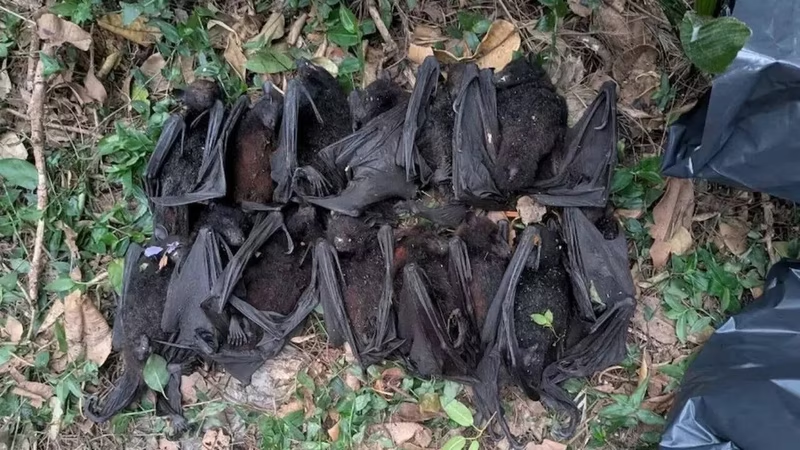
In a heartbreaking scene playing out across New South Wales, soaring temperatures have triggered a mass die-off of one of Australia’s most ecologically vital—and vulnerable—species: the flying fox. As thermometers hit a scorching 45°C (113°F), hundreds of these large fruit bats succumbed to heat stress, plummeting from trees in colonies from Lismore to Sydney. Now, wildlife carers are overwhelmed, scrambling to feed and shelter dozens of orphaned baby bats left behind—a stark symbol of how extreme weather events are pushing native species to the brink.
Table of Contents
- What Happened During the NSW Heatwave?
- NSW Heatwave Flying Foxes: Why Are They So Vulnerable?
- The Orphan Crisis: Rescuers Race Against Time
- Why Flying Foxes Matter: More Than Just Bats
- Climate Change and the Future of Australian Wildlife
- How to Help Wildlife During Extreme Heat
- Conclusion
- Sources
What Happened During the NSW Heatwave?
In early January 2026, a severe heatwave gripped eastern Australia, with parts of New South Wales experiencing consecutive days above 43°C. For flying foxes—particularly the endangered grey-headed flying fox (Pteropus poliocephalus)—these conditions proved lethal. Unlike humans, they cannot sweat or pant effectively to cool down. When temperatures exceed 42°C, they begin to suffer fatal heat stress .
Volunteers from wildlife rescue groups like WIRES and Friends of the Flying Foxes reported scenes of “raining bats,” as adults and juveniles dropped dead from roosting trees. Initial estimates suggest over 500 flying foxes perished in just a few days—a devastating blow to populations already under pressure from habitat loss and previous heat events .
NSW Heatwave Flying Foxes: Why Are They So Vulnerable?
Flying foxes are exquisitely sensitive to temperature extremes due to their physiology and behavior:
- No sweat glands: They rely on behavioral cooling—licking their arms, flapping wings, and seeking shade—but these fail in prolonged, extreme heat.
- Colony living: Roosting in dense camps amplifies heat retention, turning tree canopies into ovens.
- Timing: Many pups are still dependent on mothers during summer heatwaves. If a mother dies, her baby rarely survives without human intervention.
This isn’t an isolated incident. Similar mass mortality events occurred in 2014, 2017, and 2019, each time killing tens of thousands of bats nationwide. Scientists warn these events are becoming more frequent and severe due to climate change .
The Orphan Crisis: Rescuers Race Against Time
The immediate aftermath of the NSW heatwave flying foxes tragedy is a surge in orphaned pups—tiny, furless, and completely helpless. These babies require round-the-clock care: feeding every 2–3 hours with specialized milk formula, warmth from heating pads, and constant monitoring.
“We’re already at capacity,” said one Sydney-based carer. “Each pup needs months of rehabilitation before it can be released. And with more heatwaves predicted, this could become a recurring nightmare” .
Organizations are urgently calling for donations, foster carers, and supplies like puppy formula, soft towels, and rehydration fluids. Every rescued pup represents not just a life saved, but a future breeding adult critical to the species’ survival.
Why Flying Foxes Matter: More Than Just Bats
Despite their ominous name, flying foxes are gentle pollinators and seed dispersers—essential to Australia’s ecosystems. A single grey-headed flying fox can travel up to 50 km in a night, spreading seeds from over 100 native plant species, including eucalyptus and rainforest figs .
Without them, forest regeneration slows dramatically, affecting everything from koalas (who rely on eucalyptus) to bird populations. Their decline isn’t just a wildlife issue—it’s a threat to biodiversity itself.
Climate Change and the Future of Australian Wildlife
The flying fox die-off is a microcosm of a larger crisis. Australia is warming faster than the global average, with heatwaves now 30% more frequent and intense than in 1900 . Species like the spectacled flying fox lost over a third of its population in a single 2018 heatwave.
According to the Australian Government Department of Climate Change, Energy, the Environment and Water, urgent action is needed to protect climate-vulnerable species through habitat corridors, urban cooling strategies, and emergency response plans for wildlife .
How to Help Wildlife During Extreme Heat
If you live near a flying fox colony or spot distressed wildlife during a heatwave, here’s what you can do:
- Do not touch bats directly: They can carry diseases. Call a licensed wildlife rescuer instead.
- Provide water: Place shallow bowls of fresh water in shaded areas (not near colonies to avoid attracting predators).
- Support rescue groups: Donate to organizations like WIRES, FOF, or local bat carers.
- Advocate for climate action: Push for policies that reduce emissions and protect natural habitats.
For practical guidance, see our resource on [INTERNAL_LINK:wildlife-first-aid-during-heatwaves].
Conclusion
The tragic deaths of hundreds of flying foxes during the recent NSW heatwave flying foxes event is more than an ecological loss—it’s a warning. As global temperatures rise, even resilient species face existential threats. Saving orphaned pups is heroic, but it’s a band-aid on a deeper wound: a changing climate that’s outpacing adaptation. Protecting these vital pollinators means protecting Australia’s forests—and ultimately, its future.
Sources
- Times of India. (2026). NSW heatwave kills hundreds of flying foxes, orphaning baby bats. Retrieved from https://timesofindia.indiatimes.com/world/rest-of-world/nsw-heatwave-kills-hundreds-of-flying-foxes-orphaning-baby-bats/articleshow/126522958.cms
- WIRES Wildlife Rescue. (2026). Heat Stress in Flying Foxes: Emergency Response Guidelines.
- Australian Government – Department of Climate Change, Energy, the Environment and Water. (2025). Climate Vulnerability Assessment: Flying Foxes. Retrieved from https://www.environment.gov.au/
- Friends of the Flying Foxes (FOF). (2026). Orphan Care Protocols and Heatwave Impact Report.
- Welbergen, J. A., et al. (2020). Climate-driven mass mortality events in flying foxes. Journal of Animal Ecology.