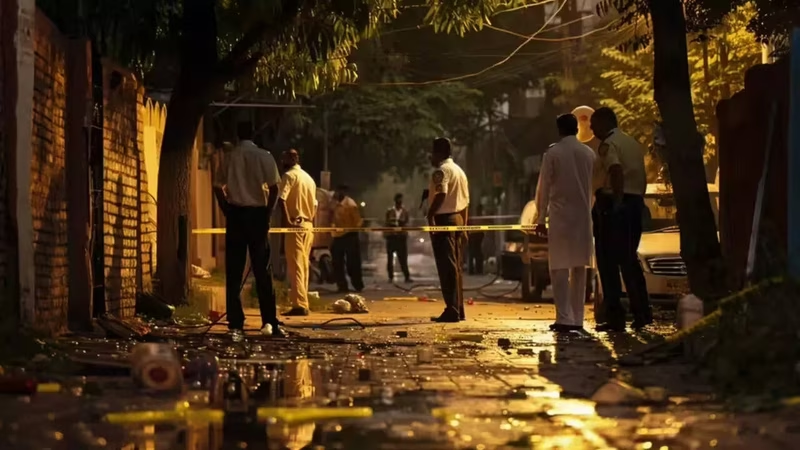
In a chilling reminder of the vulnerability many women face, the quiet lanes of Noida’s Sector 142 became the scene of a horrific crime that has left police and the public deeply disturbed. Early Monday morning, municipal workers at a remote dumping yard stumbled upon a sack—unassuming from the outside, but inside lay a nightmare: the lifeless, tortured body of a young woman.
Her limbs were tightly bound. Her face was deliberately burned, likely in a crude attempt to erase her identity. She was estimated to be in her early twenties. And as of now, no one has come forward to claim her—no missing persons report matches her description. This Noida woman murder case has quickly escalated into one of the most urgent and disturbing investigations in the National Capital Region .
Table of Contents
- The Gruesome Discovery That Rocked Noida
- Challenges in the Noida Woman Murder Investigation
- What Forensics Reveal About the Crime
- The Deadly Cost of Poor Surveillance in Noida
- Is This Part of a Larger Missing Women Crisis?
- Public Outcry and Calls for Safer Cities
- How Authorities Are Responding
- Final Thoughts: A Nameless Victim, a Community in Fear
- Sources
The Gruesome Discovery That Rocked Noida
The discovery occurred around 6:30 AM on December 29, 2025, near a garbage disposal site in Sector 142—a relatively isolated area on Noida’s outskirts, known more for industrial activity than residential life .
Initial reports suggest the sack had been dumped sometime overnight. The victim showed signs of prolonged restraint, with ligature marks on her wrists and ankles. Most alarmingly, her facial features were severely charred, possibly using an accelerant like kerosene or petrol—a tactic often used by perpetrators to delay or prevent identification .
Challenges in the Noida Woman Murder Investigation
Police face a daunting task. Without a name, they cannot trace her last known whereabouts, social circle, or potential enemies. Standard investigative paths—like checking mobile tower pings or ATM withdrawals—require a known identity to yield results.
Compounding the problem is the location itself. Sector 142’s dumping yard sits far from main roads and residential complexes. “There are no functional CCTV cameras in that stretch,” admitted a senior Noida Police official . This surveillance void creates a perfect blind spot for criminals to operate with impunity.
What Forensics Reveal About the Crime
Despite the attempts to destroy evidence, forensic teams are working around the clock:
- Dental records: Being used for potential matching if a missing person report emerges.
- Clothing analysis: The victim was dressed in everyday wear—jeans and a cotton top—offering few brand or regional clues.
- Toxicology report: Pending to determine if she was drugged before death.
- Time of death: Estimated between 10 PM Sunday and 2 AM Monday.
Investigators believe the murder did not occur at the dumping site. The lack of blood pooling and the presence of clean restraints suggest she was killed elsewhere and transported.
The Deadly Cost of Poor Surveillance in Noida
This case has reignited criticism over Noida’s patchy public security infrastructure. While sectors like 18 and 34 boast smart city surveillance, peripheral zones like Sector 142 remain dangerously under-monitored.
According to a 2024 audit by the National Crime Records Bureau (NCRB), over 60% of dumping grounds and industrial corridors in the Delhi-NCR lack 24/7 CCTV coverage . These areas become de facto crime zones—ideal for dumping bodies, illegal waste, or conducting illicit activities.
Is This Part of a Larger Missing Women Crisis?
Nationally, India reports over 65,000 missing women annually, with many cases remaining unresolved for years . In Uttar Pradesh alone, Noida’s home state, over 8,000 women were reported missing in 2024.
Activists warn that unidentified bodies like this one may represent the tragic end of many such cases. “Until we have a centralized, real-time missing persons database linked to forensics, nameless victims will remain ghosts in the system,” says women’s rights advocate Priya Mehta.
For more on urban safety challenges, see our in-depth coverage at [INTERNAL_LINK:womens-safety-in-indian-cities].
Public Outcry and Calls for Safer Cities
Social media has erupted with demands for action. Hashtags like #JusticeForNoidaVictim and #NameHer trended nationally. Local residents held a silent vigil on Tuesday evening, calling for better street lighting, increased police patrols, and mandatory CCTV in all public zones.
“How many more bodies must we find before our cities become safe for women?” asked one protester, echoing a sentiment felt across the country.
How Authorities Are Responding
Noida Police have formed a Special Investigation Team (SIT) and are reviewing footage from nearby sectors for any suspicious vehicles. They’ve also issued a public appeal with a reconstructed sketch of the victim’s likely appearance (pre-burning) and are urging families of missing women to come forward—even with partial information .
Meanwhile, the Uttar Pradesh DGP has ordered a review of all dumping yard security protocols across the state.
Final Thoughts: A Nameless Victim, a Community in Fear
The Noida woman murder is more than a single crime—it’s a symptom of systemic failures in urban planning, public safety, and gender-based violence prevention. Until this young woman is given a name, her story cannot be fully told, and her killer cannot be held accountable.
But her tragedy must not vanish into bureaucratic silence. Her bound hands and burned face are a silent scream for justice—and for a future where no woman becomes a nameless statistic in a sack on the city’s edge.